Category Archives: Religion

The wild laughter of God! Second Sunday of Advent Year C

In the fifteenth year of Tiberius Caesar’s reign… that’s like saying; in the fifteenth year of Michael D. Higgins presidency. I know that can’t happen but just go with the argument!

When Pontius Pilate was governor of Judea… equates with when Enda Kenny was Taoiseach.

When Herod was tetrarch of Galilee… which broadly equates with when Tony Dempsey was Chairman of Wexford County Council.

During the pontificate of Annas and Caiaphas… when Denis Brennan was bishop of Ferns

So the events leading up to the birth of the Christ-child are put in a political ‘State’ context, but also in a religious ‘Church’ context which itself gives the events a definite date.

But watch what happens next. The Word of God came not to any of the political-State or religious-Church agencies but to John son of Zechariah (again a particular John) in the wilderness!

How God loves to do that, to by-pass the establishment! It’s how he manifests his greatness, his absolute sovereignty. It’s the laughter of God. God loves to surprise us.

The Word issued through John has two parts.

Firstly, it’s a call to repentance, to prepare our hearts. This part belongs to us. We must do it. It’s called Advent.

Secondly, it announces that something will be accomplished, the distance between God and man (that most of us perceive intuitively) described as valleys, mountains, hills, winding roads, rough paths will be flattened and straightened because God will leave Heaven and become human child.

The implication here is that the absence of God which so many experience is more our doing than God’s.

The final lines tell us that in this child all mankind will see the salvation of God. Huge! In this child, not every child but this particular child, not wealth, not a career, not your partner, husband, wife, lover… In this child resides the salvation of God – and the salvation of God must also mean human salvation.

So, as the Word of God invites us to prepare our hearts for the Child’s arrival I ask you a question, one that I’m asking myself too: In what have you placed your salvation?

Remember, we choose our joys and our sorrows long before we experience them. Gibran.

Good Friday; our words are approximations of eternity.

Before we begin… a few pointers to help you get the most from our celebration of Good Friday.

Firstly, it’s not just the person of Jesus that’s rejected, it is God’s truth! He is Truth in human flesh. It’s also Truth – absolute Truth – that’s rejected.

Secondly, I’d like you to notice in the opening lines of the Gospel that when they go to arrest Jesus they don’t know who they’re looking for. He’s not a big name in society!

Thirdly, I’d like you to notice that the State and the religious leaders do their best to get rid of Jesus, but in their best efforts to get rid of him they’re actually fulfilling God’s will! The wisdom of man is foolishness to God!

Image of Christ crucified 7But most of all I’d like you to notice that Jesus suffering is redemptive. If you redeem something you give something away to get something back. God gave his Son to get us back… “to ransom a slave you gave away your son!” (Easter Proclamation: Exsultet).

This is the Mercy of God. Mercy is the heart of God and it’s the heart of the Gospel. Mercy means that there is ultimate Justice! For only if Justice has been transgressed can anyone be merciful. To put it in legal terms; only if a ‘law’ has been broken can anyone be merciful. So if God is merciful then there is an absolute law, God’s law, by which we are all judged.

If we think of what it means to be merciful ourselves we know that to be merciful costs. It’s difficult. Perhaps some of us are so hurt that we cannot be merciful, and if we are to be merciful it will be like crucifixion. There you have it… there you have it in your own experience; the seeds of the eternal. Therefore if God is to be merciful, God must suffer. Only if we live in a meaningless universe can it be otherwise – only in a world where words are empty and meaningless, meaning only whatever we want them to mean at any given time. But unknown to ourselves our words are approximations of eternity.

Here’s a way to get inside God’s Mercy. He died without sin for you. He died without sin on your behalf. Therefore you will die without sin if you allow Jesus Christ to ‘wash’ you. If he died without sin for you, that means you’ve done it! Put it this way: If you owe a debt and can’t pay, what happens? Now supposing someone else pays the debt on your behalf, what happens? You’re free! Behold the lamb of God who takes away the sins of the world? How does he take them away? By taking them on himself.

Here’s an exercise for those who struggle with guilt and at the same time a lesson for those who think that there’s no sin at all – two extremes to be avoided, everything is a sin (broadly equates with the past) and nothing is a sin (broadly equates with the present): Focus on the figure of Christ crucified on the Cross… Now imagine him calling your name… “Paddy, Paul – whatever your name – I did not die on the Cross for you to bear the burden of your sin.”

When that comes as grace, you’ll cry!


Palm Sunday: Murdering God’s absolute truth!

Jesus is God’s truth in the flesh, in human form. He’s thinking, talking and walking absolute truth!

As a matter of interest what part of this truth needs updating? What do you think?

IMG_1263God’s truth is unwelcome, it’s not wanted, they’ll slap it, punch it, kick it, spit on it, make fun of it, and eventually murder it.

Interestingly it’s an unlikely marriage of religious and civil-political authority that murders God’s truth. We need to be careful that we’re not doing the same!

Remarkably in the face of this violence he’ll remain silent: “But to Pilate’s amazement Jesus made no further reply.” The silence is born of absolute truth. Jesus’ silence in the face of Pilate’s questioning speaks loudly of something greater than death, indeed life itself. This is a truth that’s more than capable of defending itself. We can kick it this way and that way, murder it, but it’ll never go away. Put it down and it’ll pop back up!

This is why those who suggest that the Church will die out are spiritually naive. The Church is being pushed out to the margins, but she’s just living the great themes of salvation history, she’s being purified by her Master, same old, same old. She’ll have her time in the desert and like Christ she’ll return, trained for battle. Besides, everything about Jesus Christ points to human failure, but it is always human failure into ultimate victory.

As for Pilate? Well, Pilate does what every political leader will do whenever and wherever possible; he placates the crowd. It’ll improve the chances of holding on to political power! But where will Pilate go in the end?

As for the crowd, we can hardly but notice the stark contrast between ‘Hosanna in the highest heaven’ on Palm Sunday and ‘crucify him, crucify him” on Good Friday although it’s something of a false contrast because they’re probably two very different crowds – disciples and friends on Palm Sunday but seething enemies on Good Friday. Nonetheless crowds are always fickle. If you don’t believe me ask yourself why a drinks company will spend €4m on a TV advert?

Here’s an interesting detail about Christ’s passion; we’ve got God’s truth in the flesh, we’ve got the mass of ordinary people, the electorate so to speak, we’ve got the religious leaders, we’ve got political and civil leaders – the same essential elements that we’ve got now – and still the one thing that’s sure to be the casualty in this mix is Gods truth!

It’s easy to understand Pope Francis emphasis on mercy.


Monday, Fifth Week of Lent.

John 8:11 The adulterous woman.

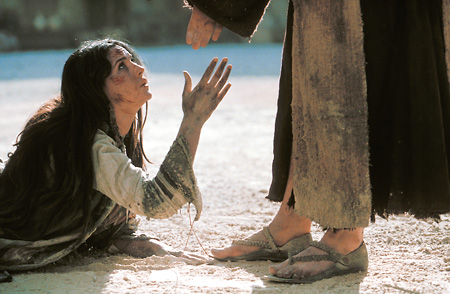
woman-caught-in-adulteryPonder the effect Jesus words and actions had on this woman “caught in the very act of committing adultery…”

She’ll love him, madly. She’ll be crazy about him and dare anybody say a bad word about him in her presence, she’ll defend him, fight for him, tell others about him, speak so positively about him that it’ll be infectious. She’ll give everything for him!

This is what makes a disciple, this concrete experience of the love but particularly the mercy of Jesus Christ.

Now, let’s consider the opposite: What would Jesus have effected in this woman if he’d joined in condemning her?

See the difference?

It’s easy to understand Pope Francis emphasis on mercy, isn’t it?

Fifth Sunday of Lent: Jesus answers the Greeks and Stephen Fry too!

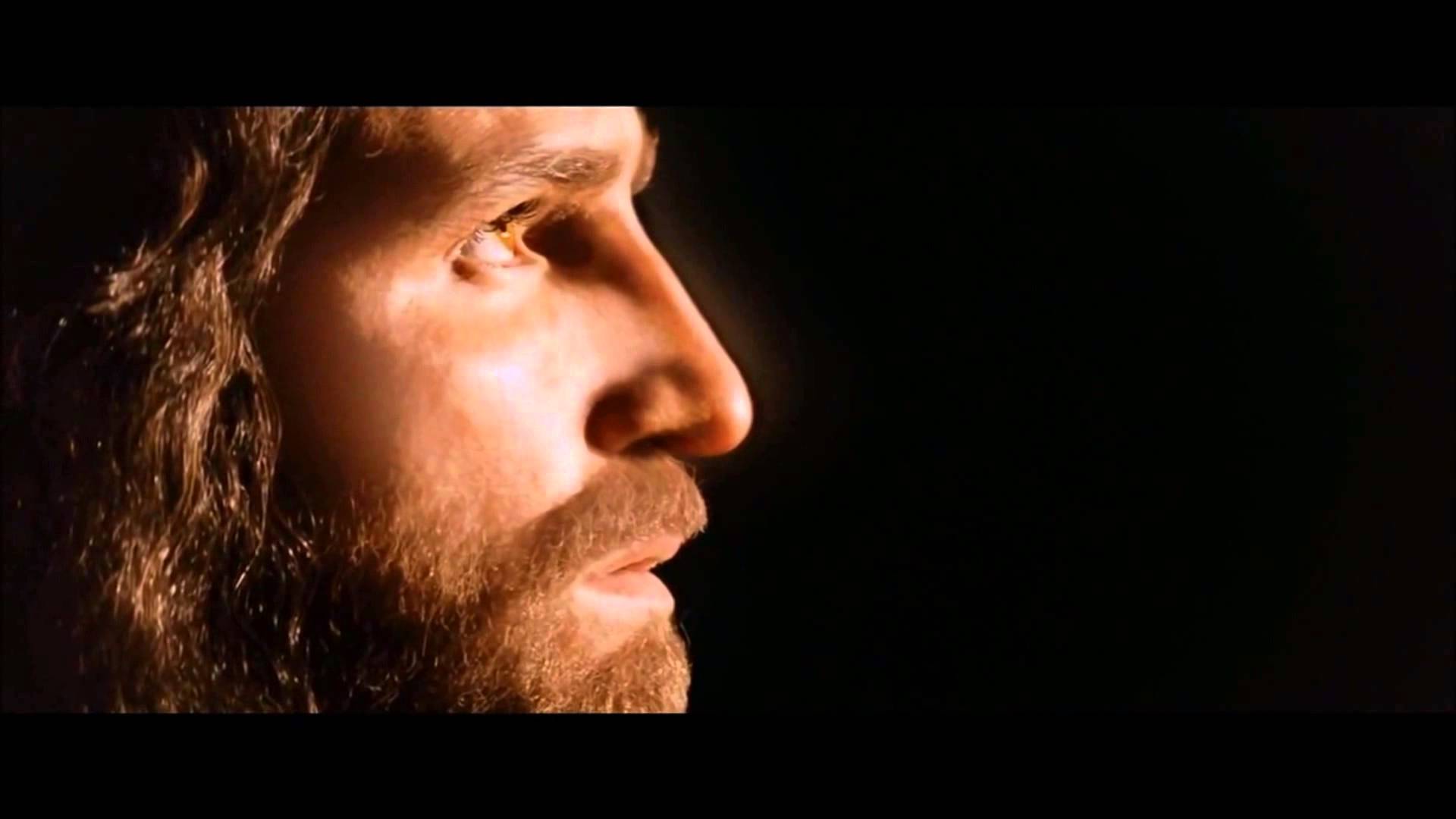
"If a man serves me, he must follow me, wherever I am, my servant will be there too." John 12:20-33 / Caviezel, Passion of Christ

“If a man serves me, he must follow me, wherever I am, my servant will be there too.” John 12:20-33 / Caviezel, Passion of Christ

In the Gospel today (John 12:20-33) we find Jesus turning toward Calvary.

The position he’s faced with equates to something like a diagnosis of terminal cancer without a morphine pump – without any kind of pain relief, comfort or consolation, nothing but the reciprocal love of his Father!

He takes the tsunami of human suffering that’ll soon crush him, and he uses it to teach us. All that’ll happen to Jesus is not just about him, it’s equally about us, it also represents human suffering and ultimately the death of every single human being.

The first thing Jesus does is place death in a far reaching context. Jesus describes death in terms of the necessity of a wheat grain falling on the ground and dying before it can reach its full potential. Death is not final but the necessary door to fulfillment.

Next, he says that if we serve him we must follow him. It’s easy to miss the brutal quality of this command. Jesus issues it while speaking of his suffering and death; “wherever I am my servant will be there too.” It’s as good as saying; you’ll have your share of human suffering, you’ll have your agony in the garden, your scourging at the pillar, your crowning with thorns, your crucifixion, you’ll follow my path – and children will get bone cancer! Thus the Greeks who “should like to see Jesus” get their answer, as does Stephen Fry; you’ll see me but don’t expect that you’ll be spared suffering and death.

Next, he echoes the cry of every person facing suffering and death but he does so while adding the extra dimension that places death in a momentous context. He puts this human cry in the form of a question to God: “What shall I say? Father, save me from this hour?” After all, I’m only 33 and there’s much I still want to see and do. He answers his own question: “But it was for this very reason that I have come to this hour.” He presents us with the inevitability of death, with the necessity of death if we’re to reach the fullness of our potential. Significantly he then adds, “Father, glorify your name!”

The Risen Christ. "If a man serves me, he must follow me, wherever I am, my servant will be there too."

The Risen Christ. “If a man serves me, he must follow me, wherever I am, my servant will be there too.”

This is a question we all face. What if we cure everything that brings death; what’ll we do then? Where will we go? How will we control the population of the earth? State controlled fertility and euthanasia? Most importantly how will we cope with living endlessly?

Imagine if time can’t reach fulfillment. We’ll go mad.

The message of Jesus is that time does reach fulfillment, for each one of us, through him, with him and in him, and the door to this fulfillment is death, death in him.

Salvation history; stumbling from one crisis to another!

Crisis ImageIn the First Reading (2 Chronicles 36:14-16,19-23) we find the great themes of salvation history – themes that are always unfolding as humankind stumbles with ever more sophistication from one crisis to the next!

We’re told that the whole of society was busy adding “infidelity after infidelity” and that God sent messengers repeatedly “since he wished to spare his people” but the people wouldn’t listen, their responses varied from ridicule, to despising, to laughing at both the messenger and the message. Same old, same old, isn’t it? There’s a sense in which nothing changes at all. We know best, we’ll do it our way, and where does it end? We stumble with ever more sophistication from one crisis to another!

The Gospel makes it clear that Jesus of Nazareth is the Saviour of the world, and that his purpose is not to condemn the world but to save it (John 3:14-21). How will he save the world? He’ll draw the world to himself one heart at a time. This of course means that Christianity and Catholicism can’t be private.

But what happens if the world refuses to come to Jesus Christ? Is there a flip side? Absolutely. Initially nothing happens that’s immediately perceptible. In other words the claim that the sky doesn’t fall down holds true. There’s no sudden crash! Instead, cut off from God the human heart is slowly desensitized over a period of a century, more or less, one small step at a time, each step facilitating the next, which in turn facilitates individuals, sometimes groups of people, and sometimes even a particular nation to wreak havoc. Ultimately, the world can find itself facing horrors such as those that unfolded during World War II.

In the bible this is what’s known as God’s punishment. God’s punishment comes in the form of social, political and economic policies, policies that arise from hearts divorced from God. It’s what we’re doing. What I do matters, it might influence you to do the same, and you might influence somebody else – eventually everybody is doing it! Then the world is changed and the path is cleared for the next change. The world is changed one heart at a time. This means that God is the God of history but that each one of us is contributing to and determining the future of all. History doesn’t happen by chance or just bad luck, history is determined by the relationship of the human heart to God.

While this slow descent is occurring God will send messengers but the messengers are almost always ridiculed, despised and laughed at – or simply ignored. Only when life is so bad that there’s nowhere perceived as ‘better’ to go do people begin to listen to these messengers. The point I want you to note is that this process is happening now. There’s never a point in history when it’s not happening.

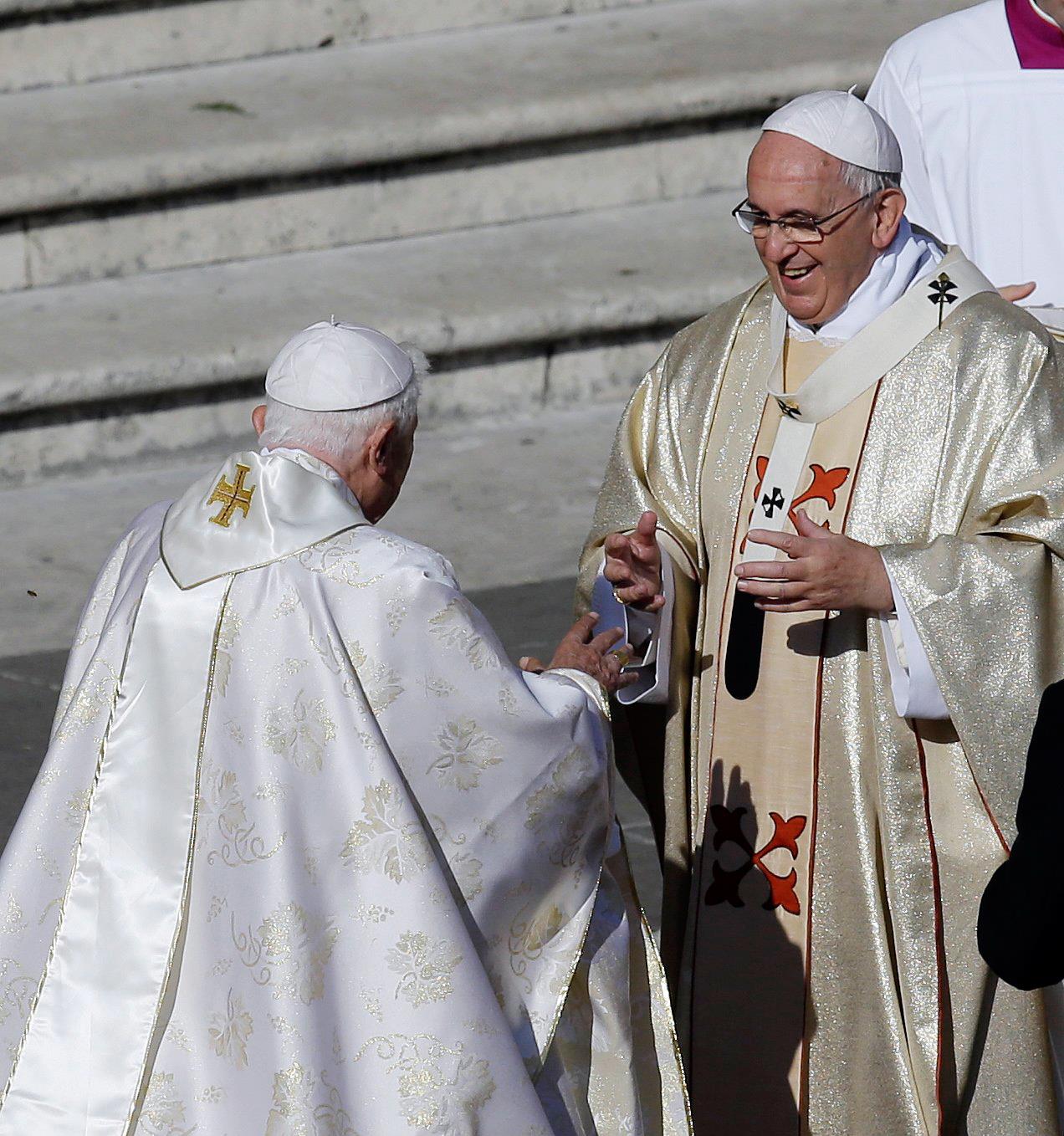
Pope Francis greets Pope Emeritus Benedict XVI. In a surprise move Pope Francis has declared a Holy Year of Mercy beginning December 08th 2015 (Feast of the Immaculate Conception)

Pope Francis greets Pope Emeritus Benedict XVI. In a surprise move Pope Francis has declared a Holy Year of Mercy beginning December 08th 2015 (Feast of the Immaculate Conception)

So, what do these messengers look like? How do we recognize them? The answer is; with great difficulty!

In Fatima almost one hundred years ago these messengers came as 3 children. But what do we know about Fatima? How much attention have we given it? A little later there’s St. Faustina and the message of Divine Mercy – what do we know about that? We’re now in the time of Mercy – we’ve been there for quite some time. It’ll be followed by Justice. Divine Mercy always precedes Divine Justice. Later there’s Padre Pio? We might know a little about Pio. Later again, there’s Pope John Paul II, then Benedict XVI, but how much attention have we given apart from what the media has told us? Now we have Pope Francis – who has just declared 2016 to be a Holy Year of Divine Mercy.

It’s not difficult to see that the great themes of salvation history also apply to us, right here, right now, that they’re unfolding even as I speak and that we’re all caught up in it.

We’ll summarize everything I’m saying when we come to pray the Our Father. We don’t pray; thy kingdom come, thy will be done in heaven only. No! We pray; thy will be done on earth as it is in heaven. God’s kingdom, God’s rule over the human heart is for the future of the earth. Heaven is well able to look after itself!

Third Sunday of Lent: Booting out what’s not of God!

35_jesus-cleanses-the-temple_1800x1200_300dpi_2The cleansing of the Temple is an appropriate Gospel reading for Lent. The work of Lent is very similar – driving out what’s not of God!

For Jesus the Temple was important. He called the Temple nothing less than “my Father’s house” and he forcibly removed people he considered to be acting offensively. It’s quite a scene if not a little out of character; “he scattered the money changers’ coins” and “knocked their tables over…”

It’s a wake-up call for those who’d think that the Temple, or logically by extension the Church as we have it today, can somehow be disconnected from the person of Jesus Christ. On the contrary, the disciples understand the cleansing as zeal for God’s house devouring Jesus of Nazareth.

Interestingly Jesus doesn’t turn against the Temple, rather he turns against the men and women disfiguring God’s house. That men and women have disfigured the Temple is no reason to turn against the Temple.

When the Jews challenge his cleansing his reply is intriguing.

He turns the conversation to himself, to his own body which he calls “this sanctuary” and declares: I am acting like this because I am the fulfilment of the Temple – I am the true sanctuary of the Temple – and my resurrection will be all the proof you need.

Just as Jesus is the true sanctuary of the Temple so he is the true sanctuary of the Church.

Just as the Temple was disfigured by the sins of men so is the Church disfigured by the sins of men. Indeed, even Christ on the Cross is disfigured by the sins of men. That’ll never change.

The problem is neither the Temple nor the Church, but the human heart. In the same way for example, speaking of Ireland’s economic collapse, the problem is not bankers, the problem is the human heart. This is the doctrine of Original Sin. It makes so much sense.

Just as Jesus didn’t abandon the Temple so he will not abandon the Church, rather he calls each one of us to boot out what’s not of God so that the world can see more clearly that this sanctuary here – the one I’m standing in now – is the sanctuary of Christ’s body and blood.

Hey Stephen Fry! I’ll stick with hanging on to Jesus Christ.

Second Sunday of Lent, Year B, Mark 9:2-10, The Transfiguration.

Abraham is prepared to give his own child (First Reading Genesis 22:1-2, 9-13, 15-18). It’s one of the most savage scenes in the bible. The only redeeming factor being that it’s a test and God is not going to allow it to happen.

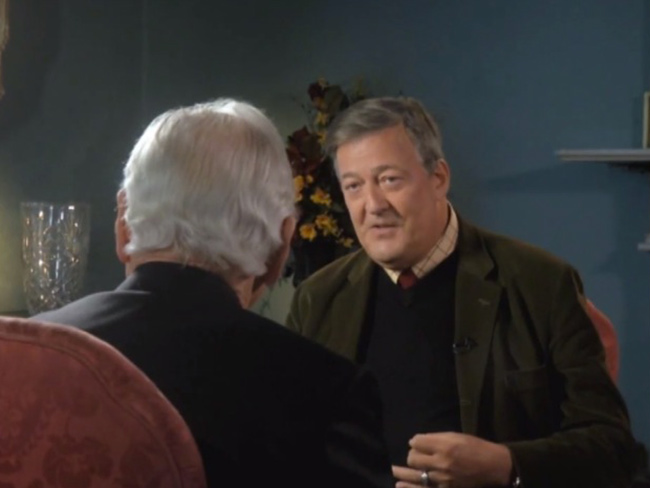
Stephen Fry tells Gay Byrne what he thinks of God!

Stephen Fry tells Gay Byrne what he thinks of God!

But for some parents, tragically, it’s happened, not that they were given a choice, rather it was forced on them, and is being forced on them, day after day, as they struggle to reach some kind of acceptance.

From the First Reading we move to the figure of Jesus, taking Peter, James and John with him, climbing a high mountain where they could be alone.

The revelation that occurs on the mountain will not be given to the other nine. Jesus takes Peter, James and John – not the others. We need to accept that God doesn’t give the same spiritual experiences to us all – for whatever reason.

Neither is the revelation given to the crowds taking an interest in Jesus of Nazareth. The vast majority among the crowds are not so much interested in discipleship – in giving up their lives for Christ – as in being cured of some difficulty so that they can get on with their lives.

Revelation always happens when we withdraw from the world, it happens away from the crowd. The world listens to talk, debate, voice after voice, but the follower of Christ listens to a single voice that’s heard only in silence.

Revelation happens when we’re in the company of Jesus. In the company of Jesus the disciples glimpse something much greater, something much more beautiful than ordinary experience.

Revelation happens after the effort of climbing the mountain. Climbing a mountain is always symbolic of the journey to God which brings “heightened consciousness” and “heightened awareness” (Fr. Robert Barron) and unrestricted vision.

Climbing a mountain is a difficult task, full of danger. Some of us will crawl on our hands and knees as we near the top, breathless, exhausted, perhaps bruised, cut and bleeding because we’ve fallen on the way up, because the ascent has been brutal and it’s taken a toll. Some of us may conclude that the ascent is too high a price, not worth it, because we can’t see beyond the immediacy of the suffering involved. There’s nothing like suffering to restrict our vision. Think Stephen Fry!

It requires self-sacrifice to climb the mountain of life and reach our true destination. It’ll cost us. On the way there may be unthinkable losses. Such is life anyway. But the teaching of Christ leaves no room for doubt – I’m worth the loss of everything! The spiritual experience is far more beautiful than anything in ordinary everyday experience.

Revelation doesn’t happen antiseptically, in a make believe world, it happens in this world, this real world, with Christ.

On the mountain top revelation happens – the earthly human Jesus is transfigured, significantly Mark makes the point of telling us that “his clothes became dazzlingly white, whiter than any earthly bleacher could make them.” It was a glimpse of the other world; “dazzingly white” – transcendent illumination! People long dead, Moses and Elijah could be seen again. Peter wanted to stay. That’s us! That’s what we’ve done with Lourdes. We build tents (hotels). We crave this beauty. This is what we’re all looking for if we could only dare to believe, if we could only get past human suffering.

We might think that for Peter, James and John, the memory of this event would be enough to carry them through the passion and death of Jesus. But it wasn’t – at least initially – and that’s significant. In the immediacy of Jesus suffering and death even this memory fades, at least for a time. That’s how it is for us too, that’s how it is for Stephen Fry.

There is no way around or past human suffering. There’s only a way through it – by hanging on to Jesus Christ come what may!

Lent: Hey world leaders! Don’t you get it? The kingdom of God is for the future of the earth and its inhabitants.

Hey world leaders! Don’t you get it? The kingdom of God is for the earth. It’s God’s programme for the future of the earth and its inhabitants. Let me explain.

Is Jesus of Nazareth the Son of God? What do you think?

Is he the Saviour of the world?

We believe that Jesus Christ is the Son of God, God who is profoundly interested in our welfare, not just as individuals but as the human race – the body of humanity on the face of the earth at any given time. He’s interested in us collectively, as we evolve.

He came to give us a future. Most of us will think of that future as eternal life – somewhere to go in the end. So religion gets pushed out, worse still, so does God!

But God is equally interested in the human race as we live out our lives on earth. It’s the daily living out of our lives together that’ll decide the future, both temporal and eternal.

This is the significance of the kingdom of God. In Mark’s Gospel (today’s Gospel Mark 1:12-15) Jesus begins his public ministry with the proclamation of the kingdom of God.

The kingdom of God is the rule of God in human hearts, in human affairs. Only when God rules our hearts and our affairs – collectively – can we be sure of a future on earth that won’t end in ruin, in disaster. Thus Jesus call to repentance. The kingdom of God is about peace on earth, it’s about true prosperity. What other purpose could the Incarnation possibly have?

So, we must decide. Is the historical figure of Jesus of Nazareth the Christ, the son of the living God? Is he the Saviour of the world?

The kingdom of God is the rule of God in human affairs, the guarantee of our collective future. It's the politics of God!

The kingdom of God is the rule of God in human affairs, the guarantee of our collective future. It’s the politics of God!

If he is, then, logically, the removal of Christ from Irish public life can only mean that the perceived progress associated with his removal is nothing more than the illusion of progress. It’s progress that’ll end in disaster. The kind of progress that came disguised as the Celtic Tiger. All in the name of a republic! There’s no darkness worse than the darkness that comes disguised as light! “if then, the light inside you is darkness, what darkness that will be!” (Matthew 6:23)

Unless, of course, this Saviour intervenes again.

Now that’s an interesting thought. That’d be quite a task! Look what the world wants to do with his original intervention!

It’s Lent; time to decide: Who are we really following?

Hey you’re wrong! The Catholic Church does not denounce homosexuality.

Pope-Francis-Reject-Gay-MarriageRecently @pmbarrins tweeted to my twitter account: “Trying to distance the Catholic Church from homophobia is disingenuous when it has actively and staunchly denounced homosexuality and by default homosexuals, using language that could never be described as Christian.”

A later tweet from @paulscullion argued (correctly, I think!): “It would help if Church doctrine and teaching was better articulated – the use of legal English sounds cold and judgmental.”

I think @paulscullion has something valuable to say. Unfortunately, while @pmbarrins tweet is probably popular it remains substantively untrue. Furthermore, I cannot see how it will ever be possible for the Catholic Church to “approve” homosexual acts while remaining faithful to the deposit of faith entrusted to the Church from the very days of the Incarnation. Furthermore, the Catholic Church has never, and never will, denounce homosexuality. The Church will, however, insist that homosexual acts are sinful.

I suspect the use of “legal English” is due to the Church’s effort to make very fine distinctions, distinctions that seek to preserve the sacredness of every life, irrespective of sexual orientation. When considering homosexuality the Church seeks to preserve a distinction between the person, the inclination and the action. The distinctions are important but they’re usually ignored – for whatever reason. The result is that Church teaching on the matter of same sex attraction has been interpreted in a way that’s the total opposite to what is intended.

Let’s start with the description: “Intrinsically disordered.” It’s generally interpreted by the homosexual person to mean “I’m intrinsically disordered.” This is horrific and if it was true would validate @pmbarrins tweet. But nothing could be further from the truth. “Intrinsically disordered” is descriptive of homosexual acts only. The description is not intended to say a single iota about the homosexual person. Homosexual acts are considered to be “intrinsically disordered” only in relation to the Catholic (and dare I say natural) understanding of the purpose of human sexuality; procreation, not in relation to the person. To understand this point better ask yourself; what is sex for? Now imagine an alien from outer space arriving on earth and asking the same question; what’s sex for? It’s how the human race reproduces itself. Biologically obvious, isn’t it?

SLOVAKIA-POLITICS-RIGHTS-HOMOSEXUALITY-SOCIALThe distinction arises again when homosexuality is said to be “objectively disordered.” Here, similarly, homosexuality (the homosexual inclination) is considered “objectively disordered” only in relation to the Catholic – and dare I say again, natural purpose – of human sexuality; procreation. The use of “objective” is very deliberate and is intended to ensure that “disorder” cannot be applied in any way to the homosexual person, to the subjective. How can the use of “objective” be understood otherwise? It should be obvious but objective and subjective do not have the same meaning! Still, there are people convinced that the Church attacks homosexual persons. This is simply untrue.

Yes, absolutely, these are very fine distinctions, but they are distinctions that carry a single purpose – to ensure that homosexual persons are “accepted with respect, compassion and sensitivity. Every sign of unjust discrimination in their regard should be avoided” (2358).

Finally, even sinful acts are subject to fine distinctions, not in terms of the sinfulness of an act itself, but in terms of a person’s culpability. In Catholic understanding it’s not in the sinful act (which always falls under objective morality) that the so-called “grey” area resides, but in the person’s culpability (subjective morality). But that’s a matter for another blog!