Monthly Archives: February 2015

Hey Stephen Fry! I’ll stick with hanging on to Jesus Christ.

Second Sunday of Lent, Year B, Mark 9:2-10, The Transfiguration.

Abraham is prepared to give his own child (First Reading Genesis 22:1-2, 9-13, 15-18). It’s one of the most savage scenes in the bible. The only redeeming factor being that it’s a test and God is not going to allow it to happen.
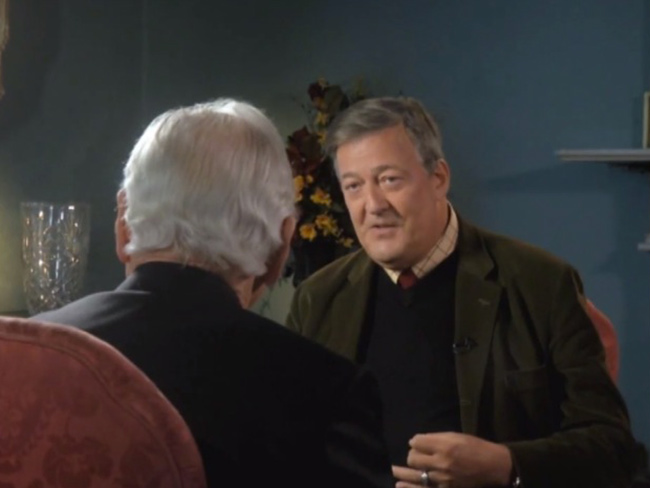
Stephen Fry tells Gay Byrne what he thinks of God!

Stephen Fry tells Gay Byrne what he thinks of God!

But for some parents, tragically, it’s happened, not that they were given a choice, rather it was forced on them, and is being forced on them, day after day, as they struggle to reach some kind of acceptance.

From the First Reading we move to the figure of Jesus, taking Peter, James and John with him, climbing a high mountain where they could be alone.

The revelation that occurs on the mountain will not be given to the other nine. Jesus takes Peter, James and John – not the others. We need to accept that God doesn’t give the same spiritual experiences to us all – for whatever reason.

Neither is the revelation given to the crowds taking an interest in Jesus of Nazareth. The vast majority among the crowds are not so much interested in discipleship – in giving up their lives for Christ – as in being cured of some difficulty so that they can get on with their lives.

Revelation always happens when we withdraw from the world, it happens away from the crowd. The world listens to talk, debate, voice after voice, but the follower of Christ listens to a single voice that’s heard only in silence.

Revelation happens when we’re in the company of Jesus. In the company of Jesus the disciples glimpse something much greater, something much more beautiful than ordinary experience.

Revelation happens after the effort of climbing the mountain. Climbing a mountain is always symbolic of the journey to God which brings “heightened consciousness” and “heightened awareness” (Fr. Robert Barron) and unrestricted vision.

Climbing a mountain is a difficult task, full of danger. Some of us will crawl on our hands and knees as we near the top, breathless, exhausted, perhaps bruised, cut and bleeding because we’ve fallen on the way up, because the ascent has been brutal and it’s taken a toll. Some of us may conclude that the ascent is too high a price, not worth it, because we can’t see beyond the immediacy of the suffering involved. There’s nothing like suffering to restrict our vision. Think Stephen Fry!

It requires self-sacrifice to climb the mountain of life and reach our true destination. It’ll cost us. On the way there may be unthinkable losses. Such is life anyway. But the teaching of Christ leaves no room for doubt – I’m worth the loss of everything! The spiritual experience is far more beautiful than anything in ordinary everyday experience.

Revelation doesn’t happen antiseptically, in a make believe world, it happens in this world, this real world, with Christ.

On the mountain top revelation happens – the earthly human Jesus is transfigured, significantly Mark makes the point of telling us that “his clothes became dazzlingly white, whiter than any earthly bleacher could make them.” It was a glimpse of the other world; “dazzingly white” – transcendent illumination! People long dead, Moses and Elijah could be seen again. Peter wanted to stay. That’s us! That’s what we’ve done with Lourdes. We build tents (hotels). We crave this beauty. This is what we’re all looking for if we could only dare to believe, if we could only get past human suffering.

We might think that for Peter, James and John, the memory of this event would be enough to carry them through the passion and death of Jesus. But it wasn’t – at least initially – and that’s significant. In the immediacy of Jesus suffering and death even this memory fades, at least for a time. That’s how it is for us too, that’s how it is for Stephen Fry.

There is no way around or past human suffering. There’s only a way through it – by hanging on to Jesus Christ come what may!

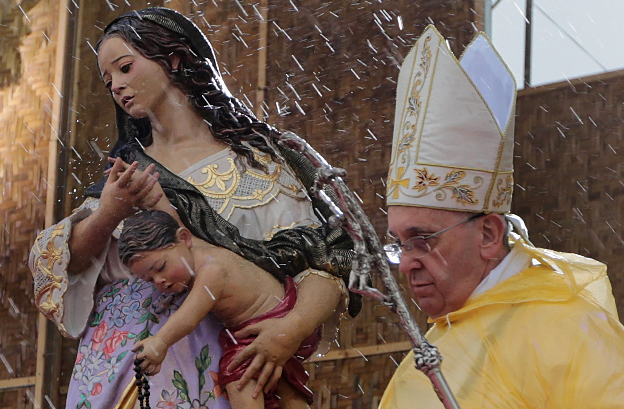
Lent: Hey world leaders! Don’t you get it? The kingdom of God is for the future of the earth and its inhabitants.

Hey world leaders! Don’t you get it? The kingdom of God is for the earth. It’s God’s programme for the future of the earth and its inhabitants. Let me explain.

Is Jesus of Nazareth the Son of God? What do you think?

Is he the Saviour of the world?

We believe that Jesus Christ is the Son of God, God who is profoundly interested in our welfare, not just as individuals but as the human race – the body of humanity on the face of the earth at any given time. He’s interested in us collectively, as we evolve.

He came to give us a future. Most of us will think of that future as eternal life – somewhere to go in the end. So religion gets pushed out, worse still, so does God!

But God is equally interested in the human race as we live out our lives on earth. It’s the daily living out of our lives together that’ll decide the future, both temporal and eternal.

This is the significance of the kingdom of God. In Mark’s Gospel (today’s Gospel Mark 1:12-15) Jesus begins his public ministry with the proclamation of the kingdom of God.

The kingdom of God is the rule of God in human hearts, in human affairs. Only when God rules our hearts and our affairs – collectively – can we be sure of a future on earth that won’t end in ruin, in disaster. Thus Jesus call to repentance. The kingdom of God is about peace on earth, it’s about true prosperity. What other purpose could the Incarnation possibly have?

So, we must decide. Is the historical figure of Jesus of Nazareth the Christ, the son of the living God? Is he the Saviour of the world?

The kingdom of God is the rule of God in human affairs, the guarantee of our collective future. It's the politics of God!

The kingdom of God is the rule of God in human affairs, the guarantee of our collective future. It’s the politics of God!

If he is, then, logically, the removal of Christ from Irish public life can only mean that the perceived progress associated with his removal is nothing more than the illusion of progress. It’s progress that’ll end in disaster. The kind of progress that came disguised as the Celtic Tiger. All in the name of a republic! There’s no darkness worse than the darkness that comes disguised as light! “if then, the light inside you is darkness, what darkness that will be!” (Matthew 6:23)

Unless, of course, this Saviour intervenes again.

Now that’s an interesting thought. That’d be quite a task! Look what the world wants to do with his original intervention!

It’s Lent; time to decide: Who are we really following?

Hey you’re wrong! The Catholic Church does not denounce homosexuality.

Pope-Francis-Reject-Gay-MarriageRecently @pmbarrins tweeted to my twitter account: “Trying to distance the Catholic Church from homophobia is disingenuous when it has actively and staunchly denounced homosexuality and by default homosexuals, using language that could never be described as Christian.”

A later tweet from @paulscullion argued (correctly, I think!): “It would help if Church doctrine and teaching was better articulated – the use of legal English sounds cold and judgmental.”

I think @paulscullion has something valuable to say. Unfortunately, while @pmbarrins tweet is probably popular it remains substantively untrue. Furthermore, I cannot see how it will ever be possible for the Catholic Church to “approve” homosexual acts while remaining faithful to the deposit of faith entrusted to the Church from the very days of the Incarnation. Furthermore, the Catholic Church has never, and never will, denounce homosexuality. The Church will, however, insist that homosexual acts are sinful.

I suspect the use of “legal English” is due to the Church’s effort to make very fine distinctions, distinctions that seek to preserve the sacredness of every life, irrespective of sexual orientation. When considering homosexuality the Church seeks to preserve a distinction between the person, the inclination and the action. The distinctions are important but they’re usually ignored – for whatever reason. The result is that Church teaching on the matter of same sex attraction has been interpreted in a way that’s the total opposite to what is intended.

Let’s start with the description: “Intrinsically disordered.” It’s generally interpreted by the homosexual person to mean “I’m intrinsically disordered.” This is horrific and if it was true would validate @pmbarrins tweet. But nothing could be further from the truth. “Intrinsically disordered” is descriptive of homosexual acts only. The description is not intended to say a single iota about the homosexual person. Homosexual acts are considered to be “intrinsically disordered” only in relation to the Catholic (and dare I say natural) understanding of the purpose of human sexuality; procreation, not in relation to the person. To understand this point better ask yourself; what is sex for? Now imagine an alien from outer space arriving on earth and asking the same question; what’s sex for? It’s how the human race reproduces itself. Biologically obvious, isn’t it?

SLOVAKIA-POLITICS-RIGHTS-HOMOSEXUALITY-SOCIALThe distinction arises again when homosexuality is said to be “objectively disordered.” Here, similarly, homosexuality (the homosexual inclination) is considered “objectively disordered” only in relation to the Catholic – and dare I say again, natural purpose – of human sexuality; procreation. The use of “objective” is very deliberate and is intended to ensure that “disorder” cannot be applied in any way to the homosexual person, to the subjective. How can the use of “objective” be understood otherwise? It should be obvious but objective and subjective do not have the same meaning! Still, there are people convinced that the Church attacks homosexual persons. This is simply untrue.

Yes, absolutely, these are very fine distinctions, but they are distinctions that carry a single purpose – to ensure that homosexual persons are “accepted with respect, compassion and sensitivity. Every sign of unjust discrimination in their regard should be avoided” (2358).

Finally, even sinful acts are subject to fine distinctions, not in terms of the sinfulness of an act itself, but in terms of a person’s culpability. In Catholic understanding it’s not in the sinful act (which always falls under objective morality) that the so-called “grey” area resides, but in the person’s culpability (subjective morality). But that’s a matter for another blog!

Fatima: God is very democratic!

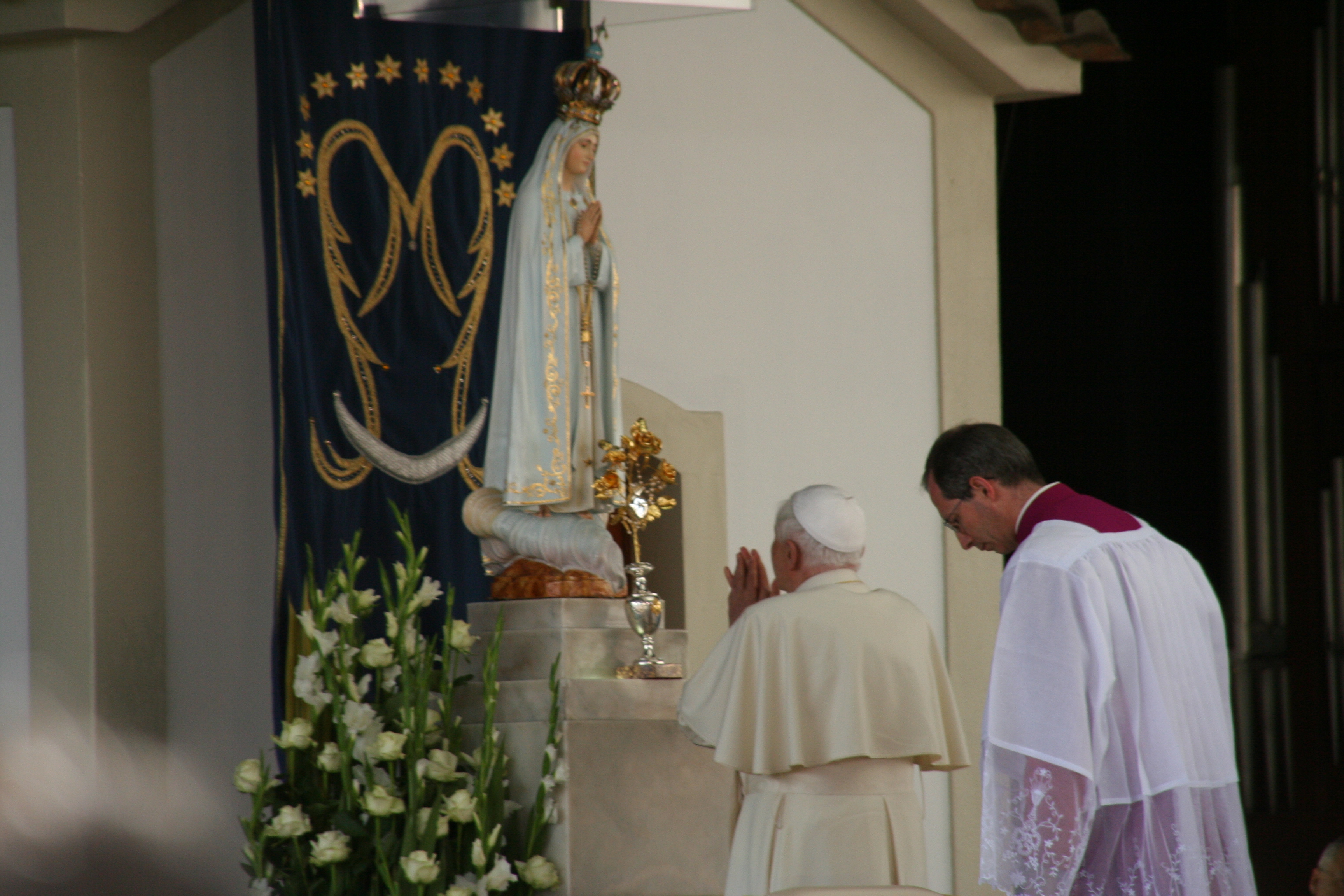
Pope Benedict XVI visits Fatima, May 2010.

Pope Benedict XVI visits Fatima, May 2010.

I’ve always been fascinated by the details of Fatima.

While watching the various DVDs about Fatima it becomes very obvious that this attempted intervention of God in human affairs caused great suffering; for the children and their parents and for the local ecclesiastical and civil authorities.

Having watched the DVDs it’s the trauma caused by the apparitions that jumps from the screen. What was it all for? What did Our Lady and ultimately God want to achieve? The answer takes most people by surprise.

Firstly, Our Lady asked that people stop offending God. So much trouble just for that! One must conclude therefore that offending God is a very serious matter.

Secondly, as if to emphasize the point, Our Lady then went on to request reparation, the repair of the hurt caused to the heart of God by human offences.

How are we to do that?

Papa17This is very striking. We are to appreciate Holy Mass. We are to partake of the Eucharist, to believe, adore, trust and love her Son Jesus Christ truly present there. Fatima clearly indicates, without room for doubt, that neglect of Holy Mass and the proper worship of the Blessed Sacrament amounts to neglect of the person and the work of Jesus Christ, and causes great suffering in the Heart of God. When working with children (using an animated DVD) I always remind them that when the Angel came to visit the children in Fatima, the Angel didn’t come with a can of coca cola and a bag of crisps! No, the Angel came with the Sacred Host and a Chalice. Why? Because that’s how God decided to remain with his people. In the message of Fatima the Eucharist is central because God intended Eucharist to be central until the end of time. The Eucharist is God-self and God’s work in Jesus Christ – it can’t be any more central than that!

Furthermore Our Lady taught the children to offer sacrifices (particularly the difficulties and sufferings of life) in reparation. This is a common theme in the lives of all the great Saints – they offered their sufferings in reparation while working tirelessly to relieve the suffering of others.

Reparation sounds difficult but it’s not – not even for children. Again, when working with children I ask them to imagine if one of them clobbered me. Then I ask them to imagine another child apologizing on behalf of my attacker and offering to make a cup of tea for me; one child is hurting me, the other is making reparation, trying to repair the damage.

But the full meaning of Fatima goes much further and connects the state of human affairs directly to humankind’s relationship with God.

During the apparition of July 13th Our Lady said that if people do not stop offending God another and more terrible war will break out – obviously meaning the Second World War.

We understand the Second World War to have been the result of Hitler coming to power in Germany. However, Our Lady suggests that the Second World War happened as a result of people offending God. In other words, when we choose against God we choose to put in place a chain of events that eventually, ultimately, causes great suffering to ourselves, to the body of humanity.

Thus during the 20 odd years between the world wars people are given ample opportunity to change or set the course of world events. This of course makes God very democratic – certainly not a dictator or a tyrant. We’re free to choose life or death, good or evil. We make the choices. At the very least Fatima implies that humankind’s well-being depends on an intimate Communion between the creature and the Creator.

Now, if offending God or otherwise determines our common human future then there arises a critically important question; what kind of a future are we creating for our children?

Indeed we might ask; what kind of a future are we creating for Irish children when a religious ethos is considered to have no place in the schools of a modern republic?

More generally, what hope is there for a culture that attempts to exclude religion from public life?

Encountering Christ – learning from the leper.

‘Spirit’ Confirmation Programme 3.

The single most important question you guys need to ask and answer (your parents too) is; if Confirmation wasn’t part of school life would you be approaching your local Church to look for it?

Candidates for Confirmation participate in the first 'Spirit' Workshop.

Candidates for Confirmation participate in the first ‘Spirit’ Workshop.

Still, whether you know it or not, God is calling you guys through the very fact that Confirmation is a part of school life. He’s calling you through the ‘Spirit’ programme, through the adults who’ve given so freely of themselves, through all of us gathered here, through your teachers, and even through me!

But the greatest call is the call that comes from the direct encounter with Jesus Christ in his Word and in his body and blood offered to us in the Eucharist – although what I’m calling the ‘direct’ encounter is still being mediated through the Church!

I think the leper in today’s Gospel (Mark 1:40-45) can teach us much about Confirmation, about your Confirmation, about the Christian life in general.

The leper goes to find Jesus.

Without the effort of going out to meet Jesus – and we’re not told how much of an effort the leper had to make but it’s likely to have been significant – nothing would have changed for the leper. There’d have been no encounter with Christ and there’d have been no healing. Same old, same old, same old life!

Confirmation presumes you’re making the effort to go out and meet Jesus. If there’s no effort on your part then Confirmation – and remember what Confirmation is; the gift of the Holy Spirit, the Divine-self – will be like throwing seeds on patches of rock where there’s little soil.

Incidentally Pope John Paul II used to love to ask people: What did you do with your Confirmation? Well, what do you think?

The leper can teach us other things too about life with God – or life without God!

Generally, like the leper people won’t go looking for God until they have a need. Confirmation presumes you have a need for God. Do you have a need for God?

When the leper encounters Christ – when Jesus stretches out his hand and says: “Of course I want to! Be Cured!” – the lepers life is changed. Yes, his life is made better, enhanced, which is what the presence of Christ always does in a life, but that life is also changed, radically.

The radically changed life is something we often miss and I’m not sure whether we miss it through simple ignorance or if it’s a very deliberate attempt to make the teaching of Jesus suit us. When Jesus stretches out his hand, whether to the serious sinner or the seriously ill, a real change is effected in their lives, sinners, outsiders, the marginalized start putting right what’s wrong – often what wasn’t considered wrong before the encounter with Christ – and simultaneously they enter a deeper experience of the kingdom of God. Indeed, the change is the proof that the kingdom of God is present.

As Christ is encountered, things that didn’t seem wrong are suddenly seen to be wrong. As Christ is encountered, the catechism is encountered. The more the kingdom of God takes hold of us the more we’ll understand even the difficult teachings of the Church, things that just seemed like nonsense before our growth in Christ!

Finally, do you know where to go to encounter Christ?

Well, in truth, it can happen almost anywhere, but there’s one very privileged place. Where is it? It’s the reason your teachers constantly remind you that there’s to be no talking in the Church. God has given one particular place that is the unequaled place of encounter: Mass, and as a result of Mass; the Tabernacle and Adoration.

You guys probably pass a Church many times every week. How often do you call in to speak with Jesus present in the Tabernacle?

You guys change that – start calling in for 10 minutes every day and just talk to him – and he’ll change your whole life, from the inside out, and it’ll be a much better life than the one you’ll make without him!

God is calling you – by name!

But can you hear it? Can you see it? Or will your Confirmation remain unused, an unused key to an unknown kingdom?

Your choice. You choose.

Every ‘problem’ calls us to spiritual growth – the gifts of the Holy Spirit.

‘Spirit’ Confirmation Programme 1.

Learning about the Gifts of the Holy Spirit!

Learning about the Gifts of the Holy Spirit!

Briefly, we’ll look at just two of the seven gifts of the Spirit – it’ll give us an idea of how important they are.

Perhaps during the week the parents – teachers too – might adapt or simplify my words and engage the children with the ideas I’m presenting.

Firstly, Wisdom; what’s that? Firstly, it’s a gift of the Holy Spirit. Therefore it doesn’t belong naturally to human nature. It’s a gift given by the Holy Spirit and when we receive it, we know (instinctive-like) that it’s in the spiritual life and not in health and wealth that we find lasting security. Those who don’t have the gift will naturally look for their security in everything from health to wealth.

Secondly, Understanding; what’s that? When we receive the gift of understanding we penetrate the truths of our faith. As we receive it we move from faith into certainty. Those who do not have the gift are always unsure, wobbly, blown this way and that, they lack conviction about God.

The gifts make a big, big difference. They’re synonymous with the spiritual journey into God (synonymous = equivalent in meaning, expressing the same idea). The gifts of the Spirit are the road into God.

Now, tell me, how many of you guys just want to get this part (Mass) over with?

Well, to be honest I was like that when I was your age. And I stayed like that through most of my teenage years.

Until one day in 1983, the 19th of July – I will never forget the day – I was at home with my father. There was a fire and tragically later that day my father died.

Now apart from the grief, something else happened. I started to ask serious questions about the meaning of life. That one event, and the questions it surfaced within me, changed the whole course of my life.

I believe we’re offering you answers to questions that most of you haven’t even started to ask. (I’m in favour of Confirmation at a later age!)

So the ‘Spirit’ team has produced a programme to give you a good experience of Confirmation in the hope that when (and if!) you do begin to ask the deeper questions, you might remember this positive experience of Confirmation and return to look in more detail.

Meanwhile, some things I’d like you to know and remember. I would like you to know that it’s in the spiritual life – the spiritual life is our life with God – that you will find true and lasting security.

If I could I’d love to spare you the futile effort of trying to find lasting security in this world, in just about everything from health to wealth.

I would like you to know that there’s no difficulty in life that can’t be overcome by spiritual growth.

I would like you to know that every challenge, every difficulty – even if it looks like there’s no way out – every suffering, every sickness is a call to spiritual growth; that it doesn’t have to end in meaningless despair.

Even if you make a complete mess of your life, I want you to know that the mess is nothing more than God’s way of calling you to spiritual growth, to do things differently, to do things his way.

No matter how many times you fall, no matter how many times you fail, remember, every fall, every failure, is God’s call to spiritual growth.

Finally, the gifts of the Holy Spirit, like Confirmation itself, like all the sacraments, belong to the spiritual life and it’s there – and only there – that we receive them.

So, do you have a spiritual life? Yes? No? No! I’m going to be really cruel to you; then what are you doing here?

Click the video links below for a summary of Pope Francis’ catecheses on the gifts of Wisdom and Understanding. (Credit: Rome Reports)

Wisdom

Understanding

Our actions will always harmonize with what’s inside us.

‘Spirit’ Confirmation Programme 2.

We’re asking you today to witness to the Spirit. Actually, that’s not right. You’ve chosen this, didn’t you? So you’re telling us that you’re going to witness to the Spirit.

'Spirit' Workshop No. 2. Candidates for Confirmation viewing video footage of how people witness to the Spirit.

‘Spirit’ Workshop No. 2. Candidates for Confirmation viewing video footage on an iPad of how people witness to the Spirit.

The visit of Annette McCarthy to the school on Friday together with the workshop this morning will have given you real examples of witnessing to the Spirit.

Here’s another way that you might witness. Sometimes as people get older they can become invisible. People don’t see them any more. So, here’s what I want you to do. You can make older people visible – all through your life – by just smiling and saying ‘hello’.

Still, I do not want you to get the idea that witnessing to the Spirit is just about being a ‘good’ person or a ‘nice’ person. Sometimes even our goodness is a witness to ourselves rather than God, my spirit rather than God’s Spirit, and merely carries the mask of witnessing to God. This – reducing Christianity to being a ‘nice’ person – is something we’ve been doing within Catholicism for most of my lifetime, and it’s directly related to the slow decline of Catholicism.

Catholicism is first and foremost a well-trodden path to a real and ongoing encounter with God. This ongoing encounter with God is what gives our lives joyful and lasting security. This is basic Jesus-speak! He never tires of telling us things like “…a man’s life is not made secure by what he owns even when he has more than he needs” and “Fool! This very night the demand will be made for your soul; and this hoard of yours, whose will it be then?” (Luke 12:15, 12:20)

There’s a desperate human need portrayed in today’s First Reading (Job 7:1-4,6-7), the kind that must surely precede suicide. There’s similar human need portrayed in today’s Gospel (Mark 1:29-39) but in the Gospel the need encounters Jesus Christ and is transformed. I heard an elderly man say recently – a man who’d lost both his wife and his son – “Life? It’s nothing in the end!” He’s right. Without Jesus Christ, it comes down to nothing in the end. It’s the encounter with God that causes us to witness. Witness is not a dry demand!

This encounter with God is not imaginary. Its development is marked by clearly defined stages, every bend on the road to God, every junction, every cul-de-sac, every obstacle, and every contour is documented. Catholicism is first and foremost a ‘how to’ manual, how to encounter God, and for the purists it’s an experiential ‘how to’ manual produced by God. So, before you walk away from Catholicism, read the life of at least one saint. It’s an interesting question to ask those who’ve already abandoned Catholicism: Did you read the life of at least one saint before walking away?

So, I do not want to be asking you to witness to a Spirit that you do not know. That’s to do violence to you. We can only witness to God’s Spirit to the degree that he’s present within us.

When we try to witness to Gods Spirit when he’s not inside us – when he’s not a real living force in our lives or when he’s diminished to the bare minimum for human life – we get fed up, bored, we fall away, and worse, we may even resent this imposition. Religion without the Holy Spirit quickly becomes a burden and even tyranny!

Sooner rather than later, our actions will always harmonize with what’s inside us.

I’ll give you an example using one of the gifts of the Spirit: Piety, or as you’d call it; Reverence.

pope-francis_2541160kPiety (Reverence) is a gift of the Holy Spirit which means that it doesn’t belong naturally to human nature. It’s as it says on the tin – a gift of the Holy Spirit. It’s an instinctive-like affection for God that makes us desire to worship him. Pope Francis described it as indicating “our belonging to God and our profound bond with him, a bond that brings meaning to our lives.” He said this bond is not “a duty or an imposition” but “a living relationship with the heart… our friendship with God, given by Jesus.” (Catholic World News, June 04, 2014). Where it is present religion is never boring, where it’s absent everything about religion is boring!

So, the gift of Piety (Reverence) alone, or its absence, can explain so much about our behaviour around religion, about how we witness, or don’t witness!


Fifth Sunday, B.