Category Archives: Catholic

The wild laughter of God! Second Sunday of Advent Year C

In the fifteenth year of Tiberius Caesar’s reign… that’s like saying; in the fifteenth year of Michael D. Higgins presidency. I know that can’t happen but just go with the argument!

When Pontius Pilate was governor of Judea… equates with when Enda Kenny was Taoiseach.

When Herod was tetrarch of Galilee… which broadly equates with when Tony Dempsey was Chairman of Wexford County Council.

During the pontificate of Annas and Caiaphas… when Denis Brennan was bishop of Ferns

So the events leading up to the birth of the Christ-child are put in a political ‘State’ context, but also in a religious ‘Church’ context which itself gives the events a definite date.

But watch what happens next. The Word of God came not to any of the political-State or religious-Church agencies but to John son of Zechariah (again a particular John) in the wilderness!

How God loves to do that, to by-pass the establishment! It’s how he manifests his greatness, his absolute sovereignty. It’s the laughter of God. God loves to surprise us.

The Word issued through John has two parts.

Firstly, it’s a call to repentance, to prepare our hearts. This part belongs to us. We must do it. It’s called Advent.

Secondly, it announces that something will be accomplished, the distance between God and man (that most of us perceive intuitively) described as valleys, mountains, hills, winding roads, rough paths will be flattened and straightened because God will leave Heaven and become human child.

The implication here is that the absence of God which so many experience is more our doing than God’s.

The final lines tell us that in this child all mankind will see the salvation of God. Huge! In this child, not every child but this particular child, not wealth, not a career, not your partner, husband, wife, lover… In this child resides the salvation of God – and the salvation of God must also mean human salvation.

So, as the Word of God invites us to prepare our hearts for the Child’s arrival I ask you a question, one that I’m asking myself too: In what have you placed your salvation?

Remember, we choose our joys and our sorrows long before we experience them. Gibran.

Palm Sunday: Murdering God’s absolute truth!

Jesus is God’s truth in the flesh, in human form. He’s thinking, talking and walking absolute truth!

As a matter of interest what part of this truth needs updating? What do you think?

IMG_1263God’s truth is unwelcome, it’s not wanted, they’ll slap it, punch it, kick it, spit on it, make fun of it, and eventually murder it.

Interestingly it’s an unlikely marriage of religious and civil-political authority that murders God’s truth. We need to be careful that we’re not doing the same!

Remarkably in the face of this violence he’ll remain silent: “But to Pilate’s amazement Jesus made no further reply.” The silence is born of absolute truth. Jesus’ silence in the face of Pilate’s questioning speaks loudly of something greater than death, indeed life itself. This is a truth that’s more than capable of defending itself. We can kick it this way and that way, murder it, but it’ll never go away. Put it down and it’ll pop back up!

This is why those who suggest that the Church will die out are spiritually naive. The Church is being pushed out to the margins, but she’s just living the great themes of salvation history, she’s being purified by her Master, same old, same old. She’ll have her time in the desert and like Christ she’ll return, trained for battle. Besides, everything about Jesus Christ points to human failure, but it is always human failure into ultimate victory.

As for Pilate? Well, Pilate does what every political leader will do whenever and wherever possible; he placates the crowd. It’ll improve the chances of holding on to political power! But where will Pilate go in the end?

As for the crowd, we can hardly but notice the stark contrast between ‘Hosanna in the highest heaven’ on Palm Sunday and ‘crucify him, crucify him” on Good Friday although it’s something of a false contrast because they’re probably two very different crowds – disciples and friends on Palm Sunday but seething enemies on Good Friday. Nonetheless crowds are always fickle. If you don’t believe me ask yourself why a drinks company will spend €4m on a TV advert?

Here’s an interesting detail about Christ’s passion; we’ve got God’s truth in the flesh, we’ve got the mass of ordinary people, the electorate so to speak, we’ve got the religious leaders, we’ve got political and civil leaders – the same essential elements that we’ve got now – and still the one thing that’s sure to be the casualty in this mix is Gods truth!

Fifth Sunday of Lent: Jesus answers the Greeks and Stephen Fry too!

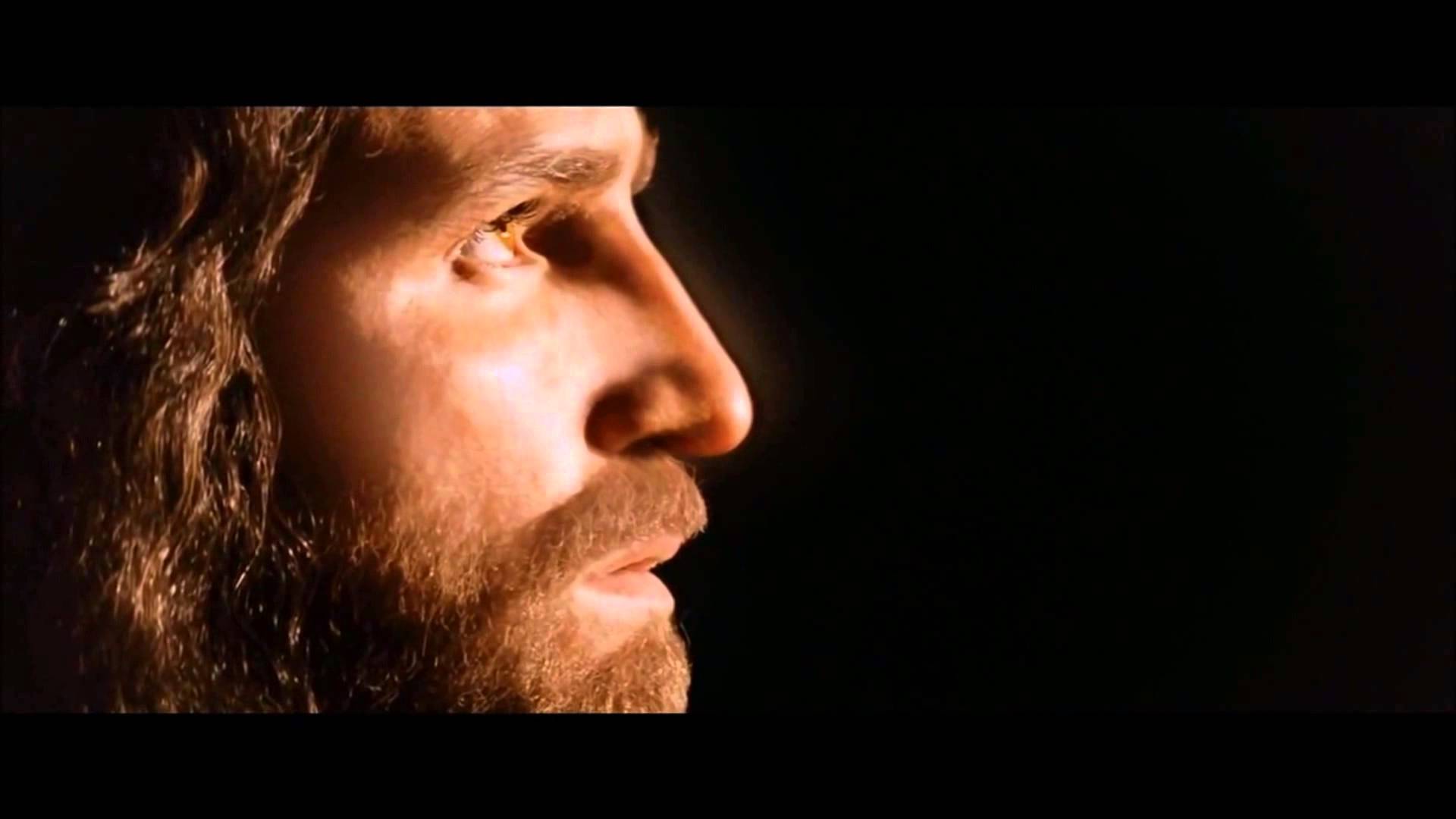
"If a man serves me, he must follow me, wherever I am, my servant will be there too." John 12:20-33 / Caviezel, Passion of Christ

“If a man serves me, he must follow me, wherever I am, my servant will be there too.” John 12:20-33 / Caviezel, Passion of Christ

In the Gospel today (John 12:20-33) we find Jesus turning toward Calvary.

The position he’s faced with equates to something like a diagnosis of terminal cancer without a morphine pump – without any kind of pain relief, comfort or consolation, nothing but the reciprocal love of his Father!

He takes the tsunami of human suffering that’ll soon crush him, and he uses it to teach us. All that’ll happen to Jesus is not just about him, it’s equally about us, it also represents human suffering and ultimately the death of every single human being.

The first thing Jesus does is place death in a far reaching context. Jesus describes death in terms of the necessity of a wheat grain falling on the ground and dying before it can reach its full potential. Death is not final but the necessary door to fulfillment.

Next, he says that if we serve him we must follow him. It’s easy to miss the brutal quality of this command. Jesus issues it while speaking of his suffering and death; “wherever I am my servant will be there too.” It’s as good as saying; you’ll have your share of human suffering, you’ll have your agony in the garden, your scourging at the pillar, your crowning with thorns, your crucifixion, you’ll follow my path – and children will get bone cancer! Thus the Greeks who “should like to see Jesus” get their answer, as does Stephen Fry; you’ll see me but don’t expect that you’ll be spared suffering and death.

Next, he echoes the cry of every person facing suffering and death but he does so while adding the extra dimension that places death in a momentous context. He puts this human cry in the form of a question to God: “What shall I say? Father, save me from this hour?” After all, I’m only 33 and there’s much I still want to see and do. He answers his own question: “But it was for this very reason that I have come to this hour.” He presents us with the inevitability of death, with the necessity of death if we’re to reach the fullness of our potential. Significantly he then adds, “Father, glorify your name!”

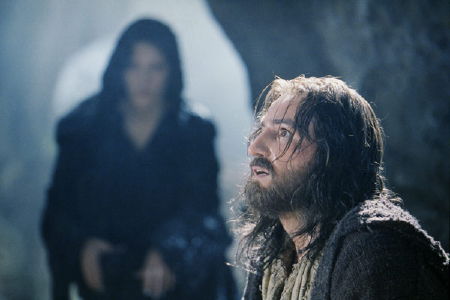
The Risen Christ. "If a man serves me, he must follow me, wherever I am, my servant will be there too."

The Risen Christ. “If a man serves me, he must follow me, wherever I am, my servant will be there too.”

This is a question we all face. What if we cure everything that brings death; what’ll we do then? Where will we go? How will we control the population of the earth? State controlled fertility and euthanasia? Most importantly how will we cope with living endlessly?

Imagine if time can’t reach fulfillment. We’ll go mad.

The message of Jesus is that time does reach fulfillment, for each one of us, through him, with him and in him, and the door to this fulfillment is death, death in him.

If radical discipleship is not found in the priesthood today, then where will it be found?

Mark 1:14-20, Third Sunday, Ordinary Time, Year B.

James and John leave everything. For a moment let’s picture their father Zebedee left in the boat with the men he employed. No doubt the father had built up the business with a view to his sons future. Now they’re gone. They’ll never really return.

It’s said that the departure of his sons caused Zebedee to go ‘ballistic’. He lost the head so to speak. That’s understandable. It’s said that in turn Jesus gave the name ‘sons of thunder’ to James and John, Mark 3:17.

At any rate, this following Jesus is portrayed as decisive, radical, life changing. The priesthood is modeled on these guys, downing tools, taking off after Jesus, staying with him, not returning. Whatever the historical roots of priestly celibacy even if several of the apostles were married, it’s not without considerable foundation in the teaching of Christ. It’s there, if we can hear it.

So when we start thinking about abolishing celibacy or making it optional – or countless other issues in the Church – we need to think about it from Christ’s perspective and those closest to him, rather than our own, because our understanding of these matters, indeed life itself, is very often a little out of sync – and that’s being generous – with the understanding that flows from the teaching of Christ.

"I had never believed. I had always known that the interest all around me in security, money, power and status was greater than any love of God or belief in his mercy" Colm Toibin, The Sign of the Cross

“I had never believed. I had always known that the interest all around me in security, money, power and status was greater than any love of God or belief in his mercy” Colm Toibin, The Sign of the Cross

Colm Toibin captures this ‘out of sync-ness’ perfectly in his book “The Sign of the Cross”. Writing about his experience as a child growing to adulthood here in the Cathedral in Enniscorthy he says – and this is both harsh judgement and profound observation – “I had never believed. I had always known that the interest all around me in security, money, power and status was greater than any love of God or belief in his mercy.” I’m afraid too often that’s us.

This is the reason we need to really listen to God’s Word, to the Gospels in particular, because only when we really listen can we begin to ‘sync’ with the message and the teaching of Christ. Often our treatment of the Word is like meeting a person and asking ‘how are you?’ when we really haven’t time for the answer, or worse, we really don’t care! Instead, take the time to look into the other persons eyes asking ‘how are you?’ and wait for the answer. We need to listen to the Word like that. Only then can we begin to move from Toibin’s “security, money, power and status” and into the “love of God” and “belief in his mercy”. This is particularly true of the priesthood.

When we think of the priesthood we need to remember Zebedee left behind in his boat, the family business and his life’s effort for his sons welfare discarded, thrown aside, abandoned. We need to wonder – and wonder is all we can do because the sources are so scant and often contradictory – about the wives of these men, if any. What happened to them?

My sense in all this is that through the apostles, married and unmarried, Christ was calling those around him and future generations to a radical discipleship, to leave everything, even marriage, Mark 19:12, 19:29 and so many other passages throughout the Gospels. It’s my sense but it’s not without foundation in the teaching of Christ. In fact, I suspect the more we ‘sync’ with the teaching of Jesus found in the Gospels the more we’ll see this possibility.

Let me put it this way: Why can’t James and John keep the family business and follow Jesus, as well? That’s what we’d do. It’s a bit like asking: Why can’t a man be a priest and marry, as well? That’s what we’d do. My sense is that Christ is calling some to a much more radical discipleship, to leave absolutely everything, to rely on him alone, and if this radical discipleship is not found in the priesthood today, then where will it be found?

Second Sunday of Christmas, (B), God lives on the edge.

Before we leave Christmas behind I want to look again at the context in which God became flesh because we can pull some interesting details from it.

Let us always remember that in the Church, in the spiritual life, we must always be deceived into focusing on the shadows, on the darkness rather than the light.

Let us always remember that in the Church, in the spiritual life, we must always be deceived into focusing on the shadows, on the darkness rather than the light.

The first detail I’d like you to see is that when God became flesh he was really pushing the boundaries of our freedom. The incarnation sits on the very edge of human freedom. If God did anything more we’d have no choice but to believe… and instantly our freedom is gone.

So the whole belief thing and the Church – remember that Christ and the Church are inseparable – is a personal choice. Yes, absolutely, but in acknowledging that it’s a personal choice, we must also acknowledge that God has done everything possible to swing our choice in his direction while leaving us just enough freedom to be able to reject him. This is a very thin line – maxed out very deliberately by God.

I’d also like you to notice the role of the political leaders – Caesar Augustus, Herod and the various layers of Government and leadership – in the arrival of the Christ-child (Cf Luke). They had absolutely nothing to do with it! In fact, they provided nothing more than the historical backdrop, nothing more than a way to put a date on the events. They were by-passed – as Mary marvelled in her Magnificat; “he has pulled down princes from their thrones…” How? He just by-passed them making them largely irrelevant and went to the lowly stable where only the lowly, and those who make themselves lowly can recognize him. This hasn’t changed.

But later they did try to get in on the act, to thwart it, Herod particularly. So his eventual involvement is one of opposition. This is most interesting because this hasn’t changed either – politics is still largely opposing the influence of the incarnation, non-violently of course, and ironically it does so on the pretext of choice!

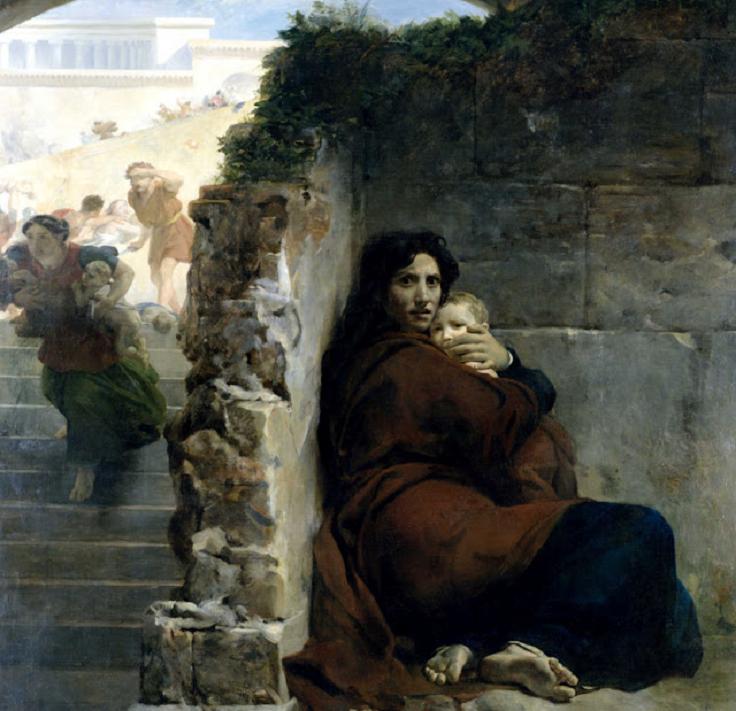
Slaughter of the Innocents, Leon Cogniet

Slaughter of the Innocents, Leon Cogniet

The next detail I’d like you to see is the proximity of really dark evil to the unfolding of God’s plans. As the Christ-child arrived into the world Herod’s power was threatened. Initially he played politics with the wise men, trying to trick them into telling him where he could find the child Jesus so that he could eliminate him, but when politics fails he unleashes a terrible evil ordering the death of every new born male child. What I want you to see is the proximity of the darkest evil to the unfolding of God’s plan in the world – this is the price of human freedom – and it hasn’t changed either. Wherever God’s plan is unfolding you will have evil too, and the greater the plan, the greater the evil, but only for a time. Always remember that spiritually we must be deceived into focusing on the shadows, on the darkness rather than the light. It happens all the time – right now in the Church it is happening; has happened.

The final detail I’d like you to see is how the unfolding of God’s plan is always tottering on the brink. God’s plan is dependent on Mary’s ‘yes’, on a solitary woman’s ‘yes’, on a ‘yes’ that asks this woman to let go of all her plans and stare, and step, into an abyss (from a human point of view). It’s dependent on Joseph accepting Mary’s version of events. It’s dependent on Joseph’s dream, on the wise men’s dream. What I want you to see is the thin line, again this thin line. God’s will always looks like it’s about to flop, from beginning to end, from incarnation to resurrection and into the future.

Doesn’t it look like that right now?

But it’ll never fail… never.

Christmas: God is with us, and God has a face, a personable identity

Tonight God crosses the desert we heard about during Advent, he crosses the valleys, the hills, the mountains, the cliffs. Tonight God is with us – and he wants to stay with us, with you.
IMG_1420

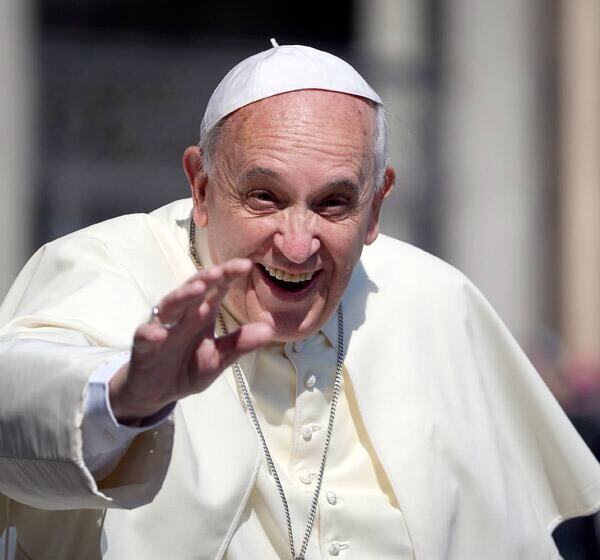
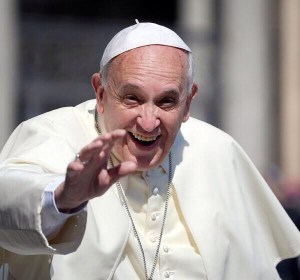
“In the mystery of the Incarnation there is also an aspect that is connected to human freedom. God has pitched his tent among us and we must hasten to receive the grace that he offers us” Pope Francis, January 05, 2014

He is with us in the real world, as Pope Francis says; “in this real world.” He doesn’t come to an idyllic world as if this (pointing to the crib) is just sentiment but nothing to do with the real world.

How real do you want it?

There’s the awkwardness of Mary’s pregnancy albeit by Gods direct intervention but who’ll believe that? I’m pregnant Joseph and you’re not the father! Thank you God, you really dropped me in it three!

There’s Joseph’s inevitable confusion, his uncertainty, his pride – think of a man’s pride in this situation, Joseph’s decision to leave Mary. Thank you God, you really dropped me in it there! See how close God’s will is to the edge, always tottering on the brink! God’s will always looks like it can’t possibly succeed.

There’s the long and difficult journey to Bethlehem for a heavily pregnant mother, a distance of 100 or more kilometres, on arrival there’s no suitable accommodation. Thank you God, you really dropped me in it there! Here we find the story of this child’s future life in summary; “foxes have holes but the Son of Man has nowhere to lay his head”… to this day. How have you changed that?

There’s the joy and the supernatural wonder of this night – the lowliness of the shepherds recognizing the Christ-child; haughtiness would never have been able to recognise the Christ-child – followed by the terror of the flight into Egypt to escape Herod’s slaughter of every new born male child. What’s it like for a father or a mother lying awake under a night sky knowing that at any moment a soldier full of murderous intent might find them? Thank you God, you really dropped me in it there! Tonight “there will be people from Nigeria to Iraq who take their life into their hands by going to midnight Mass.” (Fraser Nelson)

Not to an idyllic world but to this world, cruel, violent, craving power, divided but also good. God is with us in this world and because of this night (day) God has a face, a personable identity.

My second point tonight:

Many – far too many Catholics, possibly a majority – do not have a strong sense that God is with us even though he’s done this (pointing to the crib). Why?

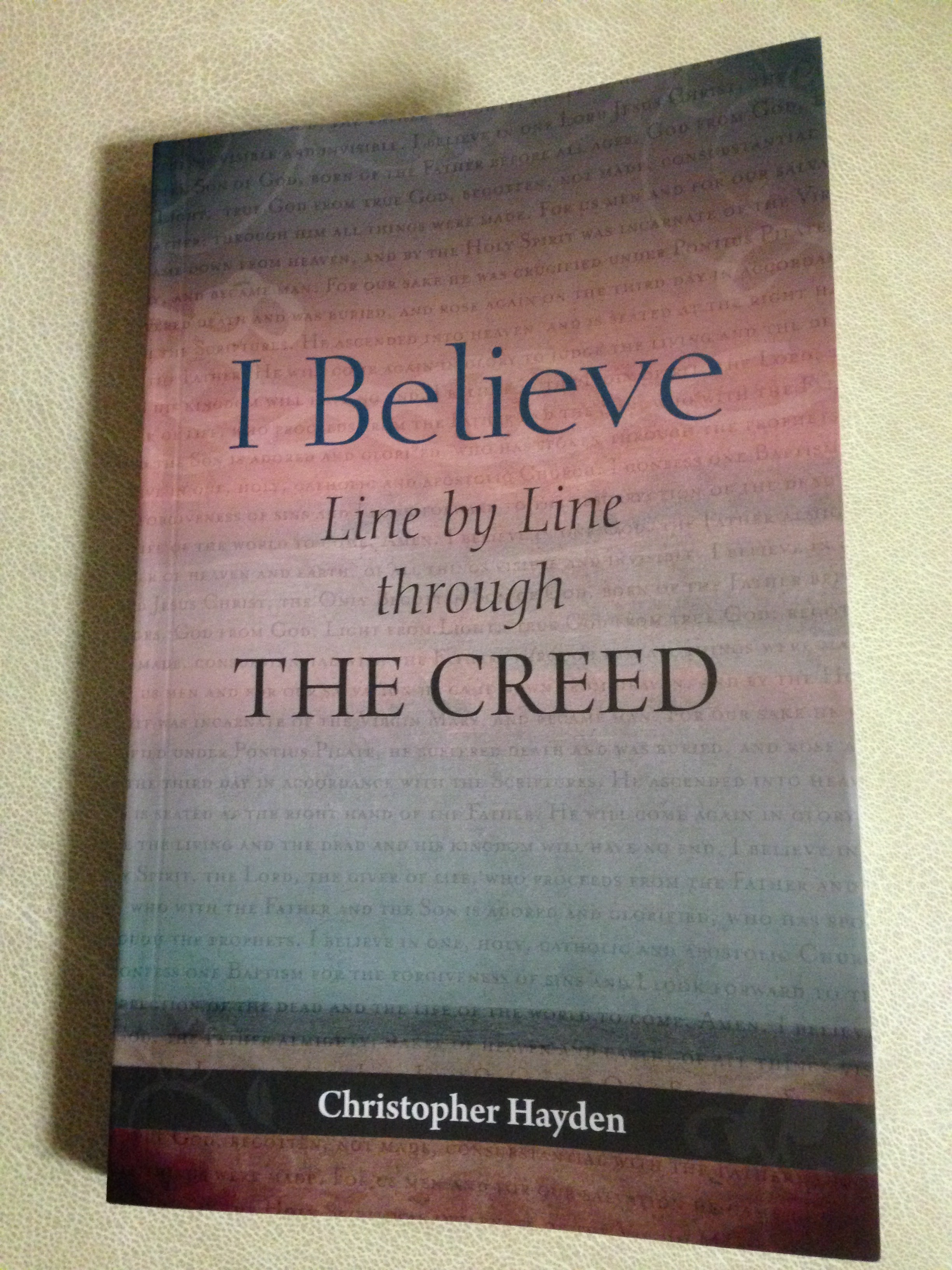
This is an excellent book, written by Fr. Chris Hayden. It's one of the books I'm recommending for the average lay wo/man in 2015. It's available from Veritas here http://www.veritasbooksonline.com/i-believe-line-by-line-through-the-creed.html or from Amazon here http://www.amazon.co.uk/Believe-Line-Through-Creed/dp/1847305687/ref=sr_1_1?ie=UTF8&qid=1420366606&sr=8-1&keywords=Christopher+Hayden

This is an excellent book, written by Fr. Chris Hayden. It’s one of the books I’m recommending for the average lay wo/man in 2015. It’s available from Veritas here http://www.veritasbooksonline.com/i-believe-line-by-line-through-the-creed.html or from Amazon here http://www.amazon.co.uk/Believe-Line-Through-Creed/dp/1847305687/ref=sr_1_1?ie=UTF8&qid=1420366606&sr=8-1&keywords=Christopher+Hayden

A poor family are taking the boat to the US. They can afford to bring nothing more than bread and cheese for the journey and a little savings. About 3 days into the journey one of the children complains: Daddy, I can’t eat any more cheese, if I eat any more cheese I think I’m going to die. So the father gives the child a small coin from the family savings telling the child to go and buy an ice cream. About an hour later the child returns, excited, and tells the father: Daddy, I’ve had three ice creams and a dinner. Here’s your coin back, the food is included in the price of the tickets! (Peter Kreeft)

Many of us have tried to live on the spiritual equivalent of a diet of “cheese sandwiches” (Fr. Chris Hayden) not realizing that there’s so much more on offer.

This is the single biggest problem in the Church.

It’s the real reason – the reason behind all the other reasons – why people leave the Church. Think about it; how long will any of us last on a diet of cheese sandwiches? How long before you’re fed up? How long before you’ll walk away?

There’s a lunacy to all this that’s seldom named, but we’ll name it tonight; God has come bounding across the desert, the valleys, the mountains, the great divide between God and man – God is with us – and we’re bored, fed up, we think that this child will somehow place limits on us, somehow diminish our freedom, or we think that it’s not about us – you – that he’s not looking for you? Ah, come on!

To all of you making your annual visit I ask you to stare hard at this child and ask yourself why he came? And if you want it, if you’ve got the desire, I think Fr. Byrne and I can lead you to much more than cheese sandwiches. As Dell-boy would say; we guarantee you a full steak meal!

Tonight, and during the Christmas season I invite you to look again, visit the crib, take a good hard look and ask; why? Then ask yourself; what’s it got to do with me? I doubt he intended you to exclude yourself. Certainly not. As Pope Francis says, he intended us to use our freedom to “hasten to receive the grace that he offers us.”
The Holy Family: Nothing is more important than the family

The family is the foundation of society. It’s the basic unit of society – the most important. It’s the place where we learn how to love or more generally, how to be in the world.

The launching pad from which we’re all sprung.

The bow from which the arrow is fired.

It’s so important that it’s how God became flesh – in a family.

“As the family goes, so goes the nation and so goes the whole world in which we live.” John Paul II

“As the family goes, so goes the nation and so goes the whole world in which we live.” John Paul II

Everything – economics, markets, Governments, States – must be made to serve the family.

The family begins in the love of a man and a woman, although that’s now being questioned.

To love another person is to seek that person’s good, it’s to desire that the other person becomes the best version of him/herself, to desire that the other person becomes the person that God intended him/her to be. This is the work of the family.

Nothing is as difficult as love. I’m serious. Primarily because we reduce it to one of it’s constituent parts, namely physical attraction. So let’s throw love around a little. What is it?

Actually to love is to become a moral person. Love is not just attraction. Try living in love without faithfulness. It’ll tear your heart out. Suddenly love also means faithfulness. What’s love without justice? I love you, but I’ll walk all over you! Suddenly, love includes justice, acting justly. What’s love without self-control? I’m angry so I’ll knock your head off! Suddenly, love now includes self-control. What about trust, patience, gentleness, kindness, goodness, truthfulness (honesty and personal integrity), forgiveness? Love is made of many different parts – virtues. Relationships don’t just fail, they fail because people don’t grow in virtue. To love is to become a moral person. A child, tomorrow‘s adult learns the art of love in the family.

In the family we learn to say ‘yes’ or ‘no’ and mean it, we learn to say ‘please’ or as Pope Francis says we learn to ask “may I”, it’s where we learn to say ‘thank you’, to say ‘I’m sorry’ or ‘forgive me’, where we learn respect for ourselves and for other people, for other people’s property. It’s where we learn to be a father or a mother. It’s where we learn to be moral people – before and above everything else we are moral people; our primary identity – moral people who can choose. Unless we’re moral people we’ll wreck everything! This is what distinguishes us from the animals, this is what makes us human.

Where these qualities are in short supply the family might survive outwardly, but inwardly it’s already a broken family and the people involved may be broken, they may not be whole within and they may reproduce the brokenness wherever they go, not always, but very often, not always because although at great personal cost we can still choose to be otherwise.

Nonetheless, as the family goes so will society go.

Nothing is more important than the family. We’ve got to get this right, and everything must be made to serve the family.

Fourth Sunday of Advent (B) Stepping into God’s time.

Advent is the beginning of the Church year because it’s the beginning of God’s time.

Pope Francis says that when we step into God’s time we stop looking at our watches.IMG_1078

As long as we’re in our own time we’re always looking at our watches!

In these final days of advent use Mary and Joseph to step into Gods time. Put yourself in their shoes, first Mary’s then Joseph’s.

Pope Francis says that in these last days of Advent like Mary we should say to the baby Jesus in the womb; “Come!  I want to see your face” – and really mean it.

I love this book - absolutely beautiful. It would make a beautiful present for a committed Catholic. I've drawn on it extensively for this piece. I bought it on the USCCB website (United States Conference of Catholic Bishops) but it's also available from amazon.com here http://www.amazon.com/Pope-Francis-Guide-English-Spanish/dp/1601374984/ref=sr_1_1?ie=UTF8&qid=1420368580&sr=8-1&keywords=Pope+Francis+In+Gods+Time

I love this book – absolutely beautiful. It would make a beautiful present for a committed Catholic. I’ve drawn on it extensively for this piece. I bought it on the USCCB website (United States Conference of Catholic Bishops) but it’s also available from amazon.com here http://www.amazon.com/Pope-Francis-Guide-English-Spanish/dp/1601374984/ref=sr_1_1?ie=UTF8&qid=1420368580&sr=8-1&keywords=Pope+Francis+In+Gods+Time

He asks: “Are we watching, waiting, or are we closed? Are we secure in an inn or are we pilgrims?” Life will always bring us back to being a pilgrim. Life is a bridge, never build your house on it!

Joseph, what a lovely man. He clearly loves Mary and has entered the preparatory stages of marriage. But before they come to live together “she was found to be with child…” Disaster! Joseph knows he’s not the father; what’ll he do? What would you do? He does what we’d all do – most likely – he decides to separate, to “divorce her informally.” But there’s kindness in Joseph. He wants to “spare her publicity” – the danger for Mary of course is that if her situation becomes public knowledge she risks being stoned to death. So here’s a man torn between the rigid application of the law and compassion. Joseph’s heart becomes a bridge between the rigid application of the law and compassion – a heart of mercy. Joseph is not just a lovely man, he is like God as manifested in the adult Christ-child.

Pope Francis says that when Joseph was confronted with Mary’s unplanned pregnancy – unplanned at least in human terms – he “is the faithful and just man who chose to believe the Lord rather than listen to the voices of doubt and human pride” – and fear.

Mary and Joseph teach us that life is not about us. The single greatest lesson to be learned in life is that life is not about us. And together with the baby Jesus they teach us that life is not about our children either. They teach us that life is about what God is doing. So don’t spend your life in your own time. Get into God’s time.

Third Sunday of Advent (B) This little Baby is for everybody!

He’s standing among them, unknown to them. They’re up to their eyes in religion and he’s among them… unknown! Brilliant, isn’t it? It could happen to you! Maybe it’s happening all the time!

The third Sunday of Advent is different.

It’s got a different coloured candle on the Advent Wreath, the rose coloured candle.

It’s even got its own name, ‘Gaudete’ or ‘Rejoice Sunday’ – ‘Rejoice’ the liturgy cries; the Lord is near, Christmas is near. Jesus is coming. He crosses the miles… the great divide between God and man. Really he’s the one who fills in the valley, he’s the one who tears down the hills and the mountains that separate man and God. He comes looking for… you. It’s much easier when he’s looking for everybody else. But he’s looking for you. This is personal.

On this day in 2013 Pope Francis had this to say:

“We can always begin again.”

“Someone might say, ‘No, Father, I did so many reprehensible things’ – I am a great sinner. I cannot begin from scratch!”IMG_1082

But Pope Francis is adamant. “God is waiting for you, he is close to you, he loves you, he is merciful, he forgives you, he gives you the strength to begin again from scratch! Everybody!”

“We are able to open our eyes again, to overcome sadness, to strike up a new song. This is true joy, it remains even amid trial, even amid suffering, for it is not a superficial joy because it permeates the depths of the person who entrusts himself to the Lord and confides in him.”

This Christmas, make sure you don’t miss him. Make sure he’s not so close to you… unknown!

Tell you what, I’ll meet you at the crib!

Second Sunday of Advent (B): Our God comes.

Today’s readings are bursting with excited anticipation. I’m sure many of us could do with a bit of that!

While the joyful messenger (First Reading Isaiah 40:1-5,9-11) undoubtedly prefigures John the Baptist (Mark 1;1-8) he (or she!) also represents the call of every Christian. We’re to be like joyful messengers going up on a high mountain (where you can see for miles – kilometres) and we’re to shout with a loud voice. In other words; tell everyone, tell the whole world. Tell them what? Our God comes. This is the joy of Catholicism – God in Jesus has travelled the miles, and continues to travel the miles, that great divide between you and God, me and God. So get ready; prepare a way for the Lord!

The ‘space’ that exists between you and God is like a wilderness – put a way for the Lord in that wilderness.

That space between you and God is like a desert – put a highway for the Lord right there in the desert!

That space is like a valley, fill in the valley!

That space between you and God is like a hill, perhaps even a mountain, tear it down and lay it low!

That space is like a cliff, make it into a plain!

Do it and you’ll see the glory of the Lord, as today’s Entrance Antiphon says “…the Lord will make the glory of his voice heard in the joy of your heart” (Cf. Is 30: 19, 30).

Then you’ll have something to shout about! Indeed, “Shout with a loud voice joyful messenger…”