It was a toxic mix of unbelief and sin that killed Jesus and it is another toxic mix of unbelief and sin that has killed the Catholic church in our time.
The laughing Christ – laughter is the end of a truly Christian death!
But where was Jesus between his death and resurrection, between Good Friday and Easter Sunday? What’s that space like? Can you enter it? Cardinal Ratzinger described this space in terms of solitude – fascinating – because I’m now linking the fear of solitude and the fear of death, but that’s for another day. This time between Good Friday and Easter Sunday is a gestation space… and I believe the Catholic church and most if not all denominations right now, can be likened to that space between dying and rising, and we’re waiting, watching patiently at the tomb. It will come… as sure as dawn follows night. Besides, you can only truly kill what’s not of God.
Secondly, the creed tells us that He descended to hell during the time between Good Friday and Easter Sunday meaning there is nobody beyond his reach – at a price, of course.
Thirdly, morbid applies only to hell, and those who describe even the slightest mention of death as morbid have yet to experience even the tiniest glimpse of Heaven. In fact, when they speak in this way, they unwittingly speak from hell’s perspective!
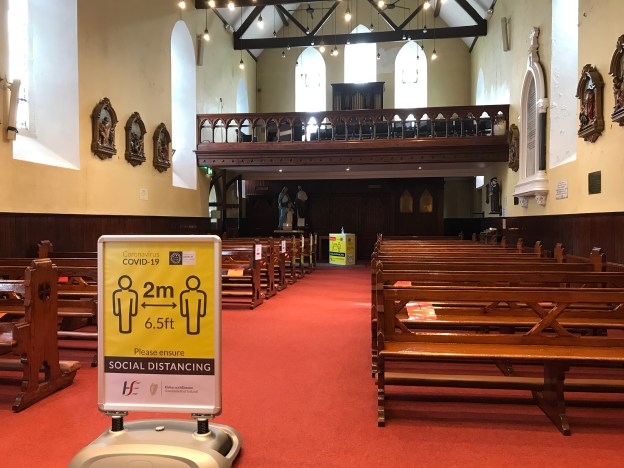
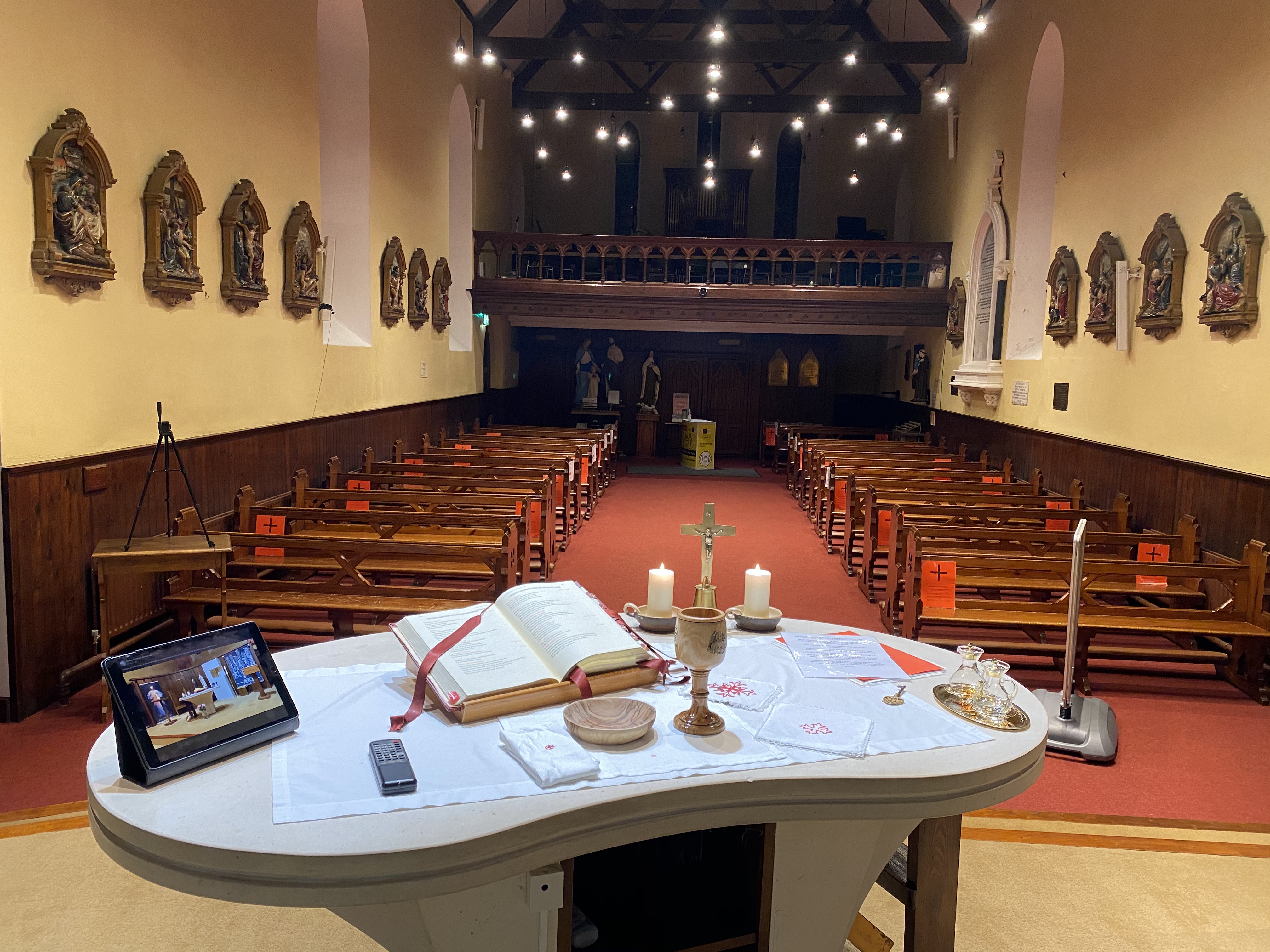
The debate about keeping our churches open for public worship continues to rage in circles, minority circles it must be said. When I tune into the debate there are several scripture passages that spring to mind.
Like so many others I think of Jesus reminder: “Man does not live on bread alone but on every word that comes from the mouth of God.” Matt 4:4. Taking this verse it seems safe to suggest that in the mind of Jesus, his person and his teaching are essential, at least of equal value to the food that we purchase from essential retail. The fundamental problem for Heaven therefore – brought into sharper focus by this pandemic – is that so many people do not consider the person of Jesus and his teaching to be as essential as their visit to the supermarket.
Of course, this is a faith position flowing from my relationship with Jesus Christ and his teaching. Realistically, at this point in salvation history I do not expect Government and its agencies to get this – and I certainly do not expect it to apply to all the people of Ireland. Faith in Jesus Christ and all that flows from faith, that which is often disparagingly referred to as dogma must be found within or it is not found at all. For every piece of dogma there must be a corresponding interior recognition in the depths of human freedom, a moment of transforming spiritual insight. I cannot stress this enough; dogma is found within, and insisting that people abide by a dogma that they have not found within will almost always result in rejection, even hatred. This has been the particular error of Irish Catholicism. A foundational tenet of the Christian faith is that God always respects human freedom. In the realm of God, respect for human freedom – even unto hell – is non-negotiable. As St. Augustine said: “He who created us without our help will not save us without our consent.”
Obviously, my freedom is convinced that Jesus and his teaching are essential. Indeed, I believe that humankind rises and falls according to our relationship with Jesus and his teaching. As Simeon said of the child Jesus: “you see this child, he is destined for the fall and the rising of many in Israel…” Lk 2:34. There is nothing as essential as Jesus Christ and his Gospel and since the Mass is the Body and Blood of Jesus Christ, his very person, I believe that Mass is therefore essential. As Padre Pio once said; “the earth could exist more easily without the sun than without the Holy Sacrifice of the Mass.”
Nonetheless on balance I am inclined to support the moving of worship to online forums in accordance with NEPHET advice. It is important to stress that worship has not been banned and comparisons with penal times do not stand up to critique, no more than the idea that this is persecution; this is so far removed from persecution that it belittles the meaning of the word and the reality of true religious persecution in many parts of the world. Furthermore, for people prohibited from attending Mass all the effects of Holy Communion can be received through spiritual Communion. I do believe that we can gather safely in our Churches – I do not doubt it at all – but by remaining open for worship we might unwittingly facilitate after-worship gatherings that have potential to become super-spreader events. For me, the moral weight drops on the side of caution and online worship until NEPHET advises otherwise.
If our lives have been curtailed, they have been curtailed to teach us, and to prepare us for the future. These are not random meaningless events – these are soul teaching moments – another step toward our common future that is being determined one step at a time by our relationship with Jesus Christ and his teaching. These events might look like obstacles but in truth are stepping stones toward a time when humankind will fully understand that “the lamb will conquer and the woman clothed in the sun will shine her light on everyone.” Seriously do we really think that God is going to be defeated, removed from the face of the earth? The same God who standing before Pilate said: “You would have no power over me… if it had not been given you from above…” Jn 19:11. Why can’t we view the current restrictions in this way? The same God of whom John reminded the people coming for baptism: “God can raise children for Abraham from these stones.” Lk 3:8.
Similarly, those believing we are now seeing the end of the Catholic church in Ireland, or anywhere for that matter – the comment sections on social media are full of such remarks – are a version of those who observing the destruction of Jesus believed they were seeing the end of Him and his movement. It was a toxic mix of unbelief and sin that caused the destruction of Jesus, and it is another toxic mix of unbelief and sin that is causing the destruction of the church in our time, but the destruction of Jesus gave way to the risen Christ and the destruction of the church – or more accurately the destruction of all that is not of God in the church in our time – will give way to a risen Church.
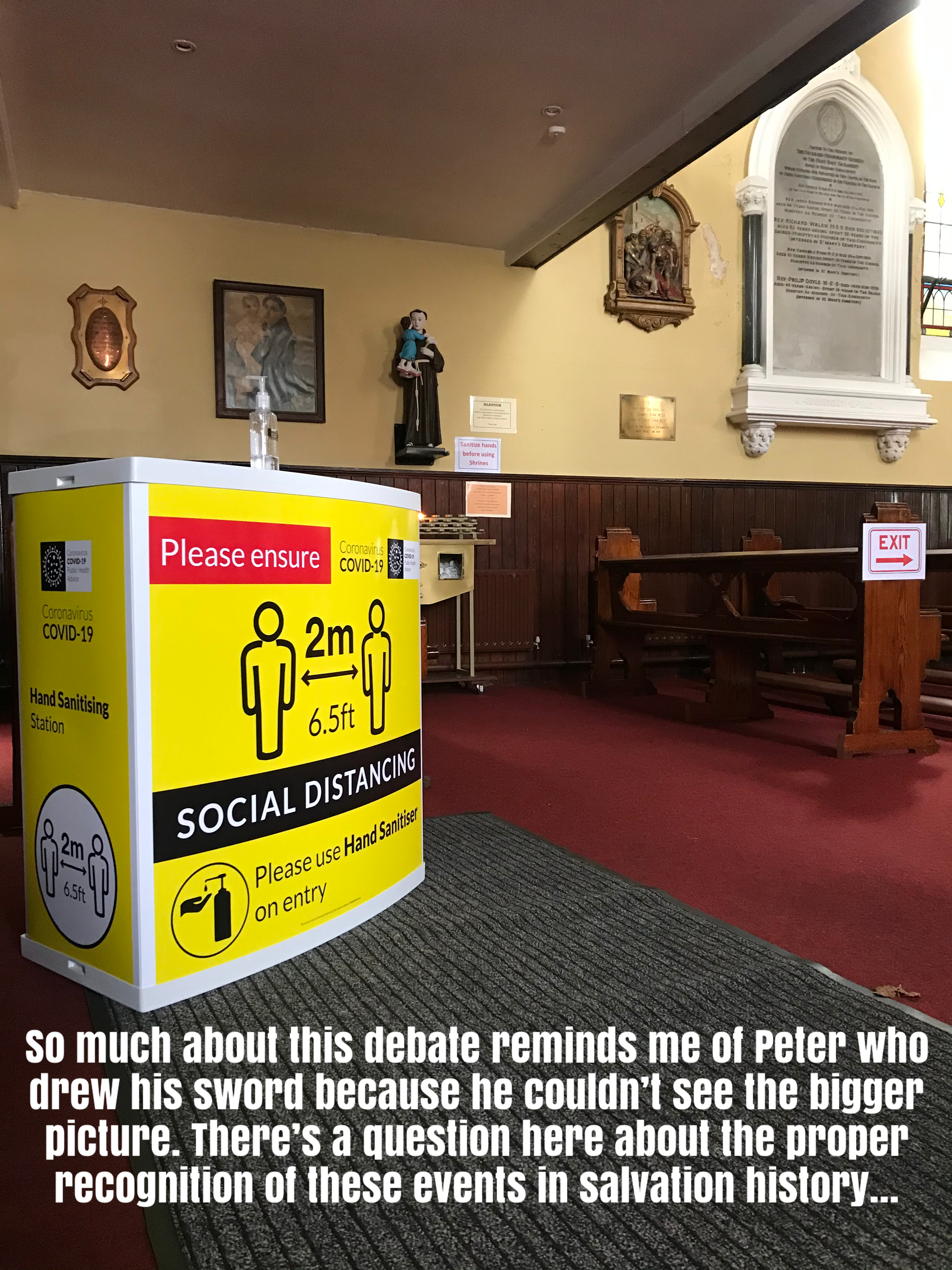
So much about this debate reminds me of Peter who drew his sword to defend Jesus and his belief in Jesus because he could not see the bigger picture. Jn 18:20. There is a question here about the proper recognition of these events in salvation history, about our recognition that the civil power always functions unwittingly in the plan of salvation. Peter has an excuse for not seeing the bigger picture because the seminal action of God that we call the resurrection had not yet happened, but what is our excuse? That, as Ronald Rolheiser observed, our awareness of God and God’s plan borders on agnosticism?
God is almighty, totally in control, suffering, enduring, correcting, leading, even allowing restrictions on the public celebration of Mass, bringing human freedom to value Jesus and his teaching as much as the food purchased from essential retail, or he is not God at all. God’s victory is certain, but the victory is nothing more than the turning of hearts and minds to God. Even allowing for an act of God – an act that must respect human freedom – this is not likely to be an easy journey!
This journey is as certain as Jesus’ declaration that “till heaven and earth disappear not one dot, not one little stroke, shall disappear from the law until it’s purpose is achieved.” Matt:5:18. The only real unknowns are the exact contours of our journey toward valuing Jesus and his teaching. Make no mistake, this is our common future. This is a journey that will slowly – and somewhat painfully – shatter humankind’s propensity toward unbelief. Of course, some will always resist. It is going to be a seismic struggle between Heaven and hell, belief and unbelief, incarnate in history, possibly involving the persecution of religious practice for a time – are we not currently being prepared? – and undoubtedly paschal in nature. As it unfolds the proper role of the church will become evident; our primary role is not about putting the kingdom here and there – remember the lamb will conquer and is conquering – but to act as a bridge, for sure a compromised bridge, but a risen bridge capable of providing difficult passage for human freedom to reach the place where Jesus and his teaching is valued as much as the food purchased from supermarkets. Can we imagine a struggling and bewildered humanity in the future, including future Irish leaders, looking to the Catholic church – albeit a risen Church – for help and direction? No? Like Peter we are in for an unforeseen and unexpected fulfillment. We must let humanity walk this walk, we must respect our place in salvation history knowing that God is far from finished with us.
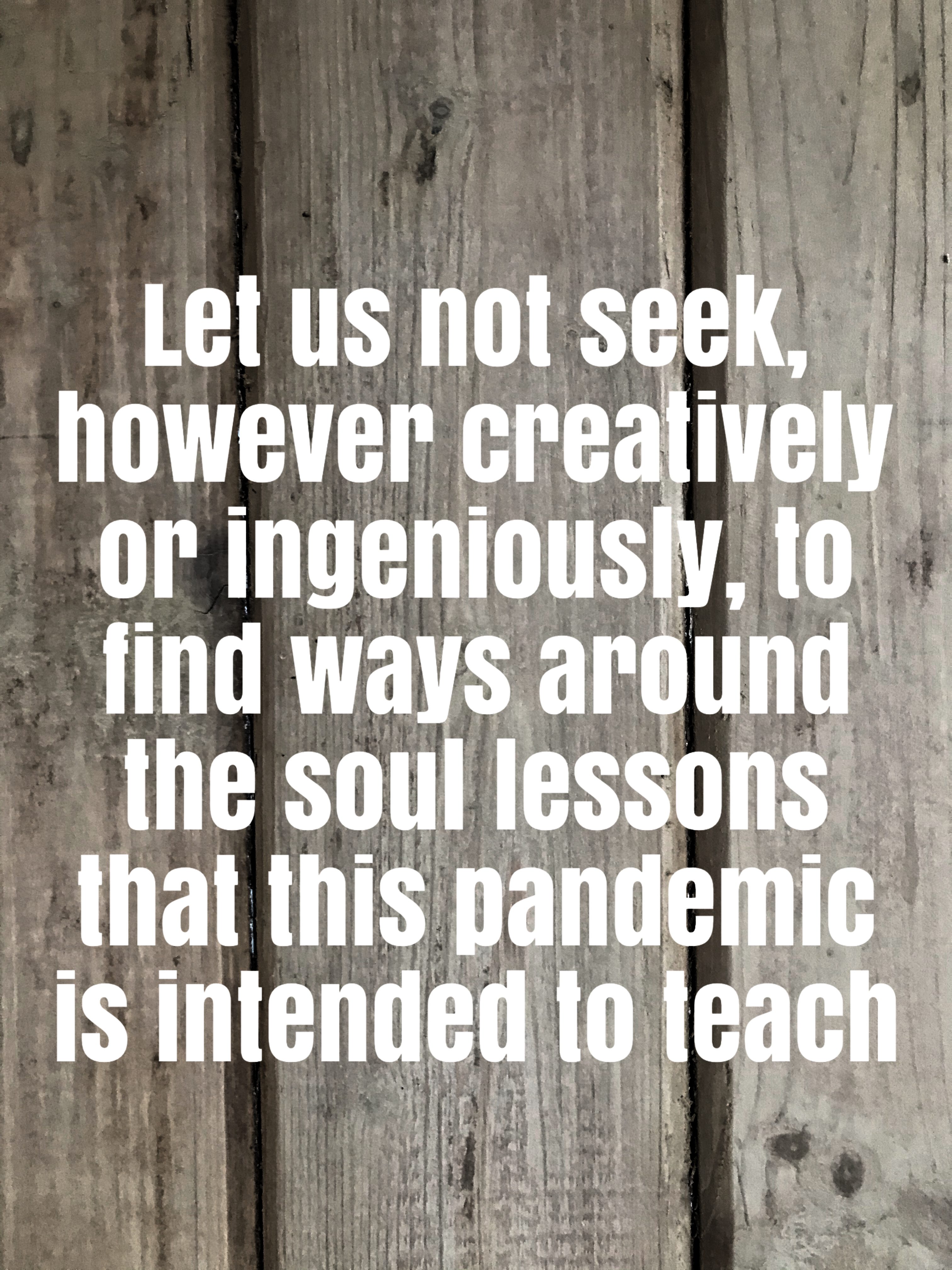
“Your kingdom come” we say in prayer – even as I write, even as you read, it is happening, right now, right here. Let us not seek however creatively or ingeniously, but very naively, to find ways around the soul lessons that this pandemic is intended to teach.
In my next blog I will try to tease out the soul lessons that come packed inside the current pandemic.
Jesus compares good people to wheat and bad people to weeds.
The kingdom is like a field of weeds and wheat. The kingdom of God no less. We’re hardly able to cope with the sinfulness of the Church!
Where is this kingdom? It’s already here, it’s in the Church, the Church that contains, and always will contain saint and sinner.
I have a choice; do I give power to the sinner or to the saint? The weeds or the wheat? “Look not on our sins but on the faith of your Church…” we pray in every Mass.
You’d think that Jesus didn’t teach the parable of the weeds and wheat.
At times you’d be forgiven for thinking that he didn’t teach at all, never said a word.
You’d think he wasn’t betrayed by somebody who shared his table.
You’d think he didn’t die between two thieves.
You’d think he didn’t describe the kingdom for us.
And yet, after all Jesus teaching, we still expect the Church to be different?
You’d think that the incarnation never happened at all!
That’s my point – many people seem to attempt to believe without Jesus Christ and his teaching!
Is it any wonder that so many fall away?
You’d never know that He told us it was going to be like this.
Of course weeds are dangerous if they get out of control.
But the best way to deal with weeds is a reminder that in the end there’s judgment. Dare I say it: Hell! The weeds are thrown on the fire and burnt.
How can there be Mercy without Justice? Justice is the very precondition of Mercy. Mercy is undoubtedly God’s greatest attribute but that presupposes Justice.
Do we really think that God bestows Mercy forcibly? Did Jesus?
God will never – never – superimpose Godself or his Mercy on our freedom.
We must use our freedom to receive Mercy, that’s its purpose.
Divine Justice just is, it’s the default position, but Mercy is our choice, always.
But every time I read the parable of the sower I’m struck by its reach. Is there a reason advanced for unbelief that’s not included in the parable?
Jesus compares people who hear the word to seed that falls on the edge of a path.
The seed of the word is sown in the heart but there’s no understanding. Where there is no understanding, abandonment follows.
The heart is simply not receptive – receptivity is the precondition of understanding – the heart is not open, and entry through anything that’s closed solidly is difficult. The word simply bounces off non-receptive hard objects and falls away.
Next, Jesus compares people who hear his teaching to the seed that falls on patches of rock. It lacks both rich soil and deep roots.
When confronted with human suffering and human failure including outrageous scandal – scorching sun – the faith of some people withers because it’s not deeply rooted in the rich soil that is Jesus Christ.
Scorching and withering – apt descriptions of human suffering and failure.
That objections to God using this very argument can attract millions of views on YouTube suggests that many have not taken Jesus and his teaching seriously. The God that many refuse to believe in is not the God found in the teaching of Jesus Christ. They dismiss a God unrelated to Jesus Christ!
Next, Jesus compares people who hear the word to seed falling in thorns; falling in the midst of the worries of this world and the lure of riches the seed is choked to death! A strong image, mind. Choked, and common parlance adds “the living daylights out of!”
It’s dramatic, but for most people the choking happens unconsciously. It’s simply that other stuff – the cares of this world (interests that are good and wholesome in themselves) and the pursuit of wealth – take our hearts. For many the interests become false gods.
Is there a source of unbelief that’s not covered in this parable?
It seems that many people attempt to believe without Jesus Christ and his teaching which means they end up struggling to believe at all.
Like Fatima, at Medugorje Our Lady has entrusted secrets to the 6 visionaries; each visionary is to receive 10 secrets.
As far as I know 3 of the visionaries have already received the 10 secrets; 3 have received 9 of the 10.
When all ten have received the ten secrets, the secrets will start to unfold in our life experience.
One of the visionaries, Mirjana, has been instructed to reveal each secret to the priest of her choice – Fr. Peter – and he is to reveal it to the world shortly before it happens (starts to unfold). All 10 secrets will be revealed in this way – before each happens.
This suggests that the secrets will unfold in Mirjana’s life-time, which means their unfolding is imminent because Mirjana is now 55 – or thereabouts – and she can’t live forever!
This is supported by the fact that three of the visionaries are one secret each short of receiving all ten secrets.
What do we know about the secrets?
Like Fatima, they’re highly likely to be the broad outline of the future of the world, and at the same time, they’re the working out of Our Lady’s victory in human affairs – Our Lady is reported as saying that she will finish in Medugorje what she started in Fatima. In the end my Immaculate Heart will triumph. Triumph suggests a struggle.
Our Lady has permitted the visionaries to reveal that the third secret is a visible and permanent sign on the hill in Medugorje – a sign that will lead many to belief and to conversion.
It will mark a radical and dramatic return to belief, possibly to the Church, to Mass, and to the Sacraments. It’s possible it’ll look like the spiritual life of Medugorje but on a world-wide scale.
We also know that the seventh secret troubled the children greatly and that they repeatedly asked Our Lady about the possibility of it being softened. Our Lady’s response was always the same – pray! We now know that it has been lessened but Our Lady also told the children to never ask about it again saying that God’s Justice was already offended enough!
We can say with some confidence that the unfolding of the 10 secrets will be the working out of Our Lady’s victory in human affairs, in the flesh and blood of human beings, in our history, just as the prophecies made in Fatima became the lived experience of a number of generations.
But, the further we are from God, the more difficult will our journey be… which is why Our Lady has been repeatedly asking us to pray and fast now, that our path and her victory may be eased.
Every moment is in God’s hands, but it’s texture and substance is determined by us.
In this moment I want to draw your attention to Medugorje and to say simply but forcefully; pay attention to Medugorje.
Pay attention because it marks out the future of the world, it paints a picture of our common future.
It does so in much the same way as Fatima did, in broad strokes. Very broad strokes, and we fill in the finer details.
Fatima painted a picture of the world over a period of 100 years – from 1917 through to the millennium and the following years.
In Fatima Our Lady entrusted 3 secrets to the children.
Firstly, and perhaps many will find it very odd, Our Lady showed the children a vision of hell. The vision confirmed that there is ultimate Justice. I’ll return to this in another blog.
Secondly, Our Lady warned of a future war – World War II – that would break out “if people do not stop offending God” and of Russia spreading error – the error is not so much Communism as the unbelief that goes with it.
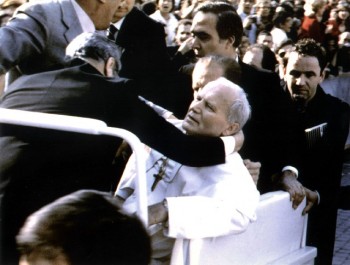
Thirdly, the vision of a man dressed in white (the children understood it was a future Pope) climbing a mountain, on the way he passes through a City in ruins, and reaching a Cross, he’s shot.
World War II unfolded with devastating consequences (more than 60 million people perished in World War II).
Unbelief – atheism – has a very strong foothold.
The City in ruins is the Church and the man who is shot is Pope John Paul II.
With the benefit of hindsight we can see that Fatima, which is to say Heaven prophesied a broad picture of the world and the Church we’ve become familiar with, but if you listen to our self-talk, even the self-talk of believers, we speak as if we never heard a word of this. Quite simply, we haven’t been paying attention.
But Fatima also prophesied that “in the end” the Immaculate Heart will triumph.
As John Paul II recovered he asked for the Fatima documents to be brought to his hospital bed.
When he fully recovered he had the bullet that almost killed him encased in the crown of the statue of Our Lady in Fatima.
Shortly after John Paul II was shot the apparitions began in Medugorje.
Just as Fatima painted a broad picture of the past 100 years so Medugorje is now painting a picture of the next 50-100 years.
Medugorje provides the broad contours of the triumph of the Immaculate Heart.
Pay attention – it’s our common future.
In my next blog I’ll consider the significance of the Medugorje secrets.
In the fifteenth year of Tiberius Caesar’s reign… that’s like saying; in the fifteenth year of Michael D. Higgins presidency. I know that can’t happen but just go with the argument!
When Pontius Pilate was governor of Judea… equates with when Enda Kenny was Taoiseach.
When Herod was tetrarch of Galilee… which broadly equates with when Tony Dempsey was Chairman of Wexford County Council.
During the pontificate of Annas and Caiaphas… when Denis Brennan was bishop of Ferns
So the events leading up to the birth of the Christ-child are put in a political ‘State’ context, but also in a religious ‘Church’ context which itself gives the events a definite date.
But watch what happens next. The Word of God came not to any of the political-State or religious-Church agencies but to John son of Zechariah (again a particular John) in the wilderness!
How God loves to do that, to by-pass the establishment! It’s how he manifests his greatness, his absolute sovereignty. It’s the laughter of God. God loves to surprise us.
The Word issued through John has two parts.
Firstly, it’s a call to repentance, to prepare our hearts. This part belongs to us. We must do it. It’s called Advent.
Secondly, it announces that something will be accomplished, the distance between God and man (that most of us perceive intuitively) described as valleys, mountains, hills, winding roads, rough paths will be flattened and straightened because God will leave Heaven and become human child.
The implication here is that the absence of God which so many experience is more our doing than God’s.
The final lines tell us that in this child all mankind will see the salvation of God. Huge! In this child, not every child but this particular child, not wealth, not a career, not your partner, husband, wife, lover… In this child resides the salvation of God – and the salvation of God must also mean human salvation.
So, as the Word of God invites us to prepare our hearts for the Child’s arrival I ask you a question, one that I’m asking myself too: In what have you placed your salvation?
Remember, we choose our joys and our sorrows long before we experience them. Gibran.
Before we begin… a few pointers to help you get the most from our celebration of Good Friday.
Firstly, it’s not just the person of Jesus that’s rejected, it is God’s truth! He is Truth in human flesh. It’s also Truth – absolute Truth – that’s rejected.
Secondly, I’d like you to notice in the opening lines of the Gospel that when they go to arrest Jesus they don’t know who they’re looking for. He’s not a big name in society!
Thirdly, I’d like you to notice that the State and the religious leaders do their best to get rid of Jesus, but in their best efforts to get rid of him they’re actually fulfilling God’s will! The wisdom of man is foolishness to God!
But most of all I’d like you to notice that Jesus suffering is redemptive. If you redeem something you give something away to get something back. God gave his Son to get us back… “to ransom a slave you gave away your son!” (Easter Proclamation: Exsultet).
This is the Mercy of God. Mercy is the heart of God and it’s the heart of the Gospel. Mercy means that there is ultimate Justice! For only if Justice has been transgressed can anyone be merciful. To put it in legal terms; only if a ‘law’ has been broken can anyone be merciful. So if God is merciful then there is an absolute law, God’s law, by which we are all judged.
If we think of what it means to be merciful ourselves we know that to be merciful costs. It’s difficult. Perhaps some of us are so hurt that we cannot be merciful, and if we are to be merciful it will be like crucifixion. There you have it… there you have it in your own experience; the seeds of the eternal. Therefore if God is to be merciful, God must suffer. Only if we live in a meaningless universe can it be otherwise – only in a world where words are empty and meaningless, meaning only whatever we want them to mean at any given time. But unknown to ourselves our words are approximations of eternity.
Here’s a way to get inside God’s Mercy. He died without sin for you. He died without sin on your behalf. Therefore you will die without sin if you allow Jesus Christ to ‘wash’ you. If he died without sin for you, that means you’ve done it! Put it this way: If you owe a debt and can’t pay, what happens? Now supposing someone else pays the debt on your behalf, what happens? You’re free! Behold the lamb of God who takes away the sins of the world? How does he take them away? By taking them on himself.
Here’s an exercise for those who struggle with guilt and at the same time a lesson for those who think that there’s no sin at all – two extremes to be avoided, everything is a sin (broadly equates with the past) and nothing is a sin (broadly equates with the present): Focus on the figure of Christ crucified on the Cross… Now imagine him calling your name… “Paddy, Paul – whatever your name – I did not die on the Cross for you to bear the burden of your sin.”
Jesus is God’s truth in the flesh, in human form. He’s thinking, talking and walking absolute truth!
As a matter of interest what part of this truth needs updating? What do you think?
God’s truth is unwelcome, it’s not wanted, they’ll slap it, punch it, kick it, spit on it, make fun of it, and eventually murder it.
Interestingly it’s an unlikely marriage of religious and civil-political authority that murders God’s truth. We need to be careful that we’re not doing the same!
Remarkably in the face of this violence he’ll remain silent: “But to Pilate’s amazement Jesus made no further reply.” The silence is born of absolute truth. Jesus’ silence in the face of Pilate’s questioning speaks loudly of something greater than death, indeed life itself. This is a truth that’s more than capable of defending itself. We can kick it this way and that way, murder it, but it’ll never go away. Put it down and it’ll pop back up!
This is why those who suggest that the Church will die out are spiritually naive. The Church is being pushed out to the margins, but she’s just living the great themes of salvation history, she’s being purified by her Master, same old, same old. She’ll have her time in the desert and like Christ she’ll return, trained for battle. Besides, everything about Jesus Christ points to human failure, but it is always human failure into ultimate victory.
As for Pilate? Well, Pilate does what every political leader will do whenever and wherever possible; he placates the crowd. It’ll improve the chances of holding on to political power! But where will Pilate go in the end?
As for the crowd, we can hardly but notice the stark contrast between ‘Hosanna in the highest heaven’ on Palm Sunday and ‘crucify him, crucify him” on Good Friday although it’s something of a false contrast because they’re probably two very different crowds – disciples and friends on Palm Sunday but seething enemies on Good Friday. Nonetheless crowds are always fickle. If you don’t believe me ask yourself why a drinks company will spend €4m on a TV advert?
Here’s an interesting detail about Christ’s passion; we’ve got God’s truth in the flesh, we’ve got the mass of ordinary people, the electorate so to speak, we’ve got the religious leaders, we’ve got political and civil leaders – the same essential elements that we’ve got now – and still the one thing that’s sure to be the casualty in this mix is Gods truth!
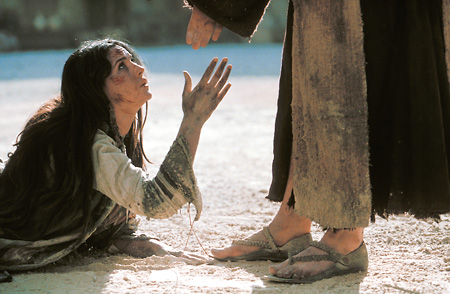
Ponder the effect Jesus words and actions had on this woman “caught in the very act of committing adultery…”
She’ll love him, madly. She’ll be crazy about him and dare anybody say a bad word about him in her presence, she’ll defend him, fight for him, tell others about him, speak so positively about him that it’ll be infectious. She’ll give everything for him!
This is what makes a disciple, this concrete experience of the love but particularly the mercy of Jesus Christ.
Now, let’s consider the opposite: What would Jesus have effected in this woman if he’d joined in condemning her?
See the difference?
It’s easy to understand Pope Francis emphasis on mercy, isn’t it?



 paddybanville's Blog