
Mission Sunday: The answer to confusion is spiritual growth.

The answer to confusion is spiritual growth.

There’s no panic when we’re standing in the light of God.

The Church is not going to die out. That’s nonsense. The Church of the future will be smaller but it’ll be made up of men and women to whom the Good News has come “not only as words, but as the Holy Spirit and as utter conviction” (Second Reading).

When I was a teenager I’d go to Mass with friends. My parents were delighted that I was going to Mass. What they didn’t realize was that the only reason I was going to Mass was because afterwards I met my girlfriend there! With my friends we’d stand at the back of the Church with much older men. The older men would go absolutely ballistic if Mass was longer than 30 minutes; the shorter the better. After Mass the older men would stand talking at the Church gate while we’d be hanging out. We often hung out for an hour or more and the older men would be still standing at the gate talking. It used to amaze us and we were only chaps!

That’s what’s dying out, only that! It’s dying out because there’s nothing of substance there. Actually we think it’s dying out but in fact what’s happening is that God is sifting. If we’ve been alive at all to the Gospels on recent Sundays we’d know that when we don’t bear fruit, God takes the kingdom from us and gives it to people who will produce its fruit. That’s all that’s happening.

The mission of the Church is not self-serving. The mission of the Church is the salvation of the world. It looks outward. The salvation of the world means nothing more than the well-being of the world. This is both spiritual and material well-being. Indeed, it’s material well-being because it’s first spiritual well-being. The men on the Mission Team years ago would have described it as temporal and eternal well-being. In the great places of Marian apparition our Lady calls this well-being ‘peace’.

If religion is true to Christ, in our case Catholicism, it is by its very nature missionary, it’s moving out towards the world. Anyone who has put a toe in the spiritual world knows this! Only a person who has never entered the kingdom of God thinks that Catholicism should be private. Thinking that Catholicism should be private is the spiritual equivalent of denying the laws of gravity in the physical world! It’s a sure indication that we haven’t entered the kingdom God.

Think of it like this; God reached out of himself in Jesus, Jesus reached out and captures others – disciples – and some are made apostles. What’s doing the capturing can’t be seen – we can see it only in its fruits – and I can’t give it to you, you must receive it from God yourself (although I may have a ‘hand’ in it). It moves outward all the time, capturing… It’s summarized perfectly in Jesus words to Peter; “Follow me and I will make you fishers of men”.

Confused by the Synod? The answer to confusion is spiritual growth.

Confused by the Synod? The answer to confusion is spiritual growth.

It is worth noting too the kind of images Jesus uses. A fisherman doesn’t capture every fish in the sea. Some of the fish he catches he’ll throw back… useless! The kingdom of God is not an all-inclusive utopia! There’s a door, a way in. Think of the guy in last Sunday’s Gospel; he gets inside the wedding feast but gets thrown out because he’s not wearing a wedding garment.

The mission of the Church is not about seats and lights; it’s about spiritual growth. In times like ours, when there’s much confusion in the Church, about the Church, about God and Jesus and just about everything else, the answer is always spiritual growth. It’s the mission of the Church and it’ll clear up all our confusion.

Click on the link below to check out Joseph Ratzinger’s prophecy about the future of the Catholic Church written more than 40 years ago – long before he would become Benedict XVI:
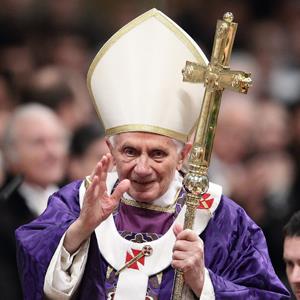
http://vaticaninsider.lastampa.it/en/the-vatican/detail/articolo/papa-el-papa-pope-benedetto-xvi-benedict-xvi-benedicto-xvi-22434/

Twenty-eight Sunday: Grace comes before inclusion; a spiritual law as sure as any physical law.

Here in Matthew 22:1-14 God is a king who gives a feast for his son’s wedding. Think about Jesus’ use of a feast to describe the kingdom of God.

His son’s wedding is every effort made by God to rule the human heart but particularly the incarnation, the birth of Jesus Christ. When God rules the human heart the heart experiences it as a feast.

The king sends his servants to call those invited to the wedding feast (the feast being the rule of God over the human heart). The servants are the men and women we read about in the Old Testament, through to Jesus himself, the apostles, the New Testament, up to every person – you and I, priest, parent, teacher – anybody who invites others to God right up to this October day 2014.

Who is invited? The Jews were first but in refusing the invitation some who were first became last (it could happen to you!) but those who did accept entered the wedding feast. Then pagans skipped the queue and entered the feast, the last becoming first. In our day the invitation has been obscured, people no longer experience Baptism, First Communion, Confirmation, indeed Catholicism generally, as an invitation to a feast. But that’s what it is, an invitation to a wedding feast, the marriage of God and man in an individual soul and in a people, the Church; sealed in the Eucharist. Our religion should be experienced as a feast (or at least in terms of a feast) – that so many do not experience religion as a feast is nothing new. It’s the reason Jesus told parables like this!

Every Catholic who no longer practices is to some degree unwittingly refusing an invitation to the feast. But there are nuances around the invitation; some accept the invitation but in reality it’s only an outward show. They practice religion outwardly but there’s nothing inside, no joy, no feast!

It’s most interesting to note the excuses given by those invited; they’re not interested. So simple isn’t it? One has a farm, another has a business; these are important things but still keep people from the feast. Others attempt to get rid of those issuing the invitations; the Church has no place in modern society, squeeze it out! It’s so 2014 isn’t it? Yet it’s a teaching that’s 2,000 years old. It’s still valid because it’s unveiling spiritual truths.

So like the vineyard owner in last week’s Gospel the king then turns to others – his own are refusing! He instructs his servants to go out “to the crossroads in the town and invite everyone you can find to the wedding” and the wedding hall is full, but when the king notices one man who was not wearing a wedding garment he kicks him out! Not very inclusive, is it?

Here we’re encountering more spiritual truths, basic laws of the spiritual world that simply do not change; no more than physical laws change. If I reduce my food intake and walk 10 kilometres daily, what’ll happen? It’s a basic physical law. The spiritual world has similar laws. One of them is that entry into the kingdom of God produces a ‘new’ man, sin is recognized, often for the first time, and there arises from within a hunger and a thirst to change, a hunger and a thirst that must be satisfied. Grace comes before inclusion! This is a law as sure as any physical law.

It’s impossible to enter the kingdom of God (or more truthfully, the kingdom of God to overtake us) without this process happening to some degree. This process is the wedding garment. The marriage produces a union. Men and women become like God, holy, as God is holy.

Twenty-seventh Sunday: Life is a tenancy; it’s not ours to do with as we please.

Here in Matthew 21:33-43 Jesus summarizes the history of salvation, the history of Gods efforts to rule the human heart. He starts by going back long before he was born of Mary (more than 1500 years before the incarnation). Remarkably in a single parable Jesus summarizes the whole Old Testament and his own life too!

There was a man, a landowner, (the landowner is God – this is a description Jesus loves to use) who planted a vineyard. The vineyard is the faith of the Jewish people, the Jewish religion. He fenced it round (it’s got clear boundaries and what’s inside belongs to God). He digs a wine-press in it and built a tower (it’s ready to produce a harvest, it’s all set-up). Finally he leased it to tenants (the Jewish people and their leaders) and then went abroad (God is in heaven!) But in the vineyard everything is ready to produce new wine. It’s easy to apply the same parable to the Church.

When vintage time draws near God sends some servants to the tenants to collect his produce. These are the great figures that we read about in the Old Testament but when they arrive (when each is born into history) there’s not much produce to collect – they find the people’s religion hasn’t been producing much! Worse still, the tenants are demanding to do as they please with the vineyard, with what doesn’t belong to them!

This happens repeatedly over many generations until finally the vineyard owner (God) sends his own son – the son being Jesus Christ.

But when the tenants see the son, what do they think? They’re moving even further from God, they think; if we can get rid of the Son then we can take over his inheritance. Then we’ll be free to do as we please with the vineyard… we can redefine everything! Isn’t this the struggle that we’re seeing every night on our TV and radio talk shows? Isn’t this really the cry of secularism?

There are some things I’d like you to note.

The human condition is probably best understood as a tenancy, a stewardship. Everything we have is entrusted to us, even life itself. Life truly belongs to God and is entrusted to us only as tenants that we might deliver his produce to him at harvest time. This changes everything.

It means that life is not ours to do with as we please. From this starting point we can begin to glimpse the spiritual foundation of the Church’s moral law, particularly the more contentious teachings. Abortion is morally wrong because life is not ours to do with as we please. So too Euthanasia, likewise human sexuality is not ours to do with as we please. Consider reviewing Humanae Vitae from this starting point, so too the redefinition of marriage. In fact, this starting point changes everything.

Here too we stumble across the Christian understanding of life; my life is not about what I get out of it, it’s about what God gets out of it! Here all the spiritual riches of heaven are hidden.

Finally the question is asked what’ll God eventually do with the tenants? “He will bring those wretches to a wretched end…” and take the vineyard from them and give it to a people who will produce its fruit, comes the reply.

Now here’s a whole new way to interpret life in the Church. Perhaps in our ignorant spiritual bliss we fail to see that it’s not so much that people are leaving the Church or that the Church is dying but that God is taking the kingdom from us and giving it to a people who will produce its fruit. For every crisis in the Church (and perhaps in the State too) is in fact the failure to produce the appropriate fruit in due season.

Besides, what would you do with a vineyard that continually fails to produce a harvest?

Twenty-sixth Sunday: The compassion of God didn’t leave sinners where they were

God is at work because tax collectors (extortionists) and prostitutes are changing their way of life.

Matthew 21:28-32

Jesus compares the people he’s speaking to – the Jewish religious leaders – to a son who says he’ll go and work in his father’s vineyard but then doesn’t go. Jesus accuses them of partaking in religion but in a way that doesn’t lead them into the kingdom of God (the kingdom of God is nothing more than God ruling your heart).

So here Jesus reveals the purpose of religion; that our hearts are ruled by God. This is the most important detail about every person’s existence; that each enters the kingdom of God.

On the other hand Jesus compares the tax collectors and prostitutes to a son who says to his father; “no, I will not go and work in your vineyard” but afterwards thinks better of it and goes, and the proof is clear for the Jewish religious leaders to see – the very public sinners were changing their lives; Zacchaeus declares to Jesus that he’ll pay back those he’s cheated four times the amount (Luke 19:8) and the woman “who had a bad name” sat weeping at his feet before kissing and anointing them with oil (Luke 7:36-38).

Jesus says this alone should have been enough to convince the Jewish leaders that God was working through him and indeed through John.

Here Jesus gives us the ultimate test to establish if God is present or not in a person’s life – “you will be able to tell them (true disciples) by their fruits” (Matthew 7:16). Where God is present certain types of behaviour follow, where God is not present other types of behaviour follow. But who decides what’s in and what’s out?

The present generation has great difficulty with some of this and wants to change it – much of it a sure sign of living outside the kingdom. Changing this is the spiritual equivalent of changing the laws of physics! It’s impossible.

When a man (or woman) begins to enter Gods kingdom (remember the definition – God ruling our hearts) he discovers the reality of sin, he doesn’t need convincing, more importantly his own sin begins to bother him, and if he continues to make his way into Gods kingdom he will change and be changed. It’s actually entry into the kingdom of God that decides what’s in and what’s out. The more you enter the more the Catechism makes sense.

This is what happened to the tax collectors and prostitutes. The compassion of God didn’t leave them where they were – and it didn’t want to leave the religious leaders where they were either. Too often today people understand the compassion of God to mean the acceptance of sin!

The compassion of God is grace or graces that change us inside (interior) and as we are changed inside we are changed outside (exterior) – our behaviour changes from the inside out. It’s precisely because we’re becoming a new person that our lifestyle choices change.

The religious leaders should have known this, they should have known that wherever the kingdom of God is present, there you find repentance and conversion. That they didn’t recognize this means that they had not entered the kingdom of God themselves.

This is a problem that persists to this day – too many speak of religion and God from a position outside the kingdom of God. The result is the blind leading the blind!

Twenty-fifth Sunday: God is generous, tolerant, merciful… but always with a purpose.

Philippians 1:20-24,27

Matthew 20:1-16

The landowner is God. He goes out to hire workers for his vineyard. The vineyard is Gods domain, where God rules, his territory.

The workers are called into the vineyard and do the work required of them but when they realize that those who worked only one hour are paid the same wage as those who worked a full day they start to complain.

Here’s where it gets messy! We need to remember that the purpose of this parable is to teach us about God and his kingdom.

Obviously it means God is very generous… but God is generous for a purpose. Likewise God is tolerant but tolerant for a purpose, merciful for a purpose.

Tolerance is not the paramount value in God’s kingdom, no more than generosity or mercy. Conversion is the paramount value, entering into God’s employment and becoming the person God intended you to be is the paramount value.

It’s not ‘when’ you start working for God that’s important but that you do actually start. It’s not ‘when’ you enter Gods domain (as in early or late in life) but that you do actually enter.

Our typical response is to throw a tantrum. it’s not fair, we say. It’s articulated in various forms that all run something like ‘he can spend his life having a good time (which usually means living a life of sin) and then at the last hour convert and receive the same wage!’ Or sometimes it goes, ‘I’ve worked hard all my life, always tried to be faithful and what do I get?’

It’s often said with envy… that’s the give-away indicating how little we know of Gods kingdom. If we knew this much (as in a pinch of salt between your fingers) of Gods domain we’d also now that nothing compares to living in Gods grace (in a state of grace as the old theologians used to say), certainly not a life of self-indulgence. Have a read of the second reading to capture something of what it means to Paul to live in God’s grace and its absolute dominance over everything the world has to offer. It really is startling.

Finally, let’s equate those working in the vineyard with those who practice religion and we’ll notice something important.

The workers in the vineyard are just doing a job for a wage, they have not assumed their employers heart, they have not become like their employer, they have failed to push on to the next level… a common enough problem among those who practice religion!

The problem with the practice of religion is that it’s only a tool and like every tool it’s only as good as the man or woman using it!

In the end the Cross of Christ will save the global village.

The Exaltation of the Holy Cross

Numbers 21:4-9

John 3:13-17

To speak against God has repercussions both personally and communally. Remember that we speak loudest through our actions.

This is illustrated in the First Reading. The people “spoke against God” resulting in the arrival of serpents in their midst and the bite of the serpents “brought death to many in Israel”

This is a common theme throughout the scriptures but one which many, particularly the politburo, love to ridicule. I sinned and the sky didn’t fall down on top of me! Sorry, much too simple.

We should think of sin not so much in terms of breaking an abstract law but in terms of what kind of person it’s making me, the kind of person I’m becoming? More importantly, we should think of sin not just in terms of the individual but as contributing to the culture and to the kind of world we’re creating, a world moving nearer to God and its proper destiny or further from God. It’s sin that has become part of the culture that’s the most insidious and destructive, stealthily treacherous and deceitful.

The consequences of sin unfold only if we remain unrepentant over months and years, often over decades and sometimes over a century or more. It’s in this sense that we should interpret the biblical idea that the sins of the fathers (mothers) are ‘punished’ in the children.

The solution in the First Reading is to fashion a fiery serpent (the very thing that’s causing death), to raise it on a standard and all who look to it after being bitten will be cured. I know, it seems far-fetched, but stay with me.

Clearly this prefigures Christ on the Cross (in whom is crucified the very thing that causes our downfall) and he brings salvation to those who look to him.

Now what I find interesting about this is that Jesus doesn’t ridicule the basic premise of the First Reading – that sin leads to the certain death of the human community. Instead, while speaking to Nicodemus he uses the story and far from dismissing its central message he reinterprets it in light of his Cross without changing its basic message. But instead of a fiery serpent he presents himself as the one to save the global human community.

Thus he says: “For God sent his Son into the world not to condemn the world but so that through him the world might be saved” – a vital distinction. God doesn’t need to condemn the world because the world commits itself to self-destruction by choosing sin and therefore condemns itself. God’s purpose in Jesus Christ is to save the human community.

So there we have it. There’s nothing more important than Jesus Christ and his Cross. The future well-being of the global village depends on it.

That makes the local Church kind of important too, doesn’t it? Much more important than we think!

And some people think we can remove Jesus Christ from public life!

Here’s a link to Scott Hahn’s reflection for the same readings in which he quotes extensively from Pope Benedict XVI

http://www.salvationhistory.com/homily_helps/english/september_14th_2014_-_exaltation_of_the_holy_cross

Twenty-third Sunday Year A: We judge acts, not people!

Matthew 18:15-20

Here we’ve got one of the most troublesome passages you’ll encounter in the course of reading the Gospels Sunday after Sunday. The modern mind will find this passage particularly difficult.

From this piece we can establish that Jesus never intended anybody to follow him in isolation. In fact, as we’ll see Jesus intended the very opposite – so much so that it makes us very uncomfortable.

This piece outlines disciplinary procedures in the early Church. But much more problematic for us is that Matthew places these guidelines on the lips of Jesus and there is no good reason to doubt that Jesus actually said these things.

Obviously they clash with “do not judge” which is the popular image of Jesus (Mr. nice guy) but if we exclude these disciplinary procedures from the repertoire of Jesus why not exclude “do not judge” too?

We simply must judge acts. If we fail to judge acts nothing can stand.

So, let’s look at Christ’s advice. It’s a series of steps, each a little more serious than the previous step.

“If your brother does something wrong go and have it out with him, between your two selves.”

We are to “have it out with him” (her) privately. There’s to be no gossip! Gossip is much too easy… and lazy! It’s the mark of the non-disciple. We’re called to a much higher standard, to step up to a mark that terrifies most people. We are to assume responsibility for Jesus missionary outreach acting in his name to win back our brothers and sisters.

The purpose of this engagement is to win back… think about what’s not said there. It’s not quite the same as our modern understanding of tolerance. Jesus tolerates to win back.

If private personal engagement fails, we are to bring one or two others because “the evidence of two or three witnesses is required to sustain any charge”. That’s a long way from gossip.

If that fails, we are to report the matter to the “community” which has been given power to bind and loose on earth. Most people have no problem with that; it’s Heaven’s ratification of that power that makes us uncomfortable! Clearly Jesus means an organized “community” of believers with people in positions of authority – otherwise to whom would you report it? He means the Church.

Between Christ and the Church there is no opposition: They are inseparable, despite the sins of the people who make up the Church. Pope Benedict XVI

Between Christ and the Church there is no opposition: They are inseparable, despite the sins of the people who make up the Church. Pope Benedict XVI

If the intervention of the Church fails we are to “treat him like a pagan or a tax collector” which effectively means exclusion.

This exclusion has a number of faces in the Church today, the exclusion of some people from receiving Holy Communion up to complete excommunication.

I told you this Gospel was going to be troublesome but we can’t get away from it… the Church we have today is not “made up” – even the hard bits. It’s got heavenly roots.

Here’s a link to Scott Hahn’s reflection:

http://www.salvationhistory.com/blog/to_win_them_back_scott_hahn_reflects_on_the_twenty-third_sunday_in_ordinary/

Here’s a link to Pope Francis reflection during his Angelus address, Twenty-third Sunday, September 07th 2014

http://www.zenit.org/en/articles/pope-s-angelus-address-sunday-7th-september

A link to Pope Benedict’s Lenten Message 2012 in which Benedict discusses “fraternal correction in view of eternal salvation” – well worth a read

http://www.vatican.va/holy_father/benedict_xvi/messages/lent/documents/hf_ben-xvi_mes_20111103_lent-2012_en.html

Twenty-second Sunday Year A: Anyone who loses his life for my sake…

Matthew 16:21-27

Peter’s reaction is the standard human reaction, “Heaven preserve you, Lord. This (suffering and death) must not happen to you”.

Jesus uses the prophecy of his own grievous suffering and death (described as put to death) to teach his followers something that’s completely counter cultural. We just don’t think in these terms.

“… anyone who wants to save his life will lose it; but anyone who loses his life for my sake will find it.”

The use of “saving” here is interesting – it means keeping life for yourself, hoarding, accumulating, because you’re afraid to give it away, to give it to Christ.

“Saving your life” then means placing yourself and your own ‘kingdom’ at the centre of your existence which inevitably leads to materialism and consumerism. Most of us do this to some degree – herein lies the fundamental difference between the average Catholic (you and I) and someone like Padre Pio.

We do this because we want to be happy.. we’ve bought the belief that happiness is attained through consuming the material. But who told us that?

Actually, we must believe this in a society where the economy is “God” – although a false god.

The ultimate victory of this belief is to win the whole world – a point Jesus makes – but he then subverts the idea asking what good is it to win the whole world but ruin your life? He means ruin your eternal life; to possess everything the world can offer but have nowhere to go! But we don’t think like that because we’ve been conditioned to think that winning the whole world is life at its very best. But that’s not your life. Your life is your pulse!

Anyway, the inner dynamic is much the same; we give to receive…

However, Jesus is arguing that the secret to happiness is in placing not yourself and your own kingdom but rather Jesus Christ and his kingdom at the centre of your existence.

The inner dynamic remains; we give to receive which is what Jesus argues, “… anyone who loses his life for my sake will find it”. The loss here is to one way of life, a worldly way of life, but in return we enter into (find) the kingdom of God, the life of God, which is so much greater.

Indeed, only when a man can see something greater (when seduced as in the First Reading) will he begin to let go of what he already has…

An after-thought:
We can use these terms to understand much about the Christian life including a vocation to the priesthood.

Twenty-first Sunday Year A: Experience of the mystery is the heart of Catholicism.

Matthew 16:13-20

The not very threatening “who do people say I am?” becomes the far more threatening “who do you say I am?”

Jesus is addressing the same question to us every time we read this piece whether we read it privately or as we do today, publicly here in St. Senans; “who do you say I am?”

The logical response to being able to say with Peter that the historical figure of Jesus is “the son of the living God” is to do exactly what Peter did… to make Jesus Christ your life and to become his missionary in the world.

Jesus says it’s not flesh and blood that effects this recognition (in you and I) but his Father in heaven. This is a very mysterious element in Catholicism but although mysterious it’s also central and without it Catholicism falls… flat!

In fact, every rejection of Catholicism is at heart the absence of this mysterious element.

It’s an absence that’s very evident in the Church’s missionary effort here in Ireland.

The Church expends huge effort celebrating baptism, first communion, confirmation, marriage, funerals and a whole lot more besides, but often in the practical everyday celebration of these events I sense there’s something missing, there’s plenty of “flesh and blood” effort but often (usually?) we’re not connecting with that which Jesus describes as “not flesh and blood”, the mysterious element that convicted Peter and changed his life. They’re events rather than encounters!

When people say they’re bored with everything the Church has to offer all they’re really saying is that they’ve yet to discover this mysterious element.

The presence or absence of this mysterious element described by Jesus as “not flesh and blood” explains so much about our attitudes towards the Catholic Church.

Twentieth Sunday Year A: It’s not fair to throw the children’s food to the house-dogs!

Matthew 16:13-20

Everything about Matthew’s description of this woman’s approach to Jesus suggests that she’s coming from somewhere that’s distant from God.

Notice Matthew’s words; “out” comes a woman (“out” as though from a foreign place or somewhere different). She’s shouting after Jesus. Shouting so loudly that she’s creating a scene that embarrasses the disciples, unnerves them, makes them uneasy.

She describes her daughter as being “tormented by a devil” – her daughter is held captive to some degree by the very enemy of God.

Jesus actions (“he answered her not a word”) and eventually his words (he compares her spiritual status to that of “house dogs” at the children’s table! Read spiritual maturity or state of soul before God) merely confirm Matthew’s description of the woman.

Here again we glimpse something that makes many Christians uncomfortable – there’s order in the spiritual realm. We’re not all equal – what’s equal is our opportunity to progress spiritually. We’re measured against an objective moral order that’s also a loving heart.

Secondly, we glimpse that anybody who wants to can progress in the spiritual life, all that’s needed is determination, the ability to take God’s knock-backs on the chin, to bear correction and even humiliation if necessary, to know your place before God, to know your misery (read sinfulness) and to keep approaching him.

The word approach here means daily prayer, active participation in Mass (activity that’s essentially interior before it’s exterior), constant unfailing knocking, talking, demanding, reading the Gospels.