Category Archives: Religion

Fatima: God is very democratic!

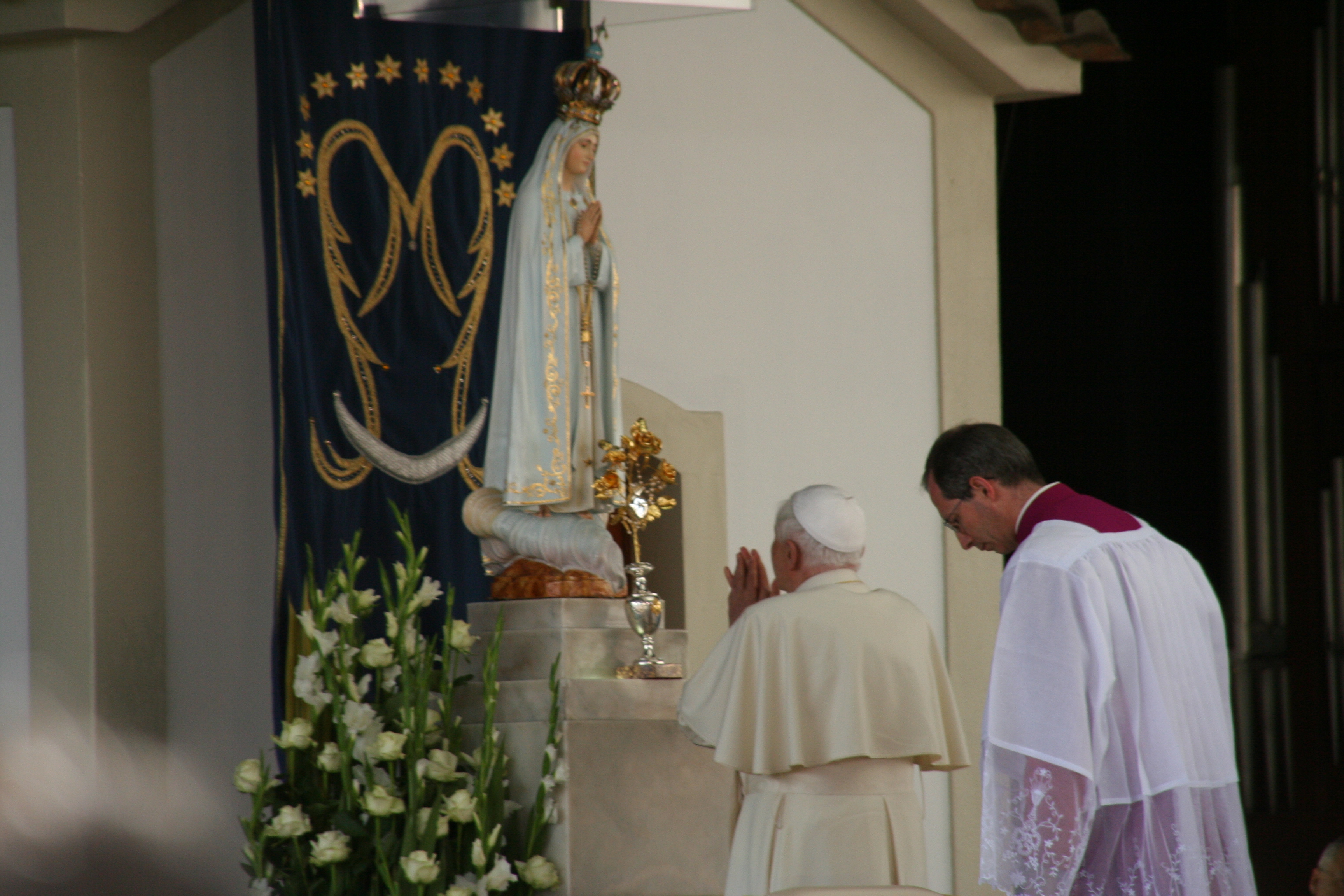
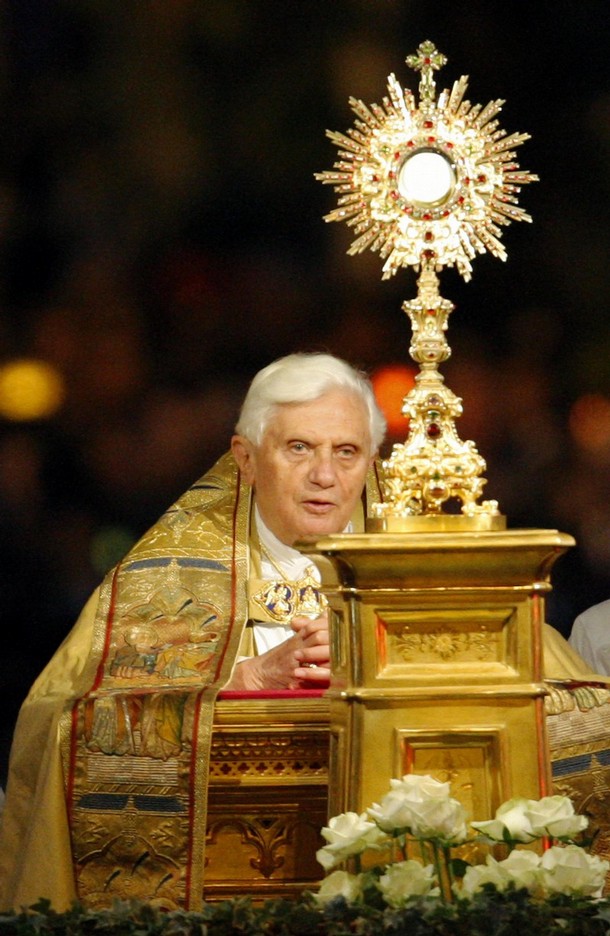
Pope Benedict XVI visits Fatima, May 2010.

Pope Benedict XVI visits Fatima, May 2010.

I’ve always been fascinated by the details of Fatima.

While watching the various DVDs about Fatima it becomes very obvious that this attempted intervention of God in human affairs caused great suffering; for the children and their parents and for the local ecclesiastical and civil authorities.

Having watched the DVDs it’s the trauma caused by the apparitions that jumps from the screen. What was it all for? What did Our Lady and ultimately God want to achieve? The answer takes most people by surprise.

Firstly, Our Lady asked that people stop offending God. So much trouble just for that! One must conclude therefore that offending God is a very serious matter.

Secondly, as if to emphasize the point, Our Lady then went on to request reparation, the repair of the hurt caused to the heart of God by human offences.

How are we to do that?
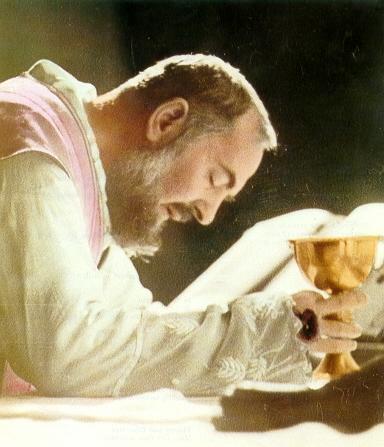
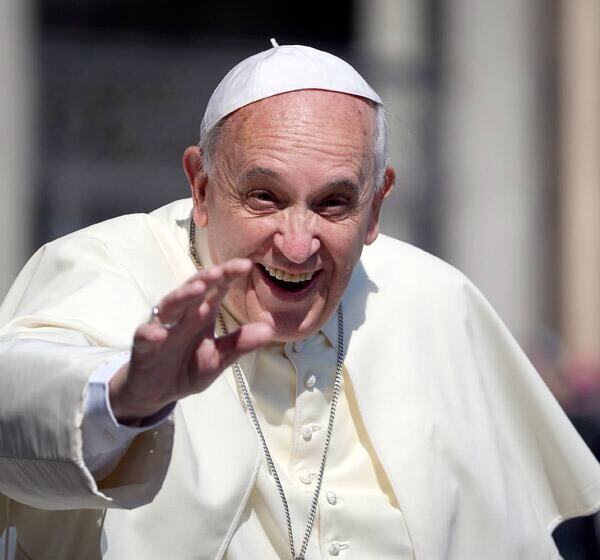
Papa17This is very striking. We are to appreciate Holy Mass. We are to partake of the Eucharist, to believe, adore, trust and love her Son Jesus Christ truly present there. Fatima clearly indicates, without room for doubt, that neglect of Holy Mass and the proper worship of the Blessed Sacrament amounts to neglect of the person and the work of Jesus Christ, and causes great suffering in the Heart of God. When working with children (using an animated DVD) I always remind them that when the Angel came to visit the children in Fatima, the Angel didn’t come with a can of coca cola and a bag of crisps! No, the Angel came with the Sacred Host and a Chalice. Why? Because that’s how God decided to remain with his people. In the message of Fatima the Eucharist is central because God intended Eucharist to be central until the end of time. The Eucharist is God-self and God’s work in Jesus Christ – it can’t be any more central than that!

Furthermore Our Lady taught the children to offer sacrifices (particularly the difficulties and sufferings of life) in reparation. This is a common theme in the lives of all the great Saints – they offered their sufferings in reparation while working tirelessly to relieve the suffering of others.

Reparation sounds difficult but it’s not – not even for children. Again, when working with children I ask them to imagine if one of them clobbered me. Then I ask them to imagine another child apologizing on behalf of my attacker and offering to make a cup of tea for me; one child is hurting me, the other is making reparation, trying to repair the damage.

But the full meaning of Fatima goes much further and connects the state of human affairs directly to humankind’s relationship with God.

During the apparition of July 13th Our Lady said that if people do not stop offending God another and more terrible war will break out – obviously meaning the Second World War.

We understand the Second World War to have been the result of Hitler coming to power in Germany. However, Our Lady suggests that the Second World War happened as a result of people offending God. In other words, when we choose against God we choose to put in place a chain of events that eventually, ultimately, causes great suffering to ourselves, to the body of humanity.

Thus during the 20 odd years between the world wars people are given ample opportunity to change or set the course of world events. This of course makes God very democratic – certainly not a dictator or a tyrant. We’re free to choose life or death, good or evil. We make the choices. At the very least Fatima implies that humankind’s well-being depends on an intimate Communion between the creature and the Creator.

Now, if offending God or otherwise determines our common human future then there arises a critically important question; what kind of a future are we creating for our children?

Indeed we might ask; what kind of a future are we creating for Irish children when a religious ethos is considered to have no place in the schools of a modern republic?

More generally, what hope is there for a culture that attempts to exclude religion from public life?

Encountering Christ – learning from the leper.

‘Spirit’ Confirmation Programme 3.

The single most important question you guys need to ask and answer (your parents too) is; if Confirmation wasn’t part of school life would you be approaching your local Church to look for it?

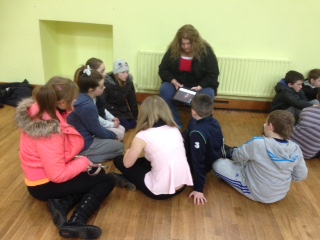
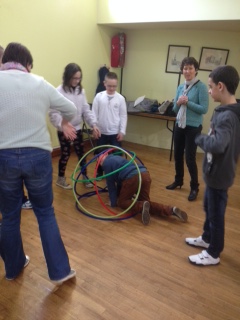
Candidates for Confirmation participate in the first 'Spirit' Workshop.

Candidates for Confirmation participate in the first ‘Spirit’ Workshop.

Still, whether you know it or not, God is calling you guys through the very fact that Confirmation is a part of school life. He’s calling you through the ‘Spirit’ programme, through the adults who’ve given so freely of themselves, through all of us gathered here, through your teachers, and even through me!

But the greatest call is the call that comes from the direct encounter with Jesus Christ in his Word and in his body and blood offered to us in the Eucharist – although what I’m calling the ‘direct’ encounter is still being mediated through the Church!

I think the leper in today’s Gospel (Mark 1:40-45) can teach us much about Confirmation, about your Confirmation, about the Christian life in general.

The leper goes to find Jesus.

Without the effort of going out to meet Jesus – and we’re not told how much of an effort the leper had to make but it’s likely to have been significant – nothing would have changed for the leper. There’d have been no encounter with Christ and there’d have been no healing. Same old, same old, same old life!

Confirmation presumes you’re making the effort to go out and meet Jesus. If there’s no effort on your part then Confirmation – and remember what Confirmation is; the gift of the Holy Spirit, the Divine-self – will be like throwing seeds on patches of rock where there’s little soil.

Incidentally Pope John Paul II used to love to ask people: What did you do with your Confirmation? Well, what do you think?

The leper can teach us other things too about life with God – or life without God!

Generally, like the leper people won’t go looking for God until they have a need. Confirmation presumes you have a need for God. Do you have a need for God?

When the leper encounters Christ – when Jesus stretches out his hand and says: “Of course I want to! Be Cured!” – the lepers life is changed. Yes, his life is made better, enhanced, which is what the presence of Christ always does in a life, but that life is also changed, radically.

The radically changed life is something we often miss and I’m not sure whether we miss it through simple ignorance or if it’s a very deliberate attempt to make the teaching of Jesus suit us. When Jesus stretches out his hand, whether to the serious sinner or the seriously ill, a real change is effected in their lives, sinners, outsiders, the marginalized start putting right what’s wrong – often what wasn’t considered wrong before the encounter with Christ – and simultaneously they enter a deeper experience of the kingdom of God. Indeed, the change is the proof that the kingdom of God is present.

As Christ is encountered, things that didn’t seem wrong are suddenly seen to be wrong. As Christ is encountered, the catechism is encountered. The more the kingdom of God takes hold of us the more we’ll understand even the difficult teachings of the Church, things that just seemed like nonsense before our growth in Christ!

Finally, do you know where to go to encounter Christ?

Well, in truth, it can happen almost anywhere, but there’s one very privileged place. Where is it? It’s the reason your teachers constantly remind you that there’s to be no talking in the Church. God has given one particular place that is the unequaled place of encounter: Mass, and as a result of Mass; the Tabernacle and Adoration.

You guys probably pass a Church many times every week. How often do you call in to speak with Jesus present in the Tabernacle?

You guys change that – start calling in for 10 minutes every day and just talk to him – and he’ll change your whole life, from the inside out, and it’ll be a much better life than the one you’ll make without him!

God is calling you – by name!

But can you hear it? Can you see it? Or will your Confirmation remain unused, an unused key to an unknown kingdom?

Your choice. You choose.

Every ‘problem’ calls us to spiritual growth – the gifts of the Holy Spirit.

‘Spirit’ Confirmation Programme 1.

Learning about the Gifts of the Holy Spirit!

Learning about the Gifts of the Holy Spirit!

Briefly, we’ll look at just two of the seven gifts of the Spirit – it’ll give us an idea of how important they are.

Perhaps during the week the parents – teachers too – might adapt or simplify my words and engage the children with the ideas I’m presenting.

Firstly, Wisdom; what’s that? Firstly, it’s a gift of the Holy Spirit. Therefore it doesn’t belong naturally to human nature. It’s a gift given by the Holy Spirit and when we receive it, we know (instinctive-like) that it’s in the spiritual life and not in health and wealth that we find lasting security. Those who don’t have the gift will naturally look for their security in everything from health to wealth.

Secondly, Understanding; what’s that? When we receive the gift of understanding we penetrate the truths of our faith. As we receive it we move from faith into certainty. Those who do not have the gift are always unsure, wobbly, blown this way and that, they lack conviction about God.

The gifts make a big, big difference. They’re synonymous with the spiritual journey into God (synonymous = equivalent in meaning, expressing the same idea). The gifts of the Spirit are the road into God.

Now, tell me, how many of you guys just want to get this part (Mass) over with?

Well, to be honest I was like that when I was your age. And I stayed like that through most of my teenage years.

Until one day in 1983, the 19th of July – I will never forget the day – I was at home with my father. There was a fire and tragically later that day my father died.

Now apart from the grief, something else happened. I started to ask serious questions about the meaning of life. That one event, and the questions it surfaced within me, changed the whole course of my life.

I believe we’re offering you answers to questions that most of you haven’t even started to ask. (I’m in favour of Confirmation at a later age!)

So the ‘Spirit’ team has produced a programme to give you a good experience of Confirmation in the hope that when (and if!) you do begin to ask the deeper questions, you might remember this positive experience of Confirmation and return to look in more detail.

Meanwhile, some things I’d like you to know and remember. I would like you to know that it’s in the spiritual life – the spiritual life is our life with God – that you will find true and lasting security.

If I could I’d love to spare you the futile effort of trying to find lasting security in this world, in just about everything from health to wealth.

I would like you to know that there’s no difficulty in life that can’t be overcome by spiritual growth.

I would like you to know that every challenge, every difficulty – even if it looks like there’s no way out – every suffering, every sickness is a call to spiritual growth; that it doesn’t have to end in meaningless despair.

Even if you make a complete mess of your life, I want you to know that the mess is nothing more than God’s way of calling you to spiritual growth, to do things differently, to do things his way.

No matter how many times you fall, no matter how many times you fail, remember, every fall, every failure, is God’s call to spiritual growth.

Finally, the gifts of the Holy Spirit, like Confirmation itself, like all the sacraments, belong to the spiritual life and it’s there – and only there – that we receive them.

So, do you have a spiritual life? Yes? No? No! I’m going to be really cruel to you; then what are you doing here?

Click the video links below for a summary of Pope Francis’ catecheses on the gifts of Wisdom and Understanding. (Credit: Rome Reports)

Wisdom

Understanding

Our actions will always harmonize with what’s inside us.

‘Spirit’ Confirmation Programme 2.

We’re asking you today to witness to the Spirit. Actually, that’s not right. You’ve chosen this, didn’t you? So you’re telling us that you’re going to witness to the Spirit.

'Spirit' Workshop No. 2. Candidates for Confirmation viewing video footage of how people witness to the Spirit.

‘Spirit’ Workshop No. 2. Candidates for Confirmation viewing video footage on an iPad of how people witness to the Spirit.

The visit of Annette McCarthy to the school on Friday together with the workshop this morning will have given you real examples of witnessing to the Spirit.

Here’s another way that you might witness. Sometimes as people get older they can become invisible. People don’t see them any more. So, here’s what I want you to do. You can make older people visible – all through your life – by just smiling and saying ‘hello’.

Still, I do not want you to get the idea that witnessing to the Spirit is just about being a ‘good’ person or a ‘nice’ person. Sometimes even our goodness is a witness to ourselves rather than God, my spirit rather than God’s Spirit, and merely carries the mask of witnessing to God. This – reducing Christianity to being a ‘nice’ person – is something we’ve been doing within Catholicism for most of my lifetime, and it’s directly related to the slow decline of Catholicism.

Catholicism is first and foremost a well-trodden path to a real and ongoing encounter with God. This ongoing encounter with God is what gives our lives joyful and lasting security. This is basic Jesus-speak! He never tires of telling us things like “…a man’s life is not made secure by what he owns even when he has more than he needs” and “Fool! This very night the demand will be made for your soul; and this hoard of yours, whose will it be then?” (Luke 12:15, 12:20)

There’s a desperate human need portrayed in today’s First Reading (Job 7:1-4,6-7), the kind that must surely precede suicide. There’s similar human need portrayed in today’s Gospel (Mark 1:29-39) but in the Gospel the need encounters Jesus Christ and is transformed. I heard an elderly man say recently – a man who’d lost both his wife and his son – “Life? It’s nothing in the end!” He’s right. Without Jesus Christ, it comes down to nothing in the end. It’s the encounter with God that causes us to witness. Witness is not a dry demand!

This encounter with God is not imaginary. Its development is marked by clearly defined stages, every bend on the road to God, every junction, every cul-de-sac, every obstacle, and every contour is documented. Catholicism is first and foremost a ‘how to’ manual, how to encounter God, and for the purists it’s an experiential ‘how to’ manual produced by God. So, before you walk away from Catholicism, read the life of at least one saint. It’s an interesting question to ask those who’ve already abandoned Catholicism: Did you read the life of at least one saint before walking away?

So, I do not want to be asking you to witness to a Spirit that you do not know. That’s to do violence to you. We can only witness to God’s Spirit to the degree that he’s present within us.

When we try to witness to Gods Spirit when he’s not inside us – when he’s not a real living force in our lives or when he’s diminished to the bare minimum for human life – we get fed up, bored, we fall away, and worse, we may even resent this imposition. Religion without the Holy Spirit quickly becomes a burden and even tyranny!

Sooner rather than later, our actions will always harmonize with what’s inside us.

I’ll give you an example using one of the gifts of the Spirit: Piety, or as you’d call it; Reverence.

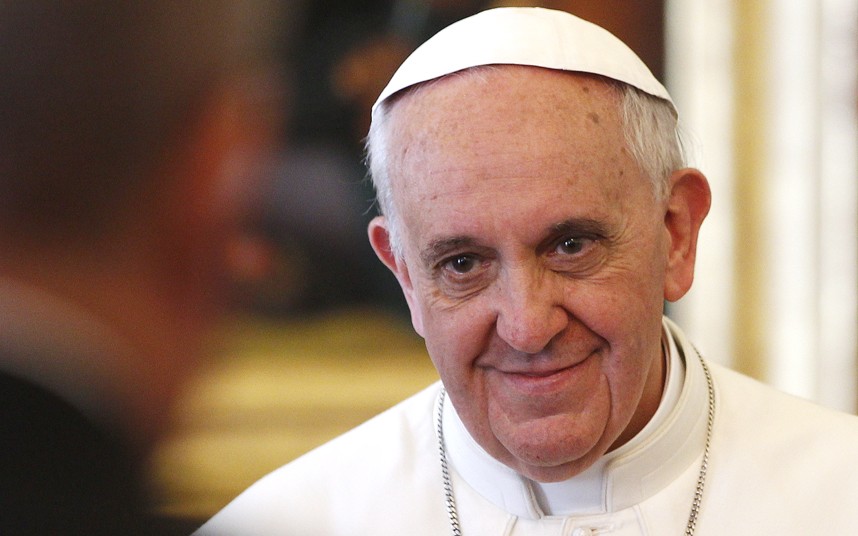
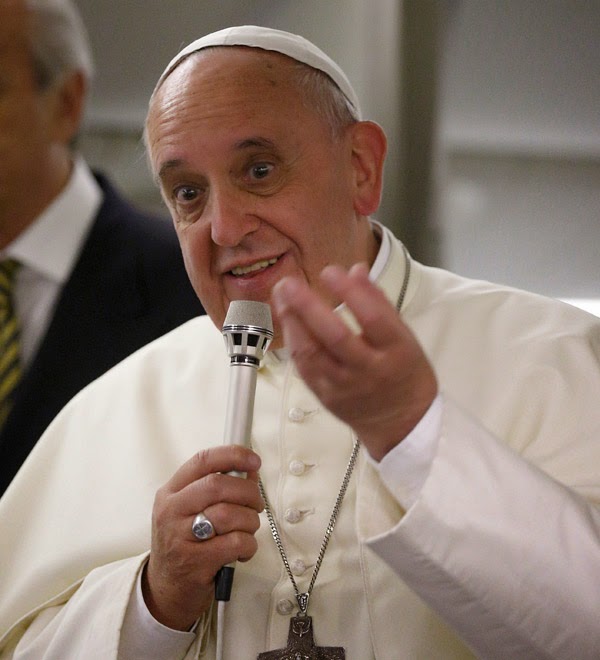
pope-francis_2541160kPiety (Reverence) is a gift of the Holy Spirit which means that it doesn’t belong naturally to human nature. It’s as it says on the tin – a gift of the Holy Spirit. It’s an instinctive-like affection for God that makes us desire to worship him. Pope Francis described it as indicating “our belonging to God and our profound bond with him, a bond that brings meaning to our lives.” He said this bond is not “a duty or an imposition” but “a living relationship with the heart… our friendship with God, given by Jesus.” (Catholic World News, June 04, 2014). Where it is present religion is never boring, where it’s absent everything about religion is boring!

So, the gift of Piety (Reverence) alone, or its absence, can explain so much about our behaviour around religion, about how we witness, or don’t witness!


Fifth Sunday, B.

Satan is forced out of hiding by spiritual growth! Fourth Sunday, Year B.

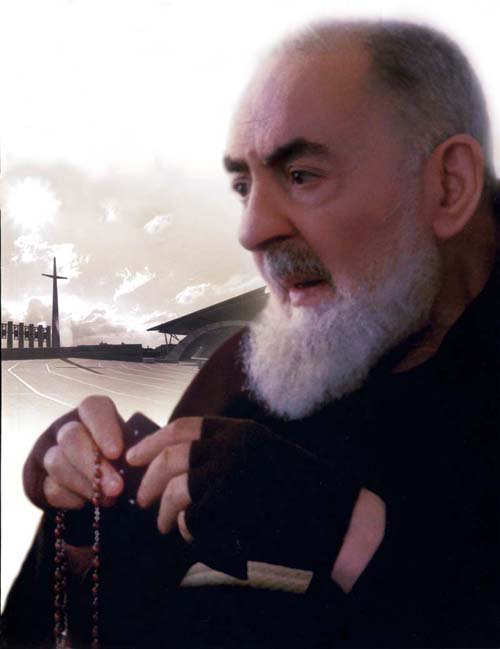
The struggle between Pio and Satan became more difficult when Pio freed the souls possessed by the Devil. Pio recounts being physically beaten! Father Tarcisio of Cervinara said, "More than once, before leaving the body of a possessed, the Devil has shouted, "Padre Pio, you give us more trouble than St. Michael"; also, "Father Pio don't steal the bodies from us and we won't bother you."

The struggle between Pio and Satan became more difficult when Pio freed the souls possessed by the Devil. Pio recounts being physically beaten! Father Tarcisio of Cervinara said, “More than once, before leaving the body of a possessed, the Devil has shouted, “Padre Pio, you give us more trouble than St. Michael”; also, “Father Pio don’t steal the bodies from us and we won’t bother you.”

This weekend we begin the Confirmation ‘Spirit’ Programme. We’re beginning with the Gifts of the Holy Spirit.

The purpose of the gifts is to make us holy, like God. They’re the means by which God draws us into his own life, the Divine life.

Some of us will know them, particularly those of us of a certain age – we were taught them ‘by heart’ as we used to say. My mother can still list them – at 83 years. We’ll look at just two, briefly, the first two, Wisdom and Understanding.

Wisdom; what’s that? Firstly, it’s a gift of the Holy Spirit. Therefore it does not belong naturally to human nature. It’s a gift given by the Holy Spirit and when we receive it, we know (instinctive-like) that it’s in the spiritual life and not in everything from health to wealth that we find lasting security. Those who don’t have the gift will naturally look for their security in everything from health to wealth.

Understanding; what’s that? When we receive the gift of understanding we penetrate the truths of our faith. As we receive it we move from faith into certainty. Those who do not have the gift are always unsure, they always lack conviction.

Now, the thing about the Gifts of the Spirit is that they can be difficult to understand. If you go looking for an explanation you’ll find multiple explanations, nearly all different, or at least they appear to be different.

Here’s the reason. The gifts come from the Holy Spirit. Therefore they’re supernatural. They’re not naturally part of human nature. We’ve almost lost this sense. This is the root of the difficulty with explanations. The gifts are known only by experience and cannot be really known outside the spiritual life and spiritual growth. So our understanding of the gifts tends to reflect the point where we stand on the scale of spiritual growth. That’s the reason we get so many different explanations.

Overall, in my lifetime, there’s been a tendency to reduce the gifts to the purely natural. I think this reflects the decline of Catholicism generally.

"The devil can confuse the most brilliant mind." Padre Pio

“The devil can confuse the most brilliant mind.” Padre Pio

Now, similarly – and this is the point I want to make about today‘s Gospel (Mark 12:21-28) – spiritual evil, both satan and unclean (evil) spirits, cannot be understood outside the spiritual life and spiritual growth.

The essence of the spiritual life is the death of self. This is the reason true religion will never be popular. The death of self is the last thing we want to hear and we ‘naturally’ fight it all the way, sometimes spending a fortune trying to avoid it! As John the Baptist said; “I must decrease and he must increase” (John 3:30). Here’s the point: Only when we’ve spiritually advanced to the point where we’ve truly died to self and started living for God alone, only then will we come face to face with spiritual evil. Only then will satan and the unclean spirits manifest themselves directly to us and become a part of our experience. It is spiritual maturity – a full complement of the gifts of the Holy Spirit – that forces satan out of the shadows, “What do you want with us, Jesus of Nazareth? Have you come to destroy us? I know who you are: the Holy One of God.” Satan was always there, hidden, unseen, but now holiness forces him out. If only Jesus could get the same recognition from us!

So, we’ve looked briefly at both ‘extremes’ if you like, the Holy Spirit and the gifts of the Spirit on the one hand, and satan and the unclean spirits on the other, and we’ve seen that our understanding and knowledge of both is determined by where we stand on the scale of spiritual development.

“Excellent homily” she said, but “very misleading, the apostles were married.”

Recently a lady approached me, “excellent homily” she said, but “very misleading, the apostles were married.”

She was referring to this: https://paddybanville.wordpress.com/2015/01/25/if-radical-discipleship-is-not-found-in-the-priesthood-today-then-where-will-it-be-found/

“It (celibacy) is a rule of life that I appreciate very much, and I think it is a gift for the church,” Francis told reporters aboard a plane returning to the Vatican. “But since it is not a dogma, the door is always open.”

“It (celibacy) is a rule of life that I appreciate very much, and I think it is a gift for the church,” Francis told reporters aboard a plane returning to the Vatican. “But since it is not a dogma, the door is always open.”

Of course the lady is correct. Celibacy is a discipline, not a dogma. There is evidence to suggest that at least some of the apostles were married. Indeed my lady friend reminded me that Jesus had cured Peter’s mother in law, so Peter was married (Matthew 8:14). But there’s another possible interpretation open to us here. Peter’s mother in law, now enjoying full health, starts to wait on Jesus in Peter’s house. Doesn’t that seem odd? It’s Peter’s mother in law rather than his wife that waits on Jesus. Where is Peter’s wife? Perhaps she’s out somewhere. But there’s another possibility; Peter was widowed at the time of Jesus call. It’s another possibility.

It’s important too that we take note of the apostle John. We know he was celibate and that he seems to have held a special place in Christ’s heart, perhaps due to his celibacy. At any rate, we’re told repeatedly that he’s the one Jesus loved (John 13:23), and as Christ was dying it was to John that he entrusted his mother (John 19:26).

My lady friend’s argument follows the familiar logic; the apostles were married so therefore priests should be allowed to marry. For many people this historical fact is all the proof needed to abolish compulsory celibacy. But there is another perspective, that of the teaching of Jesus as recorded in the Gospels. The teaching asks serious questions of married apostles and possibly even prevails over the practise.

In the Gospels we discover Christ’s call to a radical discipleship, Mark 10:21 “There is one thing you lack. Go and sell everything you own and give the money to the poor… then come follow me.” It’s a call the apostles heard and embraced, some of whom were married, others unmarried. The Gospels suggest that the first apostles were extremely challenged by Christ and if we accept the Gospel accounts of Christ’s teaching then there’s little doubt that the apostles themselves, both married and unmarried, must have understood that Christ’s call to self denial extended even to marriage, “… there are eunuchs who have made themselves that way for the sake of the kingdom of heaven.” (Matthew 19:12)

In fact, based on the evidence of Christ’s own teaching in the Gospels the first married apostles must have felt challenged about their married status. I’d go so far as to say that they even felt disadvantaged! This is not conjecture. The evidence indicates that this is exactly what happened. In the teaching of Christ and consequently in the early Church the practise of celibacy and virginity was highly valued, “what about us? We have left everything to follow you… I tell you there is no one who has left house, wife, brothers, parents or children for the sake of the kingdom of God who will not be given repayment many times over…” (Luke 18:28, Matthew 19:29). No wonder it was valued! But something even more significant happened, married couples, responding to the teaching of Christ practised continence within marriage, among them there were surely some of the apostles.

So it’s much too simplistic and even misleading to argue that the apostles were married so priests should be allowed to marry. The historical reality is much more nuanced than that.

Life went on after Christ and the Church developed. There are major figures, none more so than St. Paul, a strong supporter of celibacy, 1 Cor 7:32-35. In fact, this is a feature of the first millennium. There is no proper law of celibacy. Instead, the significant figures in the Church tend to recommend celibacy. Generally, the important figures in the early Church together with the higher members of the clergy practised celibacy.

So the picture is one of married and celibate priests, in tension to some degree, but it’s necessary to concede that it’s Christ’s radical call heard in the Gospel that’s causing at least some of the tension, “If any man comes to me without hating his father, mother, wife, children… he cannot be my disciple” (Luke 14:26). It should go without saying – but I’ll be cautious – that there are other factors at work in shaping these developments, not least a rejection of the goodness of human sexuality, a certain disdain for the sexual that had pockets of support but usually ended in heresy.

Eventually celibacy became compulsory for priests in the West. It’s with glee that some people point out that this happened because the Church didn’t want to lose its property to priest’s families. This may be true but it’s certainly not the complete truth. It conveniently ignores how celibacy and virginity never disappeared, and how the practises were highly valued by Christ, and by the Church from the very beginning, and how they are rooted in the call of Jesus Christ to leave everything and follow him.

There’s one further nuance that’s necessary to note. In the 11th century the Church split between East and West – temporarily – but reconciliation would bring with it two different traditions regarding celibacy. The Eastern Orthodox Church kept their tradition of a married clergy. But even this is nuanced; a single man cannot marry after Ordination, and to this day bishops in the East are drawn only from the celibate priests. So the tension between the historical practise of married apostles and priests, and the radical call of Jesus as recorded in the Gospels remains evident.

In conclusion we can argue:

1. Celibacy is a rejection of the sexual and it’s goodness.

2. It’s a kind of ‘spiritual worldliness’ on behalf of the Church. It’s about the Church protecting its assets.

3. It’s a response to Christ’s call to leave everything.

Take your pick.

Then ask yourself why you’ve made that particular choice?

If you think there’s an element of all three, to which of the three should we give precedence?

Me? I go with the call to leave everything although I’m not particularly good at it!

If radical discipleship is not found in the priesthood today, then where will it be found?

Mark 1:14-20, Third Sunday, Ordinary Time, Year B.

James and John leave everything. For a moment let’s picture their father Zebedee left in the boat with the men he employed. No doubt the father had built up the business with a view to his sons future. Now they’re gone. They’ll never really return.

It’s said that the departure of his sons caused Zebedee to go ‘ballistic’. He lost the head so to speak. That’s understandable. It’s said that in turn Jesus gave the name ‘sons of thunder’ to James and John, Mark 3:17.

At any rate, this following Jesus is portrayed as decisive, radical, life changing. The priesthood is modeled on these guys, downing tools, taking off after Jesus, staying with him, not returning. Whatever the historical roots of priestly celibacy even if several of the apostles were married, it’s not without considerable foundation in the teaching of Christ. It’s there, if we can hear it.

So when we start thinking about abolishing celibacy or making it optional – or countless other issues in the Church – we need to think about it from Christ’s perspective and those closest to him, rather than our own, because our understanding of these matters, indeed life itself, is very often a little out of sync – and that’s being generous – with the understanding that flows from the teaching of Christ.

"I had never believed. I had always known that the interest all around me in security, money, power and status was greater than any love of God or belief in his mercy" Colm Toibin, The Sign of the Cross

“I had never believed. I had always known that the interest all around me in security, money, power and status was greater than any love of God or belief in his mercy” Colm Toibin, The Sign of the Cross

Colm Toibin captures this ‘out of sync-ness’ perfectly in his book “The Sign of the Cross”. Writing about his experience as a child growing to adulthood here in the Cathedral in Enniscorthy he says – and this is both harsh judgement and profound observation – “I had never believed. I had always known that the interest all around me in security, money, power and status was greater than any love of God or belief in his mercy.” I’m afraid too often that’s us.

This is the reason we need to really listen to God’s Word, to the Gospels in particular, because only when we really listen can we begin to ‘sync’ with the message and the teaching of Christ. Often our treatment of the Word is like meeting a person and asking ‘how are you?’ when we really haven’t time for the answer, or worse, we really don’t care! Instead, take the time to look into the other persons eyes asking ‘how are you?’ and wait for the answer. We need to listen to the Word like that. Only then can we begin to move from Toibin’s “security, money, power and status” and into the “love of God” and “belief in his mercy”. This is particularly true of the priesthood.

When we think of the priesthood we need to remember Zebedee left behind in his boat, the family business and his life’s effort for his sons welfare discarded, thrown aside, abandoned. We need to wonder – and wonder is all we can do because the sources are so scant and often contradictory – about the wives of these men, if any. What happened to them?

My sense in all this is that through the apostles, married and unmarried, Christ was calling those around him and future generations to a radical discipleship, to leave everything, even marriage, Mark 19:12, 19:29 and so many other passages throughout the Gospels. It’s my sense but it’s not without foundation in the teaching of Christ. In fact, I suspect the more we ‘sync’ with the teaching of Jesus found in the Gospels the more we’ll see this possibility.

Let me put it this way: Why can’t James and John keep the family business and follow Jesus, as well? That’s what we’d do. It’s a bit like asking: Why can’t a man be a priest and marry, as well? That’s what we’d do. My sense is that Christ is calling some to a much more radical discipleship, to leave absolutely everything, to rely on him alone, and if this radical discipleship is not found in the priesthood today, then where will it be found?

Je suis Charlie – and a little prudence will go a long way!

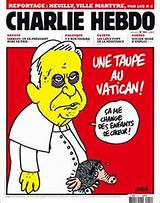
The Charlie Hebdo attack was truly outrageous. Terrorists responded to pencils with assault rifles.Charlie Hebdo Image of Pope

Obviously Charlie Hebdo made good money by mocking just about everything. But do we need to mock anyone or anyone’s beliefs? I don’t think so. I understand the need to challenge people, not least militant Islam, but people can be challenged without resorting to insult and mockery. There are better ways – but they probably wouldn’t sell very many magazines! Don’t get me wrong, I believe in free speech but it belongs to us all, not just to members of the National Union of Journalists! As a recent blog post put it: Je suis Charlie, and I would like to proclaim that Jesus Christ is Lord, marriage can only occur between one man and one woman, and that abortion is murder. Or am I allowed to say that?” (Faith in our Families blog http://faithinourfamilies.com/2015/01/08/charlie-hedbro-you-are-not-allowed-to-say-that/)

It strikes me that there’s a level of foolhardiness in the media’s response to the Charlie Hebdo attack. While we’re resolute in upholding the right to free speech its application is at times a little thoughtlessly bold.

Je suis Charlie ImageIt’s something I learned while working in the prison system. Prison officers don’t insult prisoners, or at least some prisoners. They’re careful how they speak to some prisoners. But they should really claim their right to free speech, shouldn’t they? I mean they should be entitled to strut through the prison saying what they like when they like, shouldn’t they? But they don’t. Nothing would strike the average prison officer as more stupid! Prison officers appreciate that some of the prisoners are very dangerous so they don’t put their personal safety at risk by strutting about saying what they like when they like. More importantly, it’s not just about an individual officers safety, it’s about the safety of others. They refuse to put the safety of their colleagues at risk. It’s common sense, we’d call it simple cop-on!

Similarly, I’ve heard members of An Garda Siochana (Ireland’s Police Service) say that they’d prefer not to work with a particular garda because he or she would get you in trouble. The scene goes something like this: gardai arrive at an incident that’s under control. The situation is calm, but suddenly our garda friend opens his mouth, he’s got a right to free speech, right? He says all the ‘wrong’ things according to prudence, and suddenly a calm situation is turned into a flash-point. Our garda friend has managed to put his own safety at risk and that of his colleagues and possibly members of the public too.

Free speech might get you far but common sense – in this case a prudent evaluation of your opponent – will get you much further, not to mention saving innocent lives too!

Second Sunday of Christmas, (B), God lives on the edge.

Before we leave Christmas behind I want to look again at the context in which God became flesh because we can pull some interesting details from it.

Let us always remember that in the Church, in the spiritual life, we must always be deceived into focusing on the shadows, on the darkness rather than the light.

Let us always remember that in the Church, in the spiritual life, we must always be deceived into focusing on the shadows, on the darkness rather than the light.

The first detail I’d like you to see is that when God became flesh he was really pushing the boundaries of our freedom. The incarnation sits on the very edge of human freedom. If God did anything more we’d have no choice but to believe… and instantly our freedom is gone.

So the whole belief thing and the Church – remember that Christ and the Church are inseparable – is a personal choice. Yes, absolutely, but in acknowledging that it’s a personal choice, we must also acknowledge that God has done everything possible to swing our choice in his direction while leaving us just enough freedom to be able to reject him. This is a very thin line – maxed out very deliberately by God.

I’d also like you to notice the role of the political leaders – Caesar Augustus, Herod and the various layers of Government and leadership – in the arrival of the Christ-child (Cf Luke). They had absolutely nothing to do with it! In fact, they provided nothing more than the historical backdrop, nothing more than a way to put a date on the events. They were by-passed – as Mary marvelled in her Magnificat; “he has pulled down princes from their thrones…” How? He just by-passed them making them largely irrelevant and went to the lowly stable where only the lowly, and those who make themselves lowly can recognize him. This hasn’t changed.

But later they did try to get in on the act, to thwart it, Herod particularly. So his eventual involvement is one of opposition. This is most interesting because this hasn’t changed either – politics is still largely opposing the influence of the incarnation, non-violently of course, and ironically it does so on the pretext of choice!

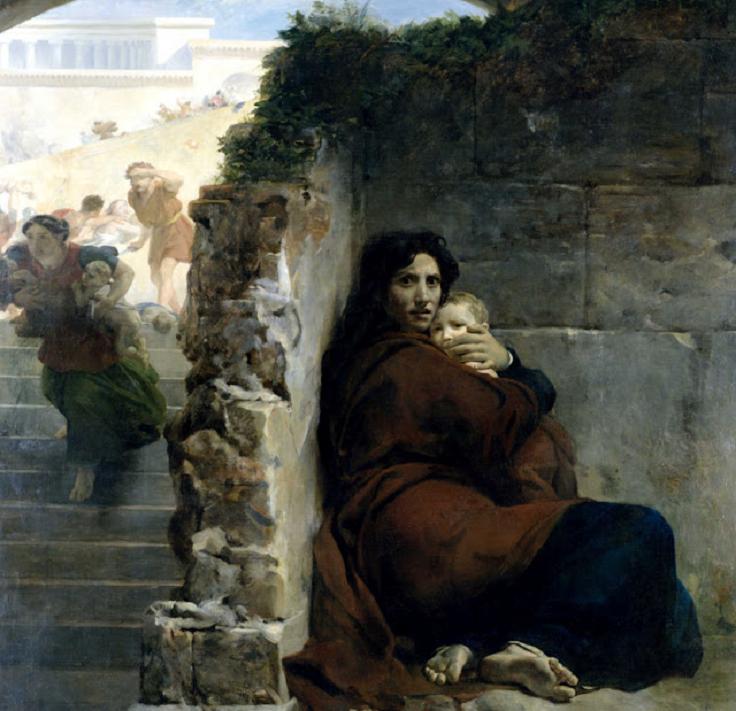
Slaughter of the Innocents, Leon Cogniet

Slaughter of the Innocents, Leon Cogniet

The next detail I’d like you to see is the proximity of really dark evil to the unfolding of God’s plans. As the Christ-child arrived into the world Herod’s power was threatened. Initially he played politics with the wise men, trying to trick them into telling him where he could find the child Jesus so that he could eliminate him, but when politics fails he unleashes a terrible evil ordering the death of every new born male child. What I want you to see is the proximity of the darkest evil to the unfolding of God’s plan in the world – this is the price of human freedom – and it hasn’t changed either. Wherever God’s plan is unfolding you will have evil too, and the greater the plan, the greater the evil, but only for a time. Always remember that spiritually we must be deceived into focusing on the shadows, on the darkness rather than the light. It happens all the time – right now in the Church it is happening; has happened.

The final detail I’d like you to see is how the unfolding of God’s plan is always tottering on the brink. God’s plan is dependent on Mary’s ‘yes’, on a solitary woman’s ‘yes’, on a ‘yes’ that asks this woman to let go of all her plans and stare, and step, into an abyss (from a human point of view). It’s dependent on Joseph accepting Mary’s version of events. It’s dependent on Joseph’s dream, on the wise men’s dream. What I want you to see is the thin line, again this thin line. God’s will always looks like it’s about to flop, from beginning to end, from incarnation to resurrection and into the future.

Doesn’t it look like that right now?

But it’ll never fail… never.

Christmas: God is with us, and God has a face, a personable identity

Tonight God crosses the desert we heard about during Advent, he crosses the valleys, the hills, the mountains, the cliffs. Tonight God is with us – and he wants to stay with us, with you.

IMG_1420

“In the mystery of the Incarnation there is also an aspect that is connected to human freedom. God has pitched his tent among us and we must hasten to receive the grace that he offers us” Pope Francis, January 05, 2014

He is with us in the real world, as Pope Francis says; “in this real world.” He doesn’t come to an idyllic world as if this (pointing to the crib) is just sentiment but nothing to do with the real world.

How real do you want it?

There’s the awkwardness of Mary’s pregnancy albeit by Gods direct intervention but who’ll believe that? I’m pregnant Joseph and you’re not the father! Thank you God, you really dropped me in it three!

There’s Joseph’s inevitable confusion, his uncertainty, his pride – think of a man’s pride in this situation, Joseph’s decision to leave Mary. Thank you God, you really dropped me in it there! See how close God’s will is to the edge, always tottering on the brink! God’s will always looks like it can’t possibly succeed.

There’s the long and difficult journey to Bethlehem for a heavily pregnant mother, a distance of 100 or more kilometres, on arrival there’s no suitable accommodation. Thank you God, you really dropped me in it there! Here we find the story of this child’s future life in summary; “foxes have holes but the Son of Man has nowhere to lay his head”… to this day. How have you changed that?

There’s the joy and the supernatural wonder of this night – the lowliness of the shepherds recognizing the Christ-child; haughtiness would never have been able to recognise the Christ-child – followed by the terror of the flight into Egypt to escape Herod’s slaughter of every new born male child. What’s it like for a father or a mother lying awake under a night sky knowing that at any moment a soldier full of murderous intent might find them? Thank you God, you really dropped me in it there! Tonight “there will be people from Nigeria to Iraq who take their life into their hands by going to midnight Mass.” (Fraser Nelson)

Not to an idyllic world but to this world, cruel, violent, craving power, divided but also good. God is with us in this world and because of this night (day) God has a face, a personable identity.

My second point tonight:

Many – far too many Catholics, possibly a majority – do not have a strong sense that God is with us even though he’s done this (pointing to the crib). Why?

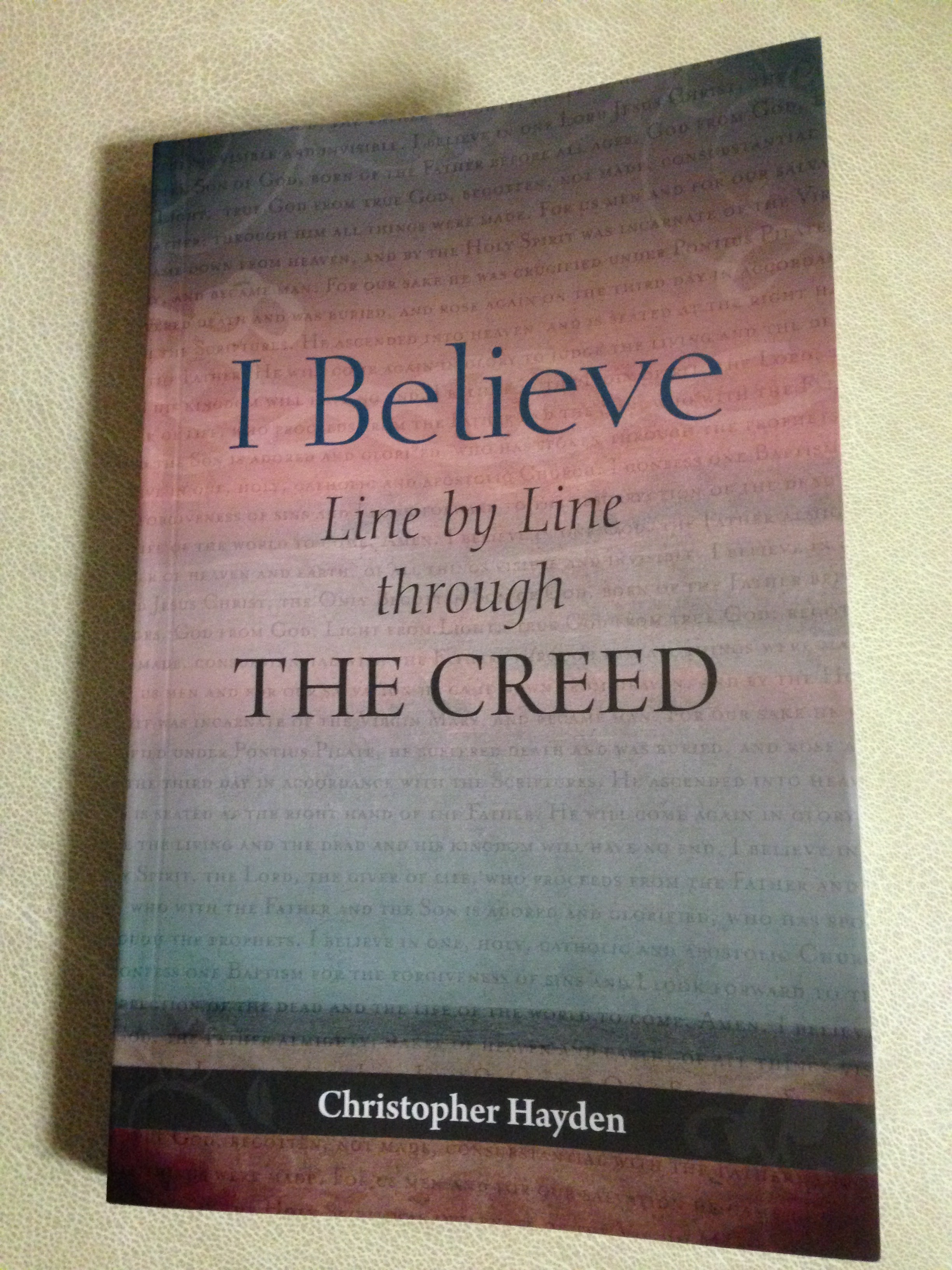
This is an excellent book, written by Fr. Chris Hayden. It's one of the books I'm recommending for the average lay wo/man in 2015. It's available from Veritas here http://www.veritasbooksonline.com/i-believe-line-by-line-through-the-creed.html or from Amazon here http://www.amazon.co.uk/Believe-Line-Through-Creed/dp/1847305687/ref=sr_1_1?ie=UTF8&qid=1420366606&sr=8-1&keywords=Christopher+Hayden

This is an excellent book, written by Fr. Chris Hayden. It’s one of the books I’m recommending for the average lay wo/man in 2015. It’s available from Veritas here http://www.veritasbooksonline.com/i-believe-line-by-line-through-the-creed.html or from Amazon here http://www.amazon.co.uk/Believe-Line-Through-Creed/dp/1847305687/ref=sr_1_1?ie=UTF8&qid=1420366606&sr=8-1&keywords=Christopher+Hayden

A poor family are taking the boat to the US. They can afford to bring nothing more than bread and cheese for the journey and a little savings. About 3 days into the journey one of the children complains: Daddy, I can’t eat any more cheese, if I eat any more cheese I think I’m going to die. So the father gives the child a small coin from the family savings telling the child to go and buy an ice cream. About an hour later the child returns, excited, and tells the father: Daddy, I’ve had three ice creams and a dinner. Here’s your coin back, the food is included in the price of the tickets! (Peter Kreeft)

Many of us have tried to live on the spiritual equivalent of a diet of “cheese sandwiches” (Fr. Chris Hayden) not realizing that there’s so much more on offer.

This is the single biggest problem in the Church.

It’s the real reason – the reason behind all the other reasons – why people leave the Church. Think about it; how long will any of us last on a diet of cheese sandwiches? How long before you’re fed up? How long before you’ll walk away?

There’s a lunacy to all this that’s seldom named, but we’ll name it tonight; God has come bounding across the desert, the valleys, the mountains, the great divide between God and man – God is with us – and we’re bored, fed up, we think that this child will somehow place limits on us, somehow diminish our freedom, or we think that it’s not about us – you – that he’s not looking for you? Ah, come on!

To all of you making your annual visit I ask you to stare hard at this child and ask yourself why he came? And if you want it, if you’ve got the desire, I think Fr. Byrne and I can lead you to much more than cheese sandwiches. As Dell-boy would say; we guarantee you a full steak meal!

Tonight, and during the Christmas season I invite you to look again, visit the crib, take a good hard look and ask; why? Then ask yourself; what’s it got to do with me? I doubt he intended you to exclude yourself. Certainly not. As Pope Francis says, he intended us to use our freedom to “hasten to receive the grace that he offers us.”