
Category Archives: Homily

Satan is forced out of hiding by spiritual growth! Fourth Sunday, Year B.

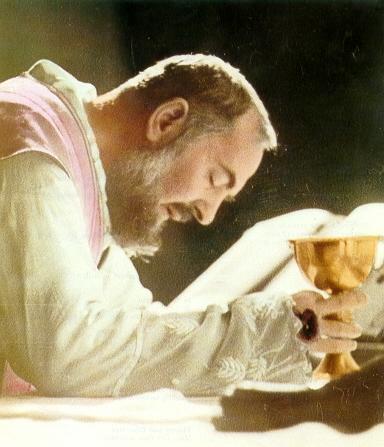
The struggle between Pio and Satan became more difficult when Pio freed the souls possessed by the Devil. Pio recounts being physically beaten! Father Tarcisio of Cervinara said, "More than once, before leaving the body of a possessed, the Devil has shouted, "Padre Pio, you give us more trouble than St. Michael"; also, "Father Pio don't steal the bodies from us and we won't bother you."

The struggle between Pio and Satan became more difficult when Pio freed the souls possessed by the Devil. Pio recounts being physically beaten! Father Tarcisio of Cervinara said, “More than once, before leaving the body of a possessed, the Devil has shouted, “Padre Pio, you give us more trouble than St. Michael”; also, “Father Pio don’t steal the bodies from us and we won’t bother you.”

This weekend we begin the Confirmation ‘Spirit’ Programme. We’re beginning with the Gifts of the Holy Spirit.

The purpose of the gifts is to make us holy, like God. They’re the means by which God draws us into his own life, the Divine life.

Some of us will know them, particularly those of us of a certain age – we were taught them ‘by heart’ as we used to say. My mother can still list them – at 83 years. We’ll look at just two, briefly, the first two, Wisdom and Understanding.

Wisdom; what’s that? Firstly, it’s a gift of the Holy Spirit. Therefore it does not belong naturally to human nature. It’s a gift given by the Holy Spirit and when we receive it, we know (instinctive-like) that it’s in the spiritual life and not in everything from health to wealth that we find lasting security. Those who don’t have the gift will naturally look for their security in everything from health to wealth.

Understanding; what’s that? When we receive the gift of understanding we penetrate the truths of our faith. As we receive it we move from faith into certainty. Those who do not have the gift are always unsure, they always lack conviction.

Now, the thing about the Gifts of the Spirit is that they can be difficult to understand. If you go looking for an explanation you’ll find multiple explanations, nearly all different, or at least they appear to be different.

Here’s the reason. The gifts come from the Holy Spirit. Therefore they’re supernatural. They’re not naturally part of human nature. We’ve almost lost this sense. This is the root of the difficulty with explanations. The gifts are known only by experience and cannot be really known outside the spiritual life and spiritual growth. So our understanding of the gifts tends to reflect the point where we stand on the scale of spiritual growth. That’s the reason we get so many different explanations.

Overall, in my lifetime, there’s been a tendency to reduce the gifts to the purely natural. I think this reflects the decline of Catholicism generally.
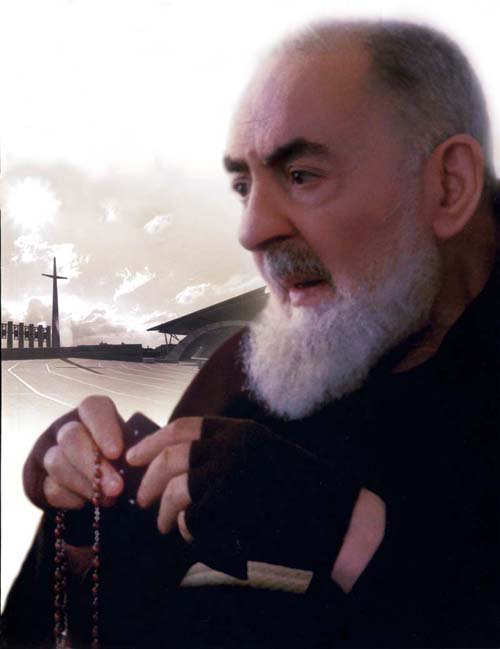
"The devil can confuse the most brilliant mind." Padre Pio

“The devil can confuse the most brilliant mind.” Padre Pio

Now, similarly – and this is the point I want to make about today‘s Gospel (Mark 12:21-28) – spiritual evil, both satan and unclean (evil) spirits, cannot be understood outside the spiritual life and spiritual growth.

The essence of the spiritual life is the death of self. This is the reason true religion will never be popular. The death of self is the last thing we want to hear and we ‘naturally’ fight it all the way, sometimes spending a fortune trying to avoid it! As John the Baptist said; “I must decrease and he must increase” (John 3:30). Here’s the point: Only when we’ve spiritually advanced to the point where we’ve truly died to self and started living for God alone, only then will we come face to face with spiritual evil. Only then will satan and the unclean spirits manifest themselves directly to us and become a part of our experience. It is spiritual maturity – a full complement of the gifts of the Holy Spirit – that forces satan out of the shadows, “What do you want with us, Jesus of Nazareth? Have you come to destroy us? I know who you are: the Holy One of God.” Satan was always there, hidden, unseen, but now holiness forces him out. If only Jesus could get the same recognition from us!

So, we’ve looked briefly at both ‘extremes’ if you like, the Holy Spirit and the gifts of the Spirit on the one hand, and satan and the unclean spirits on the other, and we’ve seen that our understanding and knowledge of both is determined by where we stand on the scale of spiritual development.
“Excellent homily” she said, but “very misleading, the apostles were married.”

Recently a lady approached me, “excellent homily” she said, but “very misleading, the apostles were married.”

She was referring to this: https://paddybanville.wordpress.com/2015/01/25/if-radical-discipleship-is-not-found-in-the-priesthood-today-then-where-will-it-be-found/

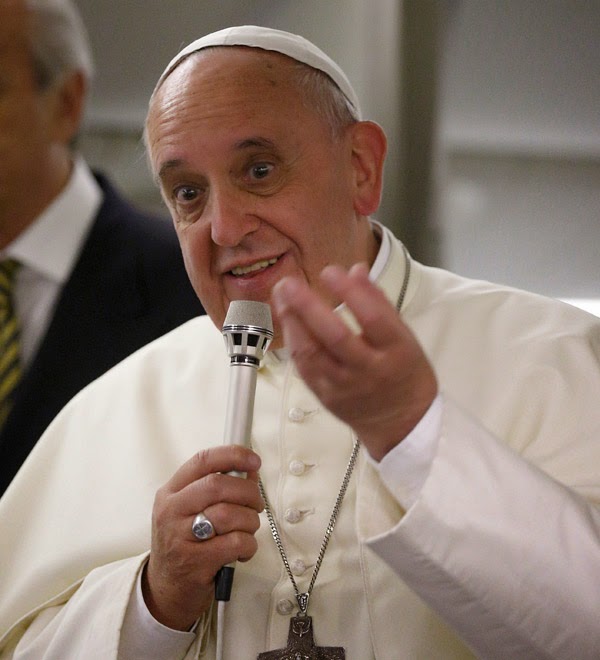
“It (celibacy) is a rule of life that I appreciate very much, and I think it is a gift for the church,” Francis told reporters aboard a plane returning to the Vatican. “But since it is not a dogma, the door is always open.”

“It (celibacy) is a rule of life that I appreciate very much, and I think it is a gift for the church,” Francis told reporters aboard a plane returning to the Vatican. “But since it is not a dogma, the door is always open.”

Of course the lady is correct. Celibacy is a discipline, not a dogma. There is evidence to suggest that at least some of the apostles were married. Indeed my lady friend reminded me that Jesus had cured Peter’s mother in law, so Peter was married (Matthew 8:14). But there’s another possible interpretation open to us here. Peter’s mother in law, now enjoying full health, starts to wait on Jesus in Peter’s house. Doesn’t that seem odd? It’s Peter’s mother in law rather than his wife that waits on Jesus. Where is Peter’s wife? Perhaps she’s out somewhere. But there’s another possibility; Peter was widowed at the time of Jesus call. It’s another possibility.

It’s important too that we take note of the apostle John. We know he was celibate and that he seems to have held a special place in Christ’s heart, perhaps due to his celibacy. At any rate, we’re told repeatedly that he’s the one Jesus loved (John 13:23), and as Christ was dying it was to John that he entrusted his mother (John 19:26).

My lady friend’s argument follows the familiar logic; the apostles were married so therefore priests should be allowed to marry. For many people this historical fact is all the proof needed to abolish compulsory celibacy. But there is another perspective, that of the teaching of Jesus as recorded in the Gospels. The teaching asks serious questions of married apostles and possibly even prevails over the practise.

In the Gospels we discover Christ’s call to a radical discipleship, Mark 10:21 “There is one thing you lack. Go and sell everything you own and give the money to the poor… then come follow me.” It’s a call the apostles heard and embraced, some of whom were married, others unmarried. The Gospels suggest that the first apostles were extremely challenged by Christ and if we accept the Gospel accounts of Christ’s teaching then there’s little doubt that the apostles themselves, both married and unmarried, must have understood that Christ’s call to self denial extended even to marriage, “… there are eunuchs who have made themselves that way for the sake of the kingdom of heaven.” (Matthew 19:12)

In fact, based on the evidence of Christ’s own teaching in the Gospels the first married apostles must have felt challenged about their married status. I’d go so far as to say that they even felt disadvantaged! This is not conjecture. The evidence indicates that this is exactly what happened. In the teaching of Christ and consequently in the early Church the practise of celibacy and virginity was highly valued, “what about us? We have left everything to follow you… I tell you there is no one who has left house, wife, brothers, parents or children for the sake of the kingdom of God who will not be given repayment many times over…” (Luke 18:28, Matthew 19:29). No wonder it was valued! But something even more significant happened, married couples, responding to the teaching of Christ practised continence within marriage, among them there were surely some of the apostles.

So it’s much too simplistic and even misleading to argue that the apostles were married so priests should be allowed to marry. The historical reality is much more nuanced than that.

Life went on after Christ and the Church developed. There are major figures, none more so than St. Paul, a strong supporter of celibacy, 1 Cor 7:32-35. In fact, this is a feature of the first millennium. There is no proper law of celibacy. Instead, the significant figures in the Church tend to recommend celibacy. Generally, the important figures in the early Church together with the higher members of the clergy practised celibacy.

So the picture is one of married and celibate priests, in tension to some degree, but it’s necessary to concede that it’s Christ’s radical call heard in the Gospel that’s causing at least some of the tension, “If any man comes to me without hating his father, mother, wife, children… he cannot be my disciple” (Luke 14:26). It should go without saying – but I’ll be cautious – that there are other factors at work in shaping these developments, not least a rejection of the goodness of human sexuality, a certain disdain for the sexual that had pockets of support but usually ended in heresy.

Eventually celibacy became compulsory for priests in the West. It’s with glee that some people point out that this happened because the Church didn’t want to lose its property to priest’s families. This may be true but it’s certainly not the complete truth. It conveniently ignores how celibacy and virginity never disappeared, and how the practises were highly valued by Christ, and by the Church from the very beginning, and how they are rooted in the call of Jesus Christ to leave everything and follow him.

There’s one further nuance that’s necessary to note. In the 11th century the Church split between East and West – temporarily – but reconciliation would bring with it two different traditions regarding celibacy. The Eastern Orthodox Church kept their tradition of a married clergy. But even this is nuanced; a single man cannot marry after Ordination, and to this day bishops in the East are drawn only from the celibate priests. So the tension between the historical practise of married apostles and priests, and the radical call of Jesus as recorded in the Gospels remains evident.

In conclusion we can argue:

1. Celibacy is a rejection of the sexual and it’s goodness.

2. It’s a kind of ‘spiritual worldliness’ on behalf of the Church. It’s about the Church protecting its assets.

3. It’s a response to Christ’s call to leave everything.

Take your pick.

Then ask yourself why you’ve made that particular choice?

If you think there’s an element of all three, to which of the three should we give precedence?

Me? I go with the call to leave everything although I’m not particularly good at it!

If radical discipleship is not found in the priesthood today, then where will it be found?

Mark 1:14-20, Third Sunday, Ordinary Time, Year B.

James and John leave everything. For a moment let’s picture their father Zebedee left in the boat with the men he employed. No doubt the father had built up the business with a view to his sons future. Now they’re gone. They’ll never really return.

It’s said that the departure of his sons caused Zebedee to go ‘ballistic’. He lost the head so to speak. That’s understandable. It’s said that in turn Jesus gave the name ‘sons of thunder’ to James and John, Mark 3:17.

At any rate, this following Jesus is portrayed as decisive, radical, life changing. The priesthood is modeled on these guys, downing tools, taking off after Jesus, staying with him, not returning. Whatever the historical roots of priestly celibacy even if several of the apostles were married, it’s not without considerable foundation in the teaching of Christ. It’s there, if we can hear it.

So when we start thinking about abolishing celibacy or making it optional – or countless other issues in the Church – we need to think about it from Christ’s perspective and those closest to him, rather than our own, because our understanding of these matters, indeed life itself, is very often a little out of sync – and that’s being generous – with the understanding that flows from the teaching of Christ.

"I had never believed. I had always known that the interest all around me in security, money, power and status was greater than any love of God or belief in his mercy" Colm Toibin, The Sign of the Cross

“I had never believed. I had always known that the interest all around me in security, money, power and status was greater than any love of God or belief in his mercy” Colm Toibin, The Sign of the Cross

Colm Toibin captures this ‘out of sync-ness’ perfectly in his book “The Sign of the Cross”. Writing about his experience as a child growing to adulthood here in the Cathedral in Enniscorthy he says – and this is both harsh judgement and profound observation – “I had never believed. I had always known that the interest all around me in security, money, power and status was greater than any love of God or belief in his mercy.” I’m afraid too often that’s us.

This is the reason we need to really listen to God’s Word, to the Gospels in particular, because only when we really listen can we begin to ‘sync’ with the message and the teaching of Christ. Often our treatment of the Word is like meeting a person and asking ‘how are you?’ when we really haven’t time for the answer, or worse, we really don’t care! Instead, take the time to look into the other persons eyes asking ‘how are you?’ and wait for the answer. We need to listen to the Word like that. Only then can we begin to move from Toibin’s “security, money, power and status” and into the “love of God” and “belief in his mercy”. This is particularly true of the priesthood.

When we think of the priesthood we need to remember Zebedee left behind in his boat, the family business and his life’s effort for his sons welfare discarded, thrown aside, abandoned. We need to wonder – and wonder is all we can do because the sources are so scant and often contradictory – about the wives of these men, if any. What happened to them?

My sense in all this is that through the apostles, married and unmarried, Christ was calling those around him and future generations to a radical discipleship, to leave everything, even marriage, Mark 19:12, 19:29 and so many other passages throughout the Gospels. It’s my sense but it’s not without foundation in the teaching of Christ. In fact, I suspect the more we ‘sync’ with the teaching of Jesus found in the Gospels the more we’ll see this possibility.

Let me put it this way: Why can’t James and John keep the family business and follow Jesus, as well? That’s what we’d do. It’s a bit like asking: Why can’t a man be a priest and marry, as well? That’s what we’d do. My sense is that Christ is calling some to a much more radical discipleship, to leave absolutely everything, to rely on him alone, and if this radical discipleship is not found in the priesthood today, then where will it be found?